Baby Scale Guide: Do You Need One for a Breastfed Baby?
By Breastfeeding Mom Editorial TeamUpdated 6 min read
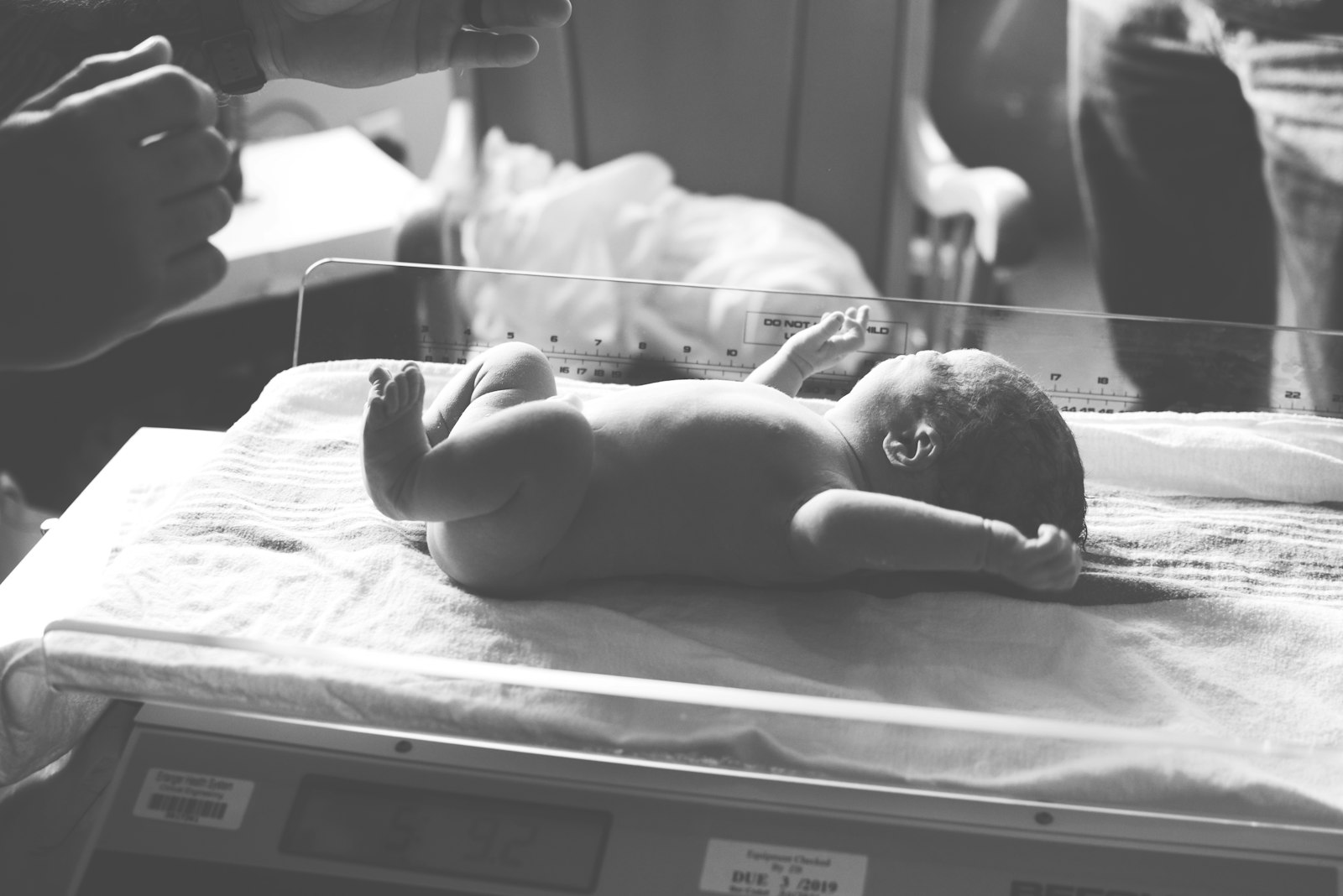
When you breastfeed, you can’t see the ounces going in, so it’s natural to wonder whether a baby scale at home would settle the question. The AAP puts it simply: you can’t measure exactly how much milk your newborn takes at the breast, but there are other ways to tell if your baby is getting enough, and how fast your baby gains weight is one of them.
This guide explains what weight can and can’t tell you, how accurate home weighing is, and what to look for if your care team suggests a scale. We don’t rank brands or models; we explain the criteria.
Why weight matters for breastfed babies
The AAP lists weight among the signs of a well-fed newborn. A baby should lose no more than 8% to 10% of birth weight in the first few days before starting to gain again. The CDC adds that breastfed babies should be back to birth weight by day 10 to 14, and lists a baby who keeps losing weight after day 5 as a sign they may not be getting enough.
After that, steady gain is what you’re looking for. The AAP’s warning signs include a baby who is still under birth weight at two weeks, or who hasn’t gained at least 5 to 7 ounces (about 140 to 200 g) a week since your milk came in. It calls inadequate weight gain one of the strongest signs that a baby isn’t getting enough milk.
Your pediatrician plots these weights on growth charts. In the US, the CDC recommends the WHO growth standards for all babies from birth to 2 years, breastfed or formula-fed, because they describe how predominantly breastfed babies grow. If you’re concerned about your baby’s growth, the CDC says to talk with your child’s health care provider.
Weight isn’t the only clue. Diapers, swallowing during feeds and how often your baby nurses matter too. Our guide on how often to breastfeed a newborn covers feeding frequency and diaper counts by age.
Pediatric weight checks come first
A home scale never replaces weight checks by your baby’s doctor. The AAP advises scheduling your newborn’s first checkup no more than 48 hours after leaving the hospital, and says that weight check will help show whether your baby is getting enough milk. If your milk hasn’t come in by day 5, the AAP says to have your baby weighed by the pediatrician right away, calling it the most precise way to tell whether they’re getting enough.
Office visits also include things a scale can’t do: an exam, a look at jaundice, and a feeding history.
Test weighing: what the research says
Test weighing means weighing your baby just before and just after a breastfeed, with the same clothes and diaper, and treating the difference in grams as roughly the milliliters of milk taken. It’s sometimes used for babies who were premature, are gaining slowly, or are being supplemented, for example during triple feeding.
The catch is precision. A feed changes a baby’s weight by only a small amount, so the scale has to detect small differences reliably:
- An ordinary infant scale may not be good enough. In a 2006 study of 94 newborns fed by bottle, cup or tube, the average result of test weighing matched the real intake closely (a 1.3 ml difference). But individual results were imprecise: 95% of differences ranged from about 12 ml too low to 15 ml too high, and the largest error was 30 ml. The authors thought the infant scales weren’t sensitive enough to pick up small changes, and advised against relying on test weighing.
- A precise scale and careful method work better. In a 2024 US community study, 31 parents test-weighed their babies and toddlers (under 2 years) around bottle feeds of expressed milk, using an infant digital scale that reads in 2 g steps up to 6 kg (5 g steps above that). Parents zeroed the scale, waited for the reading to lock, and averaged two readings before and after the feed. Their results differed from the amount actually drunk by about 2 g on average, which the researchers judged clinically acceptable. These were bottle feeds, not breastfeeds, so it shows what a careful method and a precise scale can do rather than proving every home result.
The takeaway: if your care team wants test weights, you need a scale with small increments, a stable reading and a consistent routine. A single feed’s number tells you less than the trend over days, and your IBCLC or pediatrician should interpret it with you. For a sense of typical amounts by age, see our breast milk intake calculator.
Can home weighing cause anxiety?
It can, for some parents. In a 2018 US survey of 63 mothers of healthy, full-term breastfed newborns who weighed their babies daily for 2 weeks, 81% felt positive about the scale, and many said it gave them useful knowledge or reassurance. But 14% said it made them worried about their baby’s weight. Mothers who believed their baby wasn’t feeding or gaining well were more likely to have mixed or negative feelings about it.
A 2015 Australian study found that 24 hours of measuring feeds kept breastfeeding confidence steady in at least 66% of mothers who started out confident, and improved it in at least 11% of those who didn’t.
So a scale can reassure, but it can also turn every feed into a test. If checking the number makes you more anxious, it’s fine to put the scale away and rely on checkups, diapers and your baby’s cues.
What to look for in a baby scale
If your pediatrician or lactation consultant has asked you to weigh at home, check these features:
| Feature | What to check | Why it matters |
|---|---|---|
| Increments | Displays small steps, ideally 2 g at newborn weights (look in the specs) | Test weighing depends on detecting small differences |
| Units | Grams as well as pounds and ounces | Test-weighing studies work in grams, and small changes are easier to read |
| Tare (zero) button | Zeroes the scale with a blanket or towel on it | Lets you weigh only your baby |
| Hold or lock mode | Freezes the reading once it’s stable | Babies wriggle; a moving reading is hard to trust |
| Capacity | Covers the weights you’ll need | Some infant scales change increments above a set weight |
| Tray | Flat, stable, with raised sides, on a firm surface | Keeps your baby secure while weighing |
| Cleaning | Wipeable surface | Diaper leaks happen |
Keep a hand close to your baby the whole time they’re on the scale.
When to call your pediatrician or IBCLC
Call your baby’s doctor promptly if:
- Your baby keeps losing weight after day 5, or isn’t back to birth weight by about 2 weeks.
- Your baby hasn’t gained at least 5 to 7 ounces a week since your milk came in.
- Your milk hasn’t come in by day 5, or your baby has fewer than 6 wet diapers and 3 poops a day by 5 days old.
- Your baby seems hungry after most feeds, often sleeps through feeds, or their skin looks yellow.
The AAP advises having a baby who still seems hungry after most feeds weighed right away. An IBCLC can watch a feed, check latch and milk transfer, and do accurate test weighing if it’s needed. Our breastfeeding support page lists where to find help, and you’ll find more early-days guides in our breastfeeding basics hub.
Shop on Amazon
Shop what this guide covers
Paid links: as an Amazon Associate we earn from qualifying purchases, at no extra cost to you. Links never change what we recommend. Disclosure
Frequently asked questions
Is it normal for my breastfed baby to lose weight in the first days?
Yes. The CDC says it's normal for breastfed babies to lose some weight in the first week, and they should be back to birth weight by day 10 to 14. The AAP says a well-fed newborn should lose no more than 8% to 10% of birth weight.
Why does my home scale show a different weight than the doctor's scale?
Different scales, clothing, a wet or dry diaper and timing around a feed all change the number. Compare home readings only with other readings from the same scale, and treat the office weight as the one that guides care.
How often should I weigh my baby at home?
We didn't find a primary source that sets a home weighing schedule for healthy babies. If your pediatrician or lactation consultant wants home weights, ask them how often and what numbers should prompt a call. Otherwise, the scheduled checkups are enough.
Can a baby scale tell me if I have low milk supply?
Not on its own. A single feed measured at home is only one piece of the picture. Weight gain over days and weeks, diapers and feeding behavior together tell you more, and an IBCLC can assess milk transfer in person.
Sources
- HealthyChildren.org (AAP): How to Tell if Your Breastfed Baby is Getting Enough Milkhttps://www.healthychildren.org/English/ages-stages/baby/breastfeeding/Pages/How-to-Tell-If-Baby-Is-Getting-Enough-Milk.aspx
- HealthyChildren.org (AAP): Warning Signs of Breastfeeding Problemshttps://www.healthychildren.org/English/ages-stages/baby/breastfeeding/Pages/Warning-Signs-of-Breastfeeding-Problems.aspx
- CDC: Newborn Breastfeeding Basicshttps://www.cdc.gov/infant-toddler-nutrition/breastfeeding/newborn-basics.html
- CDC: Growth Charts: What to Knowhttps://www.cdc.gov/growthcharts/information-for-healthcare-professionals.htm
- Savenije and Brand (2006): Accuracy and precision of test weighing to assess milk intake in newborn infantshttps://pmc.ncbi.nlm.nih.gov/articles/PMC2672832/
- Esquerra-Zwiers et al. (2024): Comparison of human milk bottle with infant/toddler test weights in the community settinghttps://pmc.ncbi.nlm.nih.gov/articles/PMC11270915/
- DiTomasso and Ferszt (2018): Mothers' thoughts and feelings about using a pediatric scale in the homehttps://pubmed.ncbi.nlm.nih.gov/30389281/
- Kent et al. (2015): Impact of measuring milk production by test weighing on breastfeeding confidencehttps://pubmed.ncbi.nlm.nih.gov/26090790/
This guide is general information, not medical advice. For your own situation, talk to your doctor, midwife, pharmacist or an IBCLC lactation consultant. Read our medical disclaimer and find breastfeeding support near you.
Related articles
How Long Should a Newborn Nurse? Feed Length and Switching Sides
There's no set number of minutes. Learn what the CDC, NHS and AAP say about feed length, switching sides and the signs a feed is finished.
How Often to Breastfeed a Newborn (and How That Changes by Age)
Most newborns breastfeed 8 to 12 times a day. Here's what's normal by age, plus cluster feeding, growth spurts and when to wake a sleepy baby.
Baby Thermometer: Which Type to Use by Age and When a Fever Needs a Call
Which baby thermometer to use at each age, how to take a rectal temperature, what counts as a fever, and when to call your pediatrician, per the AAP.
Combination Feeding: How to Mix Breastfeeding and Formula
How to start combination feeding with breast milk and formula, protect your milk supply, and prepare formula safely the way the CDC recommends.