Baby Thermometer: Which Type to Use by Age and When a Fever Needs a Call
By Breastfeeding Mom Editorial TeamUpdated 7 min read
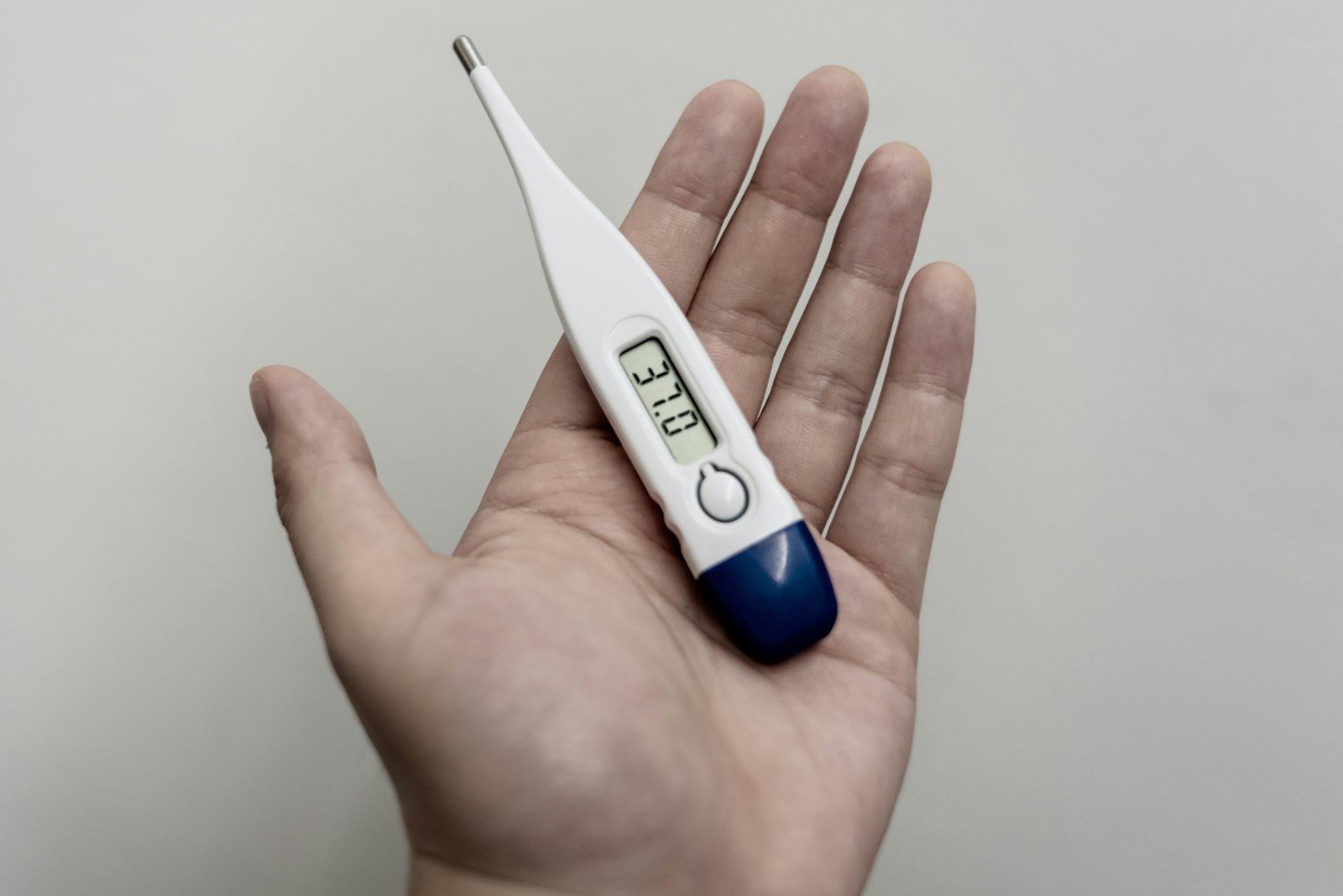
A thermometer is one of the few health items every new parent really needs. When your baby feels warm, is unusually sleepy or isn’t feeding well, a reliable reading tells you whether you’re dealing with a fever, and for a young baby that number decides whether you call the pediatrician right away.
This guide follows the American Academy of Pediatrics (AAP) on which thermometer to use at each age, how to take a rectal temperature, what counts as a fever and when to call. It also covers breastfeeding a sick baby. We don’t rank brands or test products.
Digital only, never mercury
HealthyChildren.org, the AAP’s parent site, says to use a digital thermometer and not a mercury one. Glass mercury thermometers can break and release toxic mercury fumes, and the AAP says to remove any you have at home.
Feeling your baby’s forehead or skin isn’t accurate, and fever strips aren’t reliable either. Take a real reading.
Which thermometer for which age
The AAP ranks accuracy like this: rectal readings are the most accurate, forehead readings next, oral and ear readings are accurate if done properly, and armpit readings are the least accurate but can be used to screen at any age.
| Type | Where it reads | Age (AAP) | Notes |
|---|---|---|---|
| Digital multi-use | Rectum, mouth or armpit | Rectal: any age. Oral: age 4 and up | Rectal is the most accurate, especially under 3 months. Label it “rectal” or “oral” so it’s never used in both places |
| Temporal artery (forehead) | Infrared heat from the artery across the forehead | All ages | Next most accurate after rectal. Sunlight and cold after being outside can affect the reading. Non-contact models may help reduce passing germs |
| Tympanic (ear) | Infrared heat from the eardrum | 6 months and up | Not reliable for younger babies, whose ear canals are too narrow. Must be placed correctly |
| Armpit (axillary) | Under the arm | Any age, for screening | Least accurate |
| Pacifier thermometers, fever strips | Mouth, forehead skin | Screening only | The AAP says these don’t work as well as a digital reading |
For a newborn, the practical setup is a digital multi-use thermometer kept for rectal use, and optionally a forehead thermometer for quick checks. Our newborn essentials list puts a digital thermometer on the first-month must-haves, and it’s worth packing in your hospital bag or keeping in your diaper caddy.
US and UK advice differ
The NHS tells parents to take a child’s temperature under the arm with a digital thermometer. The AAP prefers rectal readings for babies because they are the most accurate. This site follows the AAP, since it’s written for US parents, but follow your own pediatrician’s instructions.
What to look for in a baby thermometer
Criteria, not brand picks:
- Digital, no mercury.
- Suited to your baby’s age. Rectal-capable for young babies; skip ear thermometers before 6 months.
- Clear instructions. The AAP says to always follow the instructions that came with the device, including how close to hold a forehead thermometer.
- Easy to read display and a signal (usually a beep) when the reading is done.
- Easy to clean. Follow the cleaning instructions on the package.
- Shows °F, or switches between °F and °C.
How to take a rectal temperature
The AAP’s steps:
- Clean the thermometer with disinfecting soap and water or an alcohol swab. Do this before and after each use.
- Add lubricant, such as petroleum jelly, to the tip and to your baby’s bottom.
- Position your baby belly down across your lap or on a firm surface, or on their back with their legs pulled up to the chest.
- Turn the thermometer on and insert it gently, about 1/2 inch (about 1.3 cm) for babies under 6 months, up to 1 inch (2.5 cm) for older children. There should be no resistance. If there is, stop.
- Hold your baby still until it beeps, then remove it and read the display.
- Label it “rectal” so it’s never used in the mouth.
For an ear reading (6 months and up), the AAP says to wait 15 minutes after coming in from the cold. For a forehead reading, follow the package instructions for where to slide or aim the sensor.
What counts as a fever
The AAP says a fever is usually a temperature of 100.4°F (38°C) or higher. Normal body temperature is around 98.6°F (37°C), give or take about a degree, and it varies with age, activity and time of day. Infants tend to run a little warmer than older children.
That 100.4°F cutoff applies to rectal, oral, ear and forehead readings. The AAP notes that armpit readings may have a lower cutoff, without giving a number.
Fever itself is usually a sign that the body is fighting an infection. The AAP says the most important things are to keep your child hydrated and watch for signs of serious illness.
When to call your pediatrician
Young babies: call right away for 100.4°F
For young babies, any fever is a reason to call right away. The AAP pages state the age slightly differently:
- How to Take a Child’s Temperature: 2 months old or younger with a rectal temperature of 100.4°F or higher.
- When to Call the Pediatrician and Fever Without Fear: younger than 3 months (12 weeks) with 100.4°F (38.0°C) or higher.
- Fever and Your Baby: 3 months of age or younger with a rectal temperature of 100.4°F (38°C) or higher. Call immediately, even if your baby has no other signs of illness.
The safe reading of all three: if your baby is under 3 months and has a temperature of 100.4°F (38°C) or higher, call your pediatrician right away. The NHS similarly says to call NHS 111 for urgent advice if a baby under 3 months has 38°C (100.4°F) or higher.
Older babies
“Fever and Your Baby” says you may also need to call if your baby is 3 to 6 months old with 101°F (38.3°C) or higher, or older than 6 months with 103°F (39.4°C) or higher. At any age, the AAP says to call right away if fever rises above 104°F (40°C) repeatedly.
Call right away, at any age, if your baby has a fever and:
- Looks very ill, is unusually drowsy or is very fussy
- Has been somewhere very hot, such as an overheated car
- Has a stiff neck, an unexplained rash, breathing difficulty, or repeated vomiting or diarrhea
- Has signs of dehydration: a dry mouth, sunken soft spot, significantly fewer wet diapers, or can’t take in fluids
- Has immune system problems or heart problems, or takes steroids
- Has had a seizure
Also call if your baby still “acts sick” after the fever comes down, seems to be getting worse, or (under age 2) has had a fever for more than 24 hours.
Call 911 if your baby has trouble breathing during a febrile seizure, the seizure doesn’t stop within 15 minutes, or you think they have heatstroke.
Comfort care and medicines
The AAP advises:
- Dress your baby in a single layer; don’t overdress. If they are shivering or have chills, give them a blanket.
- Skip alcohol baths, ice packs and sponging. These are no longer recommended and can have adverse effects.
- Ask about medicine doses. For children under 2, contact your pediatrician or pharmacist for the correct dose of acetaminophen or ibuprofen. The NHS says not to give paracetamol (acetaminophen) under 2 months or ibuprofen under 3 months or under 5 kg.
The AAP notes that not every fever needs to be treated. For a baby under 3 months, you should already be calling your pediatrician, so ask them before giving anything.
Breastfeeding a baby with a fever
Fluids are the priority. The AAP says a fever makes children lose fluids more quickly, so offer plenty to prevent dehydration. The NHS is direct: if your baby is breastfed, continue to breastfeed as normal.
- Keep offering the breast. Our guide on how often to breastfeed explains normal feeding patterns.
- Watch the diapers. The AAP lists crying without tears, a dry mouth and fewer wet diapers as signs of dehydration. Our baby poop color chart shows what to expect by age.
- If you’re sick too, you can usually keep breastfeeding. See our guide to breastfeeding while sick.
If your baby refuses feeds or you’re seeing far fewer wet diapers, call your pediatrician.
For more help with the early weeks, visit our breastfeeding basics hub.
Shop on Amazon
Shop what this guide covers
Paid links: as an Amazon Associate we earn from qualifying purchases, at no extra cost to you. Links never change what we recommend. Disclosure
Frequently asked questions
Are forehead thermometers accurate for newborns?
HealthyChildren.org (AAP) says temporal artery (forehead) thermometers can be used at any age and are the next most accurate after rectal ones. Rectal readings are still the most accurate, especially for babies under 3 months. Direct sunlight and cold after being outside can affect forehead readings.
Can I use an ear thermometer on my newborn?
Not until 6 months. The AAP says ear (tympanic) thermometers aren't reliable for younger babies, because their ear canals are too narrow.
Should I add a degree to an armpit reading?
The AAP pages we checked don't give a conversion. They say armpit readings are the least accurate, are fine for screening, and may have a lower cutoff for fever. If an armpit reading worries you in a young baby, call your pediatrician and ask how they want you to check.
Does teething cause a fever?
HealthyChildren.org says teething can cause a slight rise in temperature within the normal range, but research shows it does not cause a true fever. If your baby has a fever or seems very unwell, they are probably sick, and you should check with your pediatrician.
Sources
- HealthyChildren.org (AAP): How to Take a Child's Temperaturehttps://www.healthychildren.org/English/health-issues/conditions/fever/Pages/How-to-Take-a-Childs-Temperature.aspx
- HealthyChildren.org (AAP): Fever and Your Babyhttps://www.healthychildren.org/English/health-issues/conditions/fever/Pages/Fever-and-Your-Baby.aspx
- HealthyChildren.org (AAP): Fever Without Fear: Information for Parentshttps://www.healthychildren.org/English/health-issues/conditions/fever/Pages/Fever-Without-Fear.aspx
- HealthyChildren.org (AAP): When to Call the Pediatrician: Feverhttps://www.healthychildren.org/English/health-issues/conditions/fever/Pages/When-to-Call-the-Pediatrician.aspx
- NHS: High Temperature (Fever) in Childrenhttps://www.nhs.uk/conditions/fever-in-children/
This guide is general information, not medical advice. For your own situation, talk to your doctor, midwife, pharmacist or an IBCLC lactation consultant. Read our medical disclaimer and find breastfeeding support near you.
Related articles
Newborn Essentials: A Minimal, Evidence-Based List for the First Month
The newborn essentials you actually need for the first month: a safe sleep space, car seat, diapers, clothes, feeding basics, and what not to buy.

Burp Cloths: What to Look For, How to Burp, and When Spit-Up Needs a Doctor
Why babies spit up, how many burp cloths are handy, muslin vs other fabrics, the AAP's three burping positions and the spit-up signs that need a doctor.
Diaper Caddy: What to Put in It and How to Use It Safely
How to set up a diaper caddy for changes and night feeds: what to pack, what to look for, safe changing habits, diaper rash basics and hand hygiene.
Pacifiers for Breastfed Babies: When to Start and What to Look For
When a breastfed baby can start a pacifier, what the AAP says about pacifiers and SIDS, what the nipple confusion evidence shows, and how to choose a safe one.