Burp Cloths: What to Look For, How to Burp, and When Spit-Up Needs a Doctor
By Breastfeeding Mom Editorial TeamUpdated 6 min read

If you’re feeding a newborn, you will see spit-up, often on your shoulder, your shirt and the couch. A stack of burp cloths is one of the simplest things you can have ready. They catch milk during burping and feeds, wipe a dribbly chin and save a lot of laundry.
This guide covers why babies spit up, what to look for in a burp cloth, how to burp your baby the way the American Academy of Pediatrics (AAP) describes, and the signs that spit-up is something more. We don’t rank brands or test products; any soft, absorbent cloth you already own can do the job.
Why babies spit up so much
HealthyChildren.org, the AAP’s parent site, puts it plainly: all babies spit up, some more than others. A baby’s stomach is small, and milk plus swallowed air fills it quickly. A change of position on a full stomach can push the valve at the top of the stomach open, and some milk comes back up.
This everyday spit-up is called gastroesophageal reflux (GER). The AAP calls babies who spit up without being upset “happy spitters” and says GER in infants is considered normal. Its timeline:
- GER usually starts at about 2 to 3 weeks of age.
- It peaks between 4 and 5 months.
- For most babies born full-term, it is gone by 9 to 12 months (another AAP page says a mild form may last until 10 to 12 months).
The NHS gives a similar picture: reflux usually starts before 8 weeks and gets better by age 1, and a baby who is happy, healthy and gaining weight usually doesn’t need to see a doctor for it.
So burp cloths aren’t a fix for spit-up. They just make a normal phase easier to live with.
Do you need burp cloths?
You don’t strictly need anything made for the purpose. Any clean, soft cloth works. Dedicated burp cloths are handy because they are the right size, wash easily and you can keep one in every spot where you feed. They are a small item on most newborn essentials lists, and they fit neatly into a diaper caddy or a hospital bag.
What to look for in a burp cloth
These are practical criteria, not brand picks:
| Type | What it’s like |
|---|---|
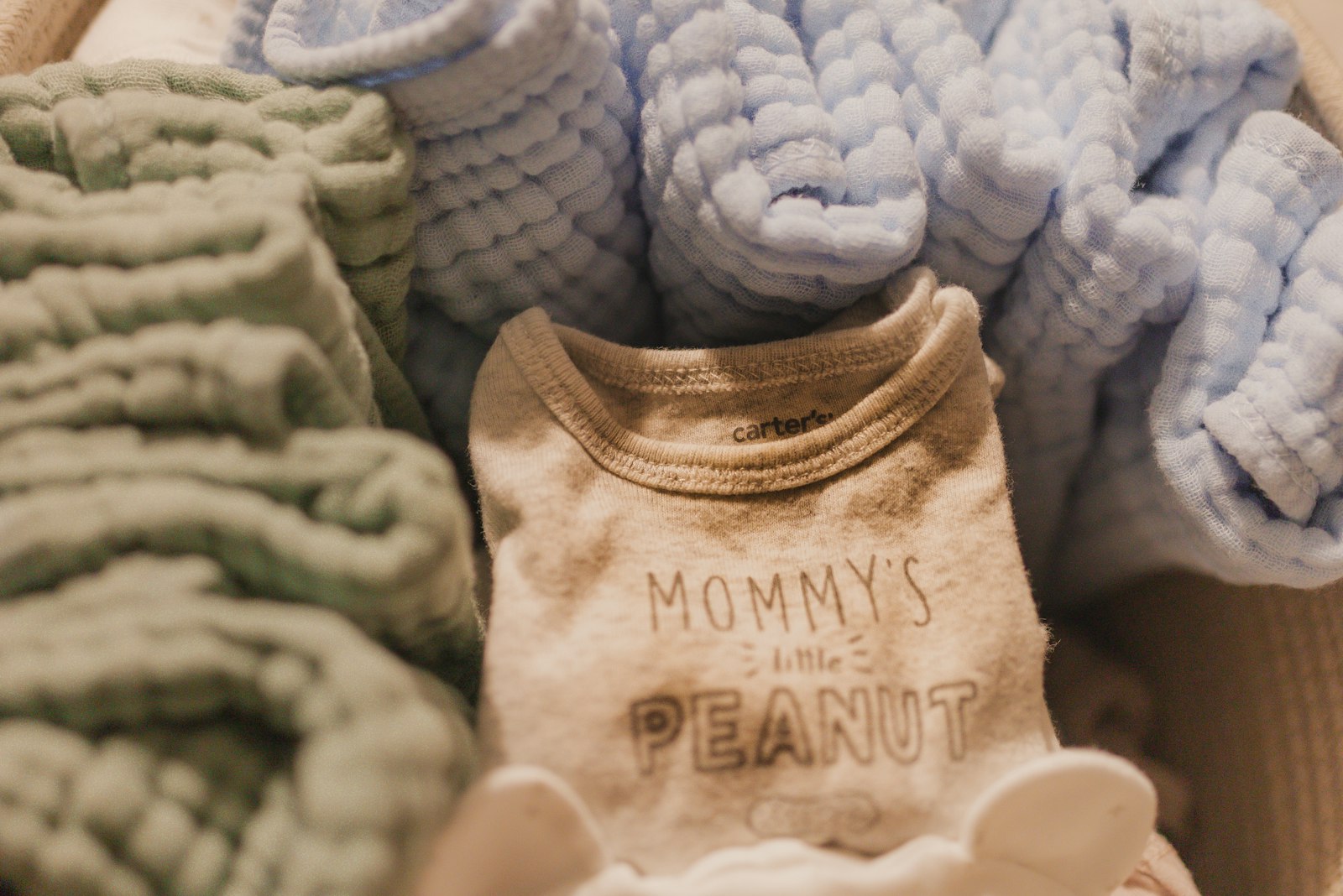
| Muslin | Thin, lightweight woven cotton, usually in several layers; dries quickly and softens with washing |
| Terry or cotton knit | Thicker and plush, holds more liquid per layer |
| Flannel | Soft, often backed with another fabric |
| Cotton prefold cloth diapers | Long, thick, multi-layer panels; many parents use them as burp cloths |
| Contoured | Shaped like a peanut or curve to sit over your shoulder |
When comparing, check:
- Size. Long enough to cover your shoulder and the top of your back, where spit-up tends to land.
- Absorbency. More layers or thicker fabric hold more before soaking through to your clothes.
- Softness. It touches your baby’s face and your skin many times a day.
- Washability. Machine washable and quick to dry, since you’ll go through several a day early on.
- Simple design. Fewer decorations means less to come loose in the wash.
How to burp your baby
Burping helps release swallowed air. HealthyChildren.org says this happens with both breast- and bottle-fed babies, but more often with the bottle. Its timing advice:
- Breastfeeding: burp when your baby switches breasts. Some breastfed babies don’t swallow very much air, so they may not need to burp.
- Bottle feeding: burp after every 2 to 3 oz (60–90 ml). Our guide to paced bottle feeding covers slowing bottle feeds down.
- Fussy feeder: if your baby is fussing during a feed, the AAP suggests stopping to burp rather than letting them fuss and feed at the same time, since fussing makes them swallow more air.
Three AAP burping positions
Put a burp cloth over your shoulder or lap first.
- Over the shoulder. Hold your baby upright with their head on your shoulder, supporting their head and back, and gently pat their back.
- Sitting on your lap. Support your baby’s chest and head with one hand and pat their back with the other.
- Face down on your lap. Lay your baby on your lap, back up, with their head higher than their chest, and gently pat or rub their back.
If no burp comes after several minutes, the AAP says to keep feeding and not worry: no baby burps every time. After the feed, burp again and keep your baby upright for 10 to 15 minutes so they don’t spit up. Other AAP pages suggest at least 20 minutes, or about the first half-hour, especially for babies who spit up a lot. Always closely supervise your baby while they’re upright. For holds that work during the feed itself, see our guide to breastfeeding positions.
Ways to cut down on spit-up
HealthyChildren.org suggests:
- Feed before your baby gets very hungry, so they don’t gulp.
- Avoid overfeeding. Smaller amounts more often can help.
- Burp during feeds, not just after.
- Keep feeds calm and limit active play (including tummy time) for about 20 to 30 minutes afterward.
If you’re breastfeeding, the AAP says cow’s milk and soy in your diet can worsen spit-up in babies with cow’s milk protein allergy or intolerance. If you suspect that, read our guide to cow’s milk protein allergy in breastfed babies and talk to your pediatrician before cutting out foods.
Spit-up and safe sleep
Spit-up worries many parents at night. The AAP says spit-up almost never involves choking or danger to your baby, even during sleep, and that even with frequent spit-ups the safest sleep position is on the back on a flat mattress, not elevated. The NHS likewise advises against raising the head of the cot.
Keep burp cloths out of the crib or bassinet. The AAP’s safe sleep guidance says to keep soft objects and loose bedding out of your baby’s sleep area because they increase the risk of suffocation, entrapment and strangulation. Finish burping, then put your baby down on their back in a clear sleep space.
Washing and storing burp cloths
Rinse or wash used cloths soon after use so milk doesn’t dry in, then wash them with your baby’s other laundry following the care label. Muslin usually needs a few washes to reach full softness. Keep a clean supply wherever you feed, plus one or two in the diaper bag.
Spit-up or vomiting?
The AAP draws a clear line between the two:
| Spit-up | Vomiting |
|---|---|
| Easy flow of milk out of the mouth, often with a burp | Forceful throwing up of stomach contents |
| Small amounts | Uses the stomach muscles, often uncomfortable |
| Baby isn’t distressed | Often leaves a crying, upset baby |
When to call your pediatrician
Call your pediatrician right away if your baby:
- Vomits forcefully after every feeding. The AAP says forceful vomiting about 15 to 30 minutes or less after every feeding is the key sign of hypertrophic pyloric stenosis, which usually starts between 2 weeks and 4 months and needs immediate medical attention.
- Has blood or green material (bile) in the vomit or spit-up, or vomit that looks like coffee grounds.
- Seems lethargic or very irritable.
- Shows signs of dehydration: dry mouth, no tears, a sunken soft spot or fewer wet diapers.
- Has vomiting that goes on beyond 24 hours.
Also contact your pediatrician if your baby:
- Refuses feeds, or cries and arches their back during feeds as if in pain
- Spits up more often or more forcefully than before
- Has a swollen, hard belly, or wheezes and coughs
- Doesn’t seem to be gaining weight, or has fewer wet and dirty diapers (our baby poop color chart shows what to expect)
The NHS adds seeing a doctor if reflux starts for the first time after 6 months or is still going after age 1.
For more help with the early weeks, visit our breastfeeding basics hub.
Shop on Amazon
Shop what this guide covers
Paid links: as an Amazon Associate we earn from qualifying purchases, at no extra cost to you. Links never change what we recommend. Disclosure
Frequently asked questions
How many burp cloths do I need?
There is no official number. It depends on how much your baby spits up and how often you do laundry. Many parents keep a few in each spot where they feed, plus a couple in the diaper bag, so there is always a clean one at hand.
Do breastfed babies need to be burped?
Not always. HealthyChildren.org (AAP) suggests burping when your baby switches breasts, but notes that some breastfed babies don't swallow very much air, so they may not need to burp. If no burp comes after several minutes, it's fine to keep feeding.
Should I raise the head of the crib if my baby spits up a lot?
No. The AAP says that even with frequent spit-ups, the safest sleep position is on the back with the mattress flat, not elevated. The NHS also advises not to raise the head of the cot or Moses basket.
Is my diet causing my baby's spit-up?
Usually not. Spit-up is normal in most babies. HealthyChildren.org says cow's milk and soy in a breastfeeding parent's diet can worsen spit-up in babies with cow's milk protein allergy or intolerance. Talk to your pediatrician before cutting foods out.
Sources
- HealthyChildren.org (AAP): Baby Burping, Hiccups & Spit-Uphttps://www.healthychildren.org/English/ages-stages/baby/feeding-nutrition/Pages/Baby-Burping-Hiccups-and-Spit-up.aspx
- HealthyChildren.org (AAP): Why Babies Spit Uphttps://www.healthychildren.org/English/ages-stages/baby/feeding-nutrition/Pages/Why-Babies-Spit-Up.aspx
- HealthyChildren.org (AAP): Gastroesophageal Reflux (GER) & GERD in Infants and Childrenhttps://www.healthychildren.org/English/health-issues/conditions/abdominal/Pages/GERD-Reflux.aspx
- HealthyChildren.org (AAP): Causes of Vomiting in Infants & Childrenhttps://www.healthychildren.org/English/health-issues/conditions/abdominal/Pages/Infant-Vomiting.aspx
- HealthyChildren.org (AAP): How to Keep Your Sleeping Baby Safe: AAP Policy Explainedhttps://www.healthychildren.org/English/ages-stages/baby/sleep/Pages/A-Parents-Guide-to-Safe-Sleep.aspx
- NHS: Reflux in Babieshttps://www.nhs.uk/conditions/reflux-in-babies/
This guide is general information, not medical advice. For your own situation, talk to your doctor, midwife, pharmacist or an IBCLC lactation consultant. Read our medical disclaimer and find breastfeeding support near you.
Related articles
Diaper Caddy: What to Put in It and How to Use It Safely
How to set up a diaper caddy for changes and night feeds: what to pack, what to look for, safe changing habits, diaper rash basics and hand hygiene.
Newborn Essentials: A Minimal, Evidence-Based List for the First Month
The newborn essentials you actually need for the first month: a safe sleep space, car seat, diapers, clothes, feeding basics, and what not to buy.

Paced Bottle Feeding: How to Bottle Feed a Breastfed Baby
Step-by-step paced bottle feeding: how to hold your baby and the bottle, when to pause, how long a feed should take and the signs your baby is full.

Breastfeeding Twins: Positions, Milk Supply and a Plan That Works
How to breastfeed twins: building enough milk, feeding together or one at a time, the best tandem positions, pumping for preterm twins and getting help.