Benefits of Breastfeeding for Baby and for You: What the Evidence Says
By Breastfeeding Mom Editorial TeamUpdated 4 min read
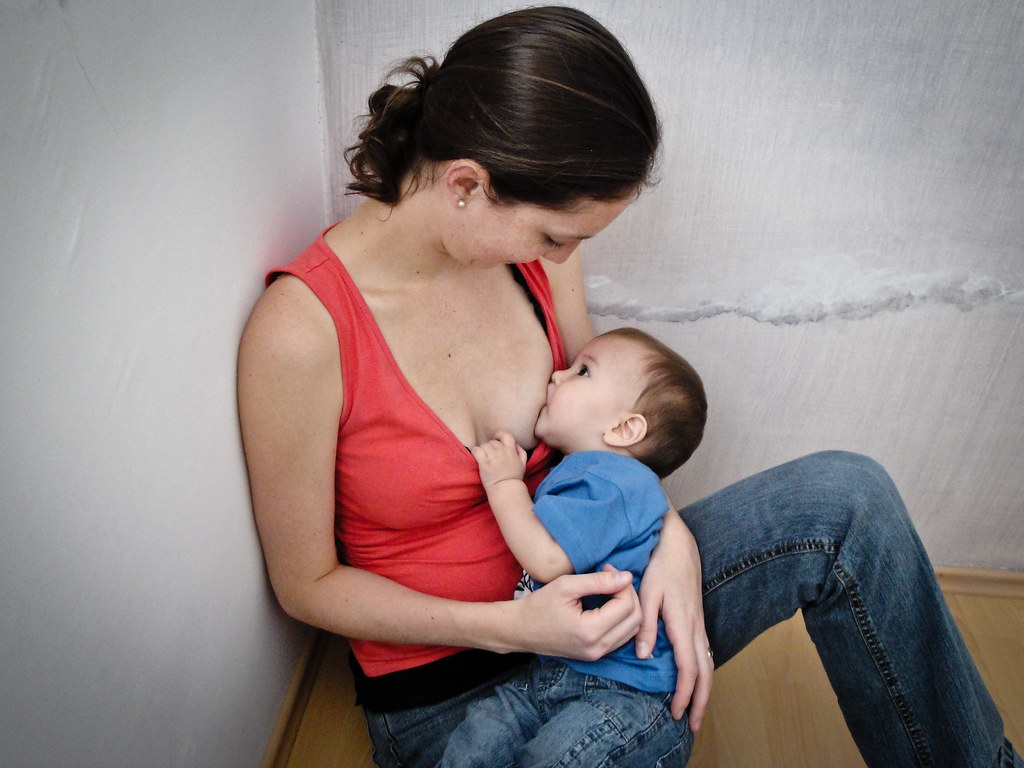
You’ve probably heard that “breast is best.” The real picture is more useful than a slogan. Breastfeeding has well-documented benefits for babies and for the person breastfeeding. Some are backed by strong evidence, others are likely but harder to prove. And the benefits don’t depend on an all-or-nothing approach.
Here is what the major health organizations and research reviews say, explained honestly. For the bigger picture of how feeding works, start with our breastfeeding basics.
What the experts recommend
The American Academy of Pediatrics (AAP) recommends exclusive breastfeeding for about the first 6 months, then continuing to breastfeed as you add solid foods, for 2 years or beyond if you and your child want to. The World Health Organization (WHO) gives the same advice and adds that breastfeeding should ideally start within the first hour after birth.
These recommendations are goals, not tests you pass or fail. Many families can’t or don’t breastfeed exclusively, and that is fine. What matters is understanding what breast milk offers so you can make the choices that work for you.
Benefits for your baby
Protection against infections
This is where the evidence is strongest. Breast milk contains antibodies, especially secretory IgA, plus other immune factors such as lactoferrin, white blood cells and special sugars called human milk oligosaccharides that feed healthy gut bacteria. Formula can’t copy these living parts. You can read more in our guide to what breast milk is made of.
The AAP and CDC report that breastfed babies have lower rates of:
- Ear infections
- Serious lower respiratory infections such as pneumonia
- Stomach infections with diarrhea and vomiting
- Necrotizing enterocolitis (NEC), a serious gut condition, in premature babies
Lower risk of SIDS
Breastfeeding is associated with a lower risk of sudden infant death syndrome. Safe sleep practices still matter just as much: always place your baby on their back on a firm, flat surface.
Longer-term health
The CDC lists lower risks of asthma, obesity, type 1 diabetes and childhood leukemia in breastfed children. The WHO notes that breastfed children are less likely to be overweight or obese and tend to score slightly higher on intelligence tests.
Benefits for you
Breastfeeding has benefits for the parent too, and these are sometimes overlooked. The CDC and AAP link breastfeeding to lower risks of:
- Breast cancer
- Ovarian cancer
- Type 2 diabetes
- High blood pressure
The AAP notes that the protection is greater with longer breastfeeding, especially for the mother. In the short term, the hormone oxytocin released during feeds helps the uterus contract after birth. Many parents also value the closeness, the convenience of milk that is always ready and at the right temperature, and not having to buy formula.
Association vs causation: an honest look
Most breastfeeding research is observational. Researchers compare babies who were breastfed with babies who weren’t, because it would be unethical to randomly assign babies to formula. The problem is that families who breastfeed often differ in other ways too, such as income, education, smoking and access to health care. These differences can make breastfeeding look more powerful than it is.
Good studies adjust for these factors, and some use sibling comparisons or large international datasets. A major 2016 review in The Lancet concluded that the evidence is strong for protection against childhood infections, that breastfeeding is linked to higher intelligence test scores, and that it probably lowers the risk of overweight and diabetes. That review did not find a clear link with asthma or allergies, blood pressure or cholesterol. Health agencies such as the CDC still list asthma, so you will see some differences between sources.
In plain words: the infection benefits are solid. Some long-term benefits are likely but smaller, or harder to separate from other parts of a child’s life. Your child’s health depends on many things, and how they were fed as a baby is only one of them.
Any amount helps
For the latest numbers on how many babies are breastfed, and for how long, see our breastfeeding statistics.
Benefits generally increase with more breast milk and longer breastfeeding, but this is not all or nothing:
- Colostrum counts. Even a few days of breastfeeding gives your newborn concentrated antibodies.
- Partial breastfeeding counts. Combining breast milk and formula still gives your baby immune factors that formula doesn’t contain.
- Pumped milk counts. If your baby can’t feed at the breast, expressed milk still offers most of the same benefits.
If you’re weighing your options, our balanced comparison of breastfeeding vs formula and our guide to extended breastfeeding beyond 12 months may help.
Breastfeeding is a team effort
Benefits on paper don’t help much if you’re struggling without support. The AAP’s 2022 policy calls for paid leave, workplace protections and insurance coverage for lactation support, because so many families stop earlier than they hoped. If feeding is painful, your baby isn’t gaining well, or you’re thinking about stopping because it’s hard, reach out to a lactation consultant first. Many problems can be fixed with the right help. Our breastfeeding support page lists where to find it.
When to talk to a doctor or lactation consultant
Speak to your baby’s doctor or an IBCLC if you have a health condition or take medicines and aren’t sure breastfeeding is safe, if you’re worried about your milk supply, or if feeding hurts. A small number of conditions, such as certain infections and a rare metabolic disorder in the baby called classic galactosemia, mean breastfeeding isn’t recommended, so it’s worth checking with your care team.
Frequently asked questions
Do the benefits of breastfeeding stop after 6 months?
No. The AAP says there are continued benefits beyond the first year, and recommends continuing alongside solid foods for as long as you and your child want, to 2 years or beyond.
Does pumped breast milk have the same benefits?
Expressed breast milk gives your baby the same nutrients and most of the same immune factors. Feeding at the breast adds things a bottle doesn't, such as skin-to-skin contact, but pumped milk is still breast milk.
Does breastfeeding help you lose weight?
Breastfeeding uses extra energy, and some people find it helps with postpartum weight loss, but results vary a lot. Diet, sleep and activity matter too.
Is breastfeeding a reliable form of birth control?
Only under strict conditions: your baby is under 6 months, exclusively breastfed day and night, and your period hasn't returned. Even then it is not foolproof, so talk to your doctor about contraception.
Sources
- AAP: Updated breastfeeding policy recommendations (2022)https://www.aap.org/en/news-room/news-releases/aap/2022/american-academy-of-pediatrics-calls-for-more-support-for-breastfeeding-mothers-within-updated-policy-recommendations/
- CDC: About Breastfeedinghttps://www.cdc.gov/breastfeeding/php/about/index.html
- WHO: Breastfeedinghttps://www.who.int/health-topics/breastfeeding
- Victora CG et al. Breastfeeding in the 21st century: epidemiology, mechanisms, and lifelong effect. The Lancet, 2016https://pubmed.ncbi.nlm.nih.gov/26869575/
- Ballard O, Morrow AL. Human Milk Composition: Nutrients and Bioactive Factors. Pediatr Clin North Am, 2013https://pmc.ncbi.nlm.nih.gov/articles/PMC3586783/
- CDC: Contraindications to Breastfeeding or Feeding Expressed Breast Milkhttps://www.cdc.gov/breastfeeding-special-circumstances/hcp/contraindications/index.html
This guide is general information, not medical advice. For your own situation, talk to your doctor, midwife, pharmacist or an IBCLC lactation consultant. Read our medical disclaimer and find breastfeeding support near you.
Related articles
Breastfeeding vs Formula: An Honest, Judgment-Free Comparison
Breastfeeding vs formula side by side: nutrition, immunity, cost, convenience and who can feed, plus combination feeding and safe formula prep.

What Is Breast Milk Made Of? Nutrients, Stages and Immune Factors
What breast milk is made of: lactose, fat and protein per 100 ml, how colostrum differs from mature milk, foremilk and hindmilk, and its immune factors.

Wet Nurse: What It Means, Its History and Modern Alternatives
What a wet nurse is, how wet nursing worked through history, why it declined, and how milk banks, milk sharing and cross-nursing compare today.

History of Breastfeeding: From Ancient Feeding Vessels to Today
The history of breastfeeding, from ancient clay feeding vessels and wet nurses to the rise of formula, the Nestlé boycott and the WHO Code.