Breastfeeding vs Formula: An Honest, Judgment-Free Comparison
By Breastfeeding Mom Editorial TeamUpdated 5 min read
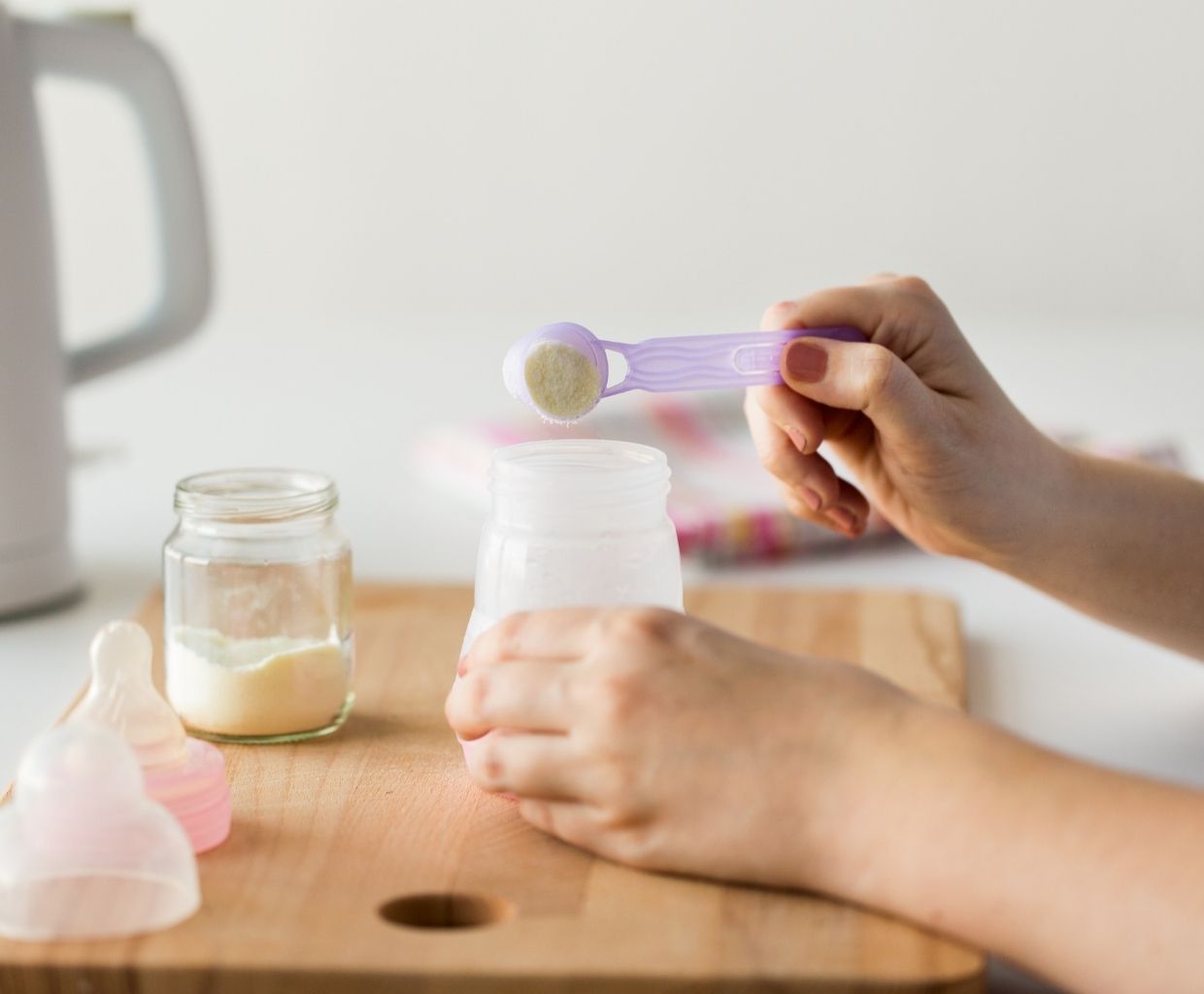
Few parenting topics come with as much pressure as how you feed your baby. You may feel pushed toward breastfeeding by health messages, and pushed toward formula by work, health issues, a hard start or simply what feels right for your family. This guide sets out the facts side by side, without judgment.
The short version: breast milk has unique benefits, formula is a safe and complete alternative, and many families use both. For the basics of how breastfeeding works, see our breastfeeding basics guide.
Breastfeeding vs formula at a glance
Curious how families actually feed their babies? Our breastfeeding statistics show how many US babies are breastfed, exclusively breastfed and given formula early.
| Breast milk | Infant formula | |
|---|---|---|
| Nutrition | Changes over time (colostrum, then mature milk) and even during a feed. Easy to digest. Low in vitamin D, so babies need drops | Complete, regulated nutrition based on cow’s milk (or soy). Same composition every bottle |
| Immunity | Contains antibodies (secretory IgA), lactoferrin, live white blood cells and human milk oligosaccharides | No live cells or antibodies. Some formulas add individual ingredients, but can’t copy the whole mix |
| Health links | Fewer ear, chest and stomach infections, lower SIDS risk; lower breast and ovarian cancer risk for the parent | Supports normal growth and development |
| Cost | No product to buy, but takes time and may involve a pump, bras and lactation help | An ongoing cost for supplies; WIC can help eligible families |
| Convenience | Always ready and at the right temperature, no washing bottles. Can be tiring early on | Easy to measure how much your baby drinks. Needs safe water, clean bottles and preparation |
| Who can feed | Mainly the breastfeeding parent, unless you pump | Anyone, so feeds and night duties are easy to share |
| Parent’s body | Needs time, food and rest; can be affected by some medicines | No effect on your body; you can take medicines more freely |
Nutrition: what’s different
Breast milk changes to match your baby. Colostrum in the first days is rich in immune factors. Mature milk settles at roughly 65 to 70 calories per 100 ml, with fat that rises toward the end of a feed. Our guide to what breast milk is made of explains the details.
Formula is designed to match the main nutrients in breast milk as closely as possible and to support normal growth. What it can’t do is change from feed to feed, or provide living immune cells and the full mix of antibodies.
One thing both groups share: babies need vitamin D. The AAP recommends 400 IU a day for breastfed and partially breastfed babies starting in the first few days. Formula-fed babies need a supplement too unless they drink about 32 oz (about 1 liter) of formula a day.
Immunity and long-term health
This is breast milk’s biggest advantage. The AAP and CDC report that breastfed babies have fewer ear infections, serious chest infections and stomach bugs, and a lower risk of SIDS. Longer-term links to lower obesity and diabetes risk have also been reported, though these come mainly from observational studies. Our article on the benefits of breastfeeding explains what the research can and can’t prove.
Practical life: cost, time and sharing feeds
Practical reasons matter as much as health reasons. Formula lets a partner or grandparent take a night feed and makes it easy to see exactly how much your baby drank. Breastfeeding means no bottles to prepare at 3 a.m., and nothing to pack for a day out. Pumping sits in between: it lets others feed your baby breast milk, but adds cleaning and time. If you go back to work, a pumping schedule can help you keep breastfeeding.
Combination feeding
You don’t have to pick one. Combination feeding (some breast milk, some formula) is common and can be a good long-term plan. A few tips:
- In the early weeks, protect your supply. Milk supply follows demand, so each formula feed that replaces a breastfeed sends a “make less” signal. If you want to keep breastfeeding, pump when your baby has formula.
- Choose a consistent pattern. For example, breastfeed in the morning and evening and give formula during the day.
- Keep breast milk and formula separate unless you plan carefully. If you want to mix them in one bottle, read our guide to mixing breast milk and formula first.
How to prepare formula safely
If you use formula, preparing it correctly is important. The CDC advises:
- Wash your hands and clean and sanitize bottles, nipples and your work surface.
- Use water from a safe source. If you’re not sure your tap water is safe, ask your local health department.
- Measure the water first, then add the powder, exactly as the label says. Never add extra water to stretch formula, because too much water can leave your baby without enough nutrition, and too little can cause dehydration.
- Take extra care for young or vulnerable babies. For babies under 2 months, born before 37 weeks or with a weakened immune system, boil the water, let it cool for about 5 minutes (it should still be at least 158°F (70°C)), mix, then cool the bottle before feeding.
- Don’t microwave bottles. If you warm formula, stand the bottle in warm water and test a few drops on your wrist.
- Use it on time. Use prepared formula within 2 hours, and within 1 hour of starting a feed. Throw away leftovers. If you won’t use it within 2 hours, refrigerate it and use it within 24 hours.
Fed is the goal
Breast milk offers real advantages, and many parents who want to breastfeed don’t get the support they need. At the same time, a parent who is exhausted, in pain or under huge pressure deserves real options. A well-fed baby and a parent who is coping are what matter most.
When to talk to a doctor or lactation consultant
Talk to your baby’s doctor if your baby isn’t gaining weight, has fewer wet diapers, vomits often or seems to react to a formula. Talk to an IBCLC if you want to keep breastfeeding but are struggling, want to increase supply, or want to switch from formula to more breastfeeding. Our breastfeeding support page lists where to get help.
Frequently asked questions
Are formula-fed babies less healthy?
Formula-fed babies grow and thrive. On average, breastfed babies have fewer infections, and some long-term health differences have been reported, but your baby's health depends on many things, not just how they were fed.
Can I switch from formula back to breastfeeding?
Often, yes, especially in the early weeks. Increasing supply usually means frequent feeding or pumping. A lactation consultant can make a plan with you.
Do breastfed and formula-fed babies need vitamin D?
The AAP recommends 400 IU of vitamin D a day for breastfed and partially breastfed babies, starting in the first days. Formula-fed babies need a supplement too unless they drink about 32 oz (about 1 liter) of formula a day.
Is there a best formula?
Infant formulas sold in the US must meet federal nutrition requirements. For most healthy babies a standard cow's milk-based formula works well. Ask your pediatrician before choosing a specialty formula.
Sources
- AAP: Updated breastfeeding policy recommendations (2022)https://www.aap.org/en/news-room/news-releases/aap/2022/american-academy-of-pediatrics-calls-for-more-support-for-breastfeeding-mothers-within-updated-policy-recommendations/
- CDC: About Breastfeedinghttps://www.cdc.gov/breastfeeding/php/about/index.html
- CDC: Infant Formula Preparation and Storagehttps://www.cdc.gov/infant-toddler-nutrition/formula-feeding/preparation-and-storage.html
- Ballard O, Morrow AL. Human Milk Composition: Nutrients and Bioactive Factors. Pediatr Clin North Am, 2013https://pmc.ncbi.nlm.nih.gov/articles/PMC3586783/
- HealthyChildren.org (AAP): Vitamin D On the Doublehttps://www.healthychildren.org/English/healthy-living/nutrition/Pages/Vitamin-D-On-the-Double.aspx
This guide is general information, not medical advice. For your own situation, talk to your doctor, midwife, pharmacist or an IBCLC lactation consultant. Read our medical disclaimer and find breastfeeding support near you.
Related articles

Benefits of Breastfeeding for Baby and for You: What the Evidence Says
The real benefits of breastfeeding for babies and parents, what the research can and can't prove, and why any amount of breast milk counts.

What Is Breast Milk Made Of? Nutrients, Stages and Immune Factors
What breast milk is made of: lactose, fat and protein per 100 ml, how colostrum differs from mature milk, foremilk and hindmilk, and its immune factors.

How Often to Breastfeed a Newborn (and How That Changes by Age)
Most newborns breastfeed 8 to 12 times a day. Here's what's normal by age, plus cluster feeding, growth spurts and when to wake a sleepy baby.

Wet Nurse: What It Means, Its History and Modern Alternatives
What a wet nurse is, how wet nursing worked through history, why it declined, and how milk banks, milk sharing and cross-nursing compare today.