Mixing Breast Milk and Formula: Is It Safe and How to Do It
By Breastfeeding Mom Editorial TeamUpdated 4 min read
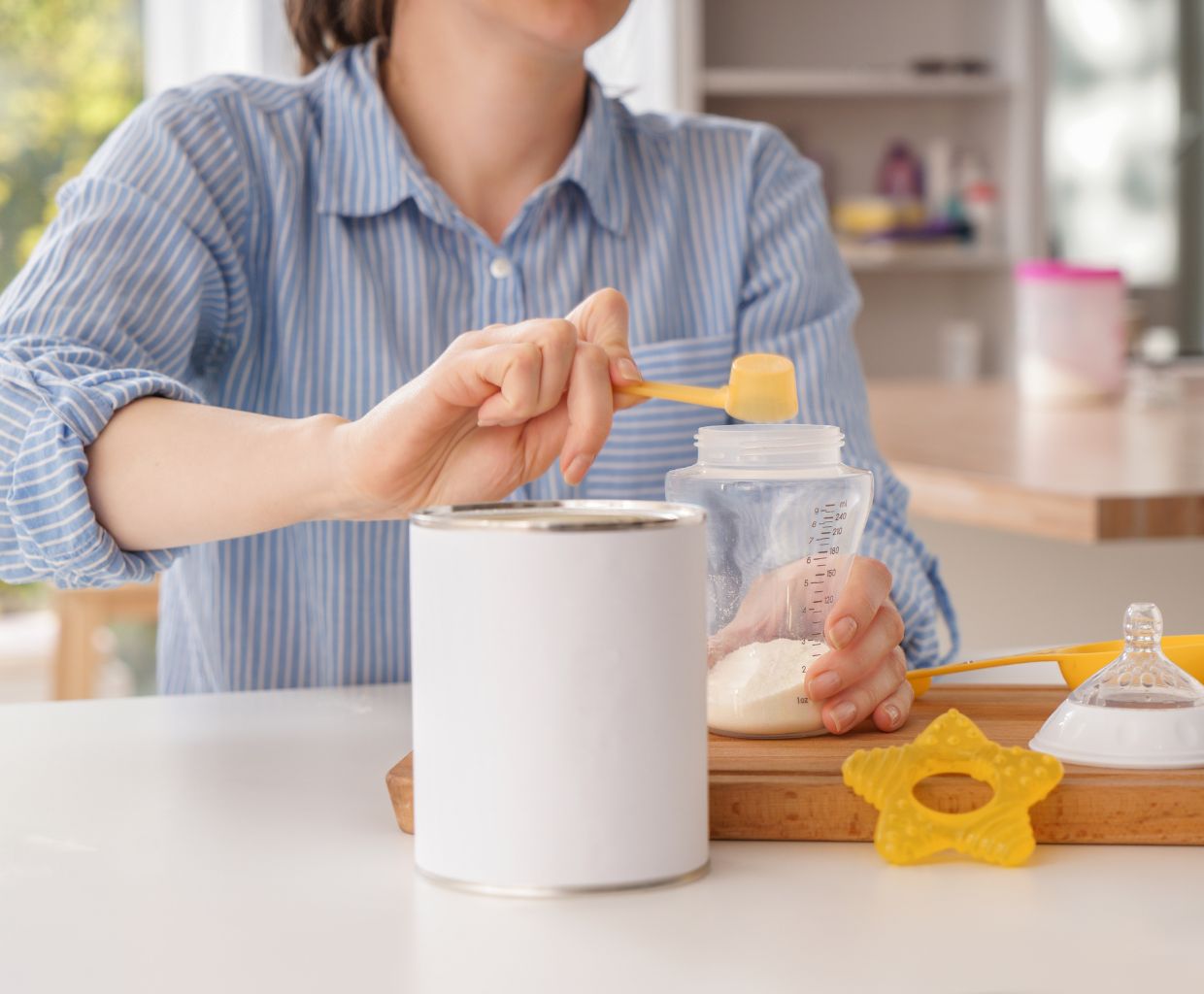
Lots of families combine breast milk and formula. Maybe you’re topping up while your supply builds, heading back to work, or simply need a break. Whatever the reason, combination feeding is a valid choice, and any amount of breast milk your baby gets counts.
A common question is whether you can put both in the same bottle. You can, but the order matters. Here’s how mixing breast milk and formula works safely, how long a mixed bottle lasts, and how to protect your milk supply along the way.
Can you mix breast milk and formula in the same bottle?
Yes. Combining prepared formula and breast milk in one bottle is generally fine for healthy, full-term babies. Some parents find it helps a baby get used to the taste of formula, or makes it easier to use up a small amount of pumped milk.
There is one firm rule, though: the formula must be made with water first, exactly as the label says, before any breast milk goes in.
Why you should never mix formula powder into breast milk
It can be tempting to use breast milk instead of water to make up formula. Please don’t. Formula is designed to be mixed with a specific amount of water. The CDC warns that using too little water can strain a baby’s kidneys and digestive system and lead to dehydration. Adding powder to breast milk has the same effect: it makes the feed far more concentrated than your baby’s body can handle.
The only exception is when your baby’s doctor or neonatal team tells you to fortify breast milk for a specific medical reason, such as with some premature babies. In that case, follow their exact instructions.
How to mix breast milk and formula: step by step
- Wash your hands and use a clean, sanitized bottle and workspace.
- Make the formula first. Measure the water, then add the amount of powder stated on the container. Shake to mix. Never add extra water or extra powder.
- Add the breast milk. Pour your expressed milk into the prepared formula. Swirl gently.
- Check the temperature if you warmed anything. Warm bottles under warm running water, never in the microwave, and test a few drops on your wrist.
- Feed right away and discard what’s left after the feed.
If you’re using liquid ready-to-feed formula, step 2 is already done for you: it comes mixed to the right strength, so follow the label and don’t add water.
How long is a mixed bottle good for?
Breast milk and formula have different storage rules, and once they’re in the same bottle, the stricter rules apply. For prepared formula, the CDC says:
| Situation | CDC guidance for prepared formula |
|---|---|
| At room temperature, before feeding | Use within 2 hours of preparing |
| Once your baby starts feeding | Use within 1 hour |
| Not used within 2 hours | Refrigerate right away and use within 24 hours |
| Leftovers after a feed | Throw away; don’t save for later |
By comparison, plain breast milk can sit out for up to 4 hours when fresh, and leftover breast milk can be used within 2 hours after a feed. Those longer times don’t carry over to a mixed bottle. Because a mixed bottle contains formula, follow the formula timing.
Want to check the breast milk side on its own? Our breast milk storage guide has the full chart, and the breast milk storage calculator gives you a use-by time.
Same bottle or separate bottles?
Mixing in one bottle isn’t required. Many parents prefer to:
- Offer breast milk (or the breast) first, then a separate bottle of formula if the baby is still hungry.
- Give a full bottle of breast milk at some feeds and formula at others.
Keeping them separate means that if your baby doesn’t finish, you lose formula rather than hard-won breast milk. Leftover breast milk can also be used for up to 2 hours after a feed, while leftover formula has to be thrown away.
To get a sense of how much your baby needs overall, try our breast milk intake calculator.
Combination feeding and your milk supply
Your body makes milk based on demand, so replacing breastfeeds or pumping sessions with formula usually means making less milk. The NHS notes that introducing formula will probably reduce your breast milk supply and suggests these steps:
- Go slowly. Replace one breastfeed a day with a bottle at first, and give your body several days to adjust before changing more.
- Keep breastfeeding or pumping regularly at the feeds you want to keep.
- Watch for overfull breasts. Cutting back gradually lowers the risk of engorgement and mastitis. If your breasts become hard and painful, see our guide to engorged breasts.
If you want to keep or rebuild your supply while supplementing, our guide on how to increase milk supply explains what helps.
Extra care for younger or vulnerable babies
Powdered formula isn’t sterile. The CDC notes it can contain germs such as Cronobacter, which rarely causes illness but can be serious in newborns. For babies under 2 months, born before 37 weeks, or with a weakened immune system, the CDC recommends extra precautions when preparing powdered formula, or using liquid ready-to-feed formula, which is made to be sterile. Ask your baby’s doctor which option is best.
When to call a doctor or lactation consultant
Talk to your baby’s doctor if your baby has fewer wet diapers than usual, seems very sleepy, vomits often, or isn’t gaining weight, or if you’re unsure how much formula to offer.
A lactation consultant (IBCLC) can help you plan combination feeding, protect your supply, or return to more breastfeeding if that’s your goal. Our breastfeeding support page lists where to find one.
Frequently asked questions
Can I add breast milk to a bottle of ready-to-feed formula?
Liquid ready-to-feed formula is already mixed to the right strength, so it doesn't need water. If you combine it with breast milk, follow the same timing as for prepared formula and discard leftovers after the feed.
Should I give breast milk or formula first?
Many parents offer breast milk first, then formula, so none of the expressed milk is wasted if the baby doesn't finish. Ask your baby's doctor or a lactation consultant what fits your situation.
Will combination feeding reduce my milk supply?
It can. The NHS notes that introducing formula will probably reduce your breast milk supply, and regular breastfeeding or pumping helps you keep it up.
Can I prepare a mixed bottle ahead of time?
Prepared formula that won't be used within 2 hours should go straight into the fridge and be used within 24 hours. Because breast milk is precious, many parents prefer to mix just before a feed so nothing goes to waste.
Sources
- CDC: Infant Formula Preparation and Storagehttps://www.cdc.gov/infant-toddler-nutrition/formula-feeding/preparation-and-storage.html
- CDC: Preventing Cronobacter Infectionhttps://www.cdc.gov/cronobacter/prevention/index.html
- CDC: Breast Milk Storage and Preparationhttps://www.cdc.gov/breastfeeding/breast-milk-preparation-and-storage/handling-breastmilk.html
- NHS: Introducing formula feedshttps://www.nhs.uk/best-start-in-life/baby/feeding-your-baby/mixed-feeding/introducing-formula-feeds/
- HealthyChildren.org (AAP): Storing and Preparing Expressed Breast Milkhttps://www.healthychildren.org/English/ages-stages/baby/breastfeeding/Pages/storing-and-preparing-expressed-breast-milk.aspx
This guide is general information, not medical advice. For your own situation, talk to your doctor, midwife, pharmacist or an IBCLC lactation consultant. Read our medical disclaimer and find breastfeeding support near you.
Related articles
How to Warm Breast Milk Safely
Safe ways to warm breast milk with warm water or a bottle warmer, why to skip the microwave, and how long warmed milk is good for.
How Long Can Breast Milk Sit Out?
Fresh breast milk can sit out up to 4 hours, thawed milk 1–2 hours and leftovers 2 hours. Here's how each rule works.
How to Turn Breast Milk Into Powder at Home: What You Should Know First
Can you turn breast milk into powder at home? An honest look at the safety concerns, freeze-drying services and safer ways to store milk.
How Long Does Breast Milk Last in the Fridge?
Fresh breast milk keeps up to 4 days in the fridge and thawed milk up to 24 hours. Here's how to store it so it stays safe.