Pacifiers for Breastfed Babies: When to Start and What to Look For
By Breastfeeding Mom Editorial TeamUpdated 5 min read
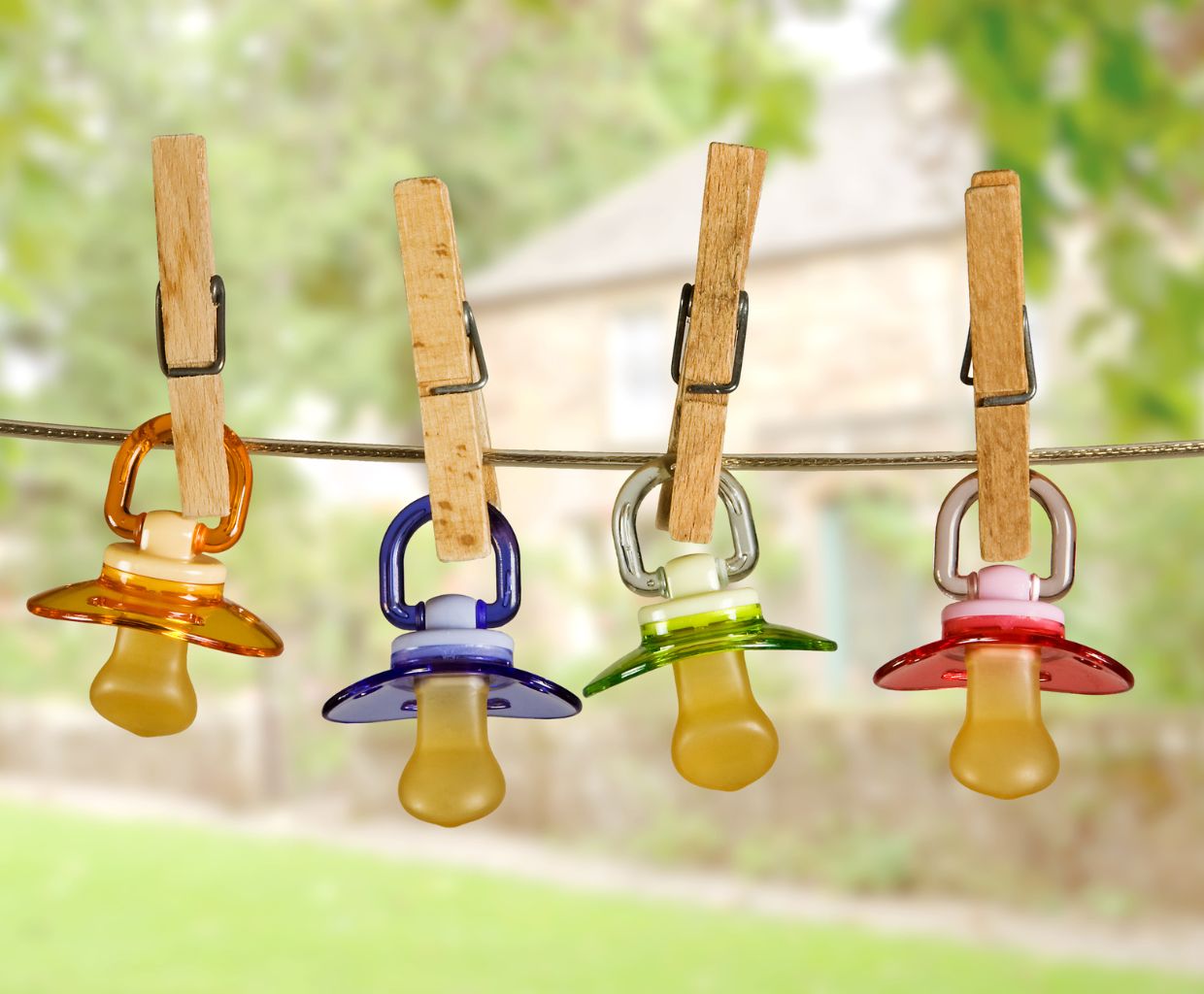
If you’re breastfeeding, you’ve probably heard two opposite messages about pacifiers: that they help protect against SIDS, and that they ruin breastfeeding. Both have some history, and the evidence is more reassuring than the warnings suggest, as long as timing and safety are right.
This guide covers when a breastfed baby can start a pacifier, what the research actually shows, and how to choose a safe one. It doesn’t rank brands or products. When people search for the “best” pacifier for a breastfed baby, the honest answer is a set of safety and fit criteria, not a single product.
What the AAP says about pacifiers and breastfed babies
The American Academy of Pediatrics’ safe sleep advice for parents says:
- Try a pacifier at nap time and bedtime. The AAP says pacifiers help reduce the risk of SIDS, even if the pacifier falls out after your baby is asleep.
- Wait until breastfeeding is established if you breastfeed. The AAP describes this as having a good milk supply, comfortable and consistent feeding, a good latch and appropriate weight gain. Formula-fed babies can start whenever parents like.
- Don’t put it back in if it falls out once your baby is asleep.
- Don’t force it. It’s OK if your baby doesn’t want a pacifier.
- Don’t hang it around your baby’s neck or attach it to their clothing while they’re sleeping.
There’s no fixed number of weeks for “established.” It depends on you and your baby. Checking that feeds are comfortable, your baby is latching well and weight gain is on track is a better guide than the calendar. Our guide on how to breastfeed explains what a good latch looks and feels like, and our baby poop color chart helps you check diaper counts in the early weeks.
How strong is the evidence?
Pacifiers and SIDS. The link between pacifier use during sleep and a lower SIDS risk comes from observational studies going back to the early 1990s. A 2017 Cochrane review looked for randomized trials and found none, so it could neither support nor refute pacifiers for SIDS prevention on trial evidence alone.
Pacifiers and breastfeeding. A 2016 Cochrane review pooled two trials with 1,302 healthy, full-term breastfed babies. Pacifier use, started from birth or after breastfeeding was established, did not significantly change the share of babies exclusively or partly breastfed at 3 or 4 months. The review noted that evidence on other outcomes, such as nipple pain, mastitis and dental effects, was lacking.
Nipple confusion. A 2015 review of 14 studies found very little evidence of nipple confusion linked to pacifiers. It found emerging evidence only for bottle use, and said it’s hard to tell whether artificial nipples cause breastfeeding problems or are simply more common when breastfeeding is already difficult.
The bottom line: for healthy, full-term babies, a pacifier offered after breastfeeding is going well is unlikely to harm breastfeeding. The research has limits, and it doesn’t cover premature babies or babies who are struggling to gain weight, where your care team’s advice comes first.
When to hold off on a pacifier
The Cochrane reviewers describe the original worry behind “no pacifiers”: that offering a pacifier instead of the breast to calm a baby could mean fewer feeds and, over time, less milk. That’s worth keeping in mind in the early weeks, when frequent feeds and stretches of cluster feeding are normal.
Based on the AAP’s description of established breastfeeding, it makes sense to wait, or use the pacifier less, if:
- Breastfeeding is still painful or your baby struggles to latch
- Your baby isn’t back to birth weight or isn’t gaining as expected
- Your milk supply is low or still building
- You notice you’re using the pacifier to stretch time between feeds
Hunger cues to watch for, according to the CDC, include hands to mouth, turning toward the breast, lip smacking or licking, and clenched hands. When you see them, offer the breast first. Our guide to how often to breastfeed covers normal feeding frequency.
What to look for in a pacifier
Pacifiers sold in the US must meet federal requirements set by the Consumer Product Safety Commission (16 CFR Part 1511). These include a shield that can’t be pulled through a test opening, at least two ventilation holes in the shield, tests that check the nipple and ring don’t come off or break into small parts, even after repeated boiling, and no cord, ribbon or string attached at sale. The package must carry a warning not to tie the pacifier around a child’s neck.
The AAP’s pacifier safety advice adds:
| Feature | What to check |
|---|---|
| One piece | Choose pacifiers that can’t come apart. The AAP says those molded from one solid piece are particularly safe. |
| Shield size | At least 1.5 inches (3.8 cm) across, so it can’t fit into your baby’s mouth |
| Shield material | Firm plastic with ventilation holes |
| Age range | Follow the age range on the package |
| Condition | Check regularly and replace if the nipple is discolored or torn |
| Homemade versions | Never make a pacifier from a bottle top and nipple, even taped together |
Shape and material. Pacifiers come with round or flattened (“orthodontic”) nipples, in silicone or latex. None of the sources above show that one shape is better for breastfed babies. Many families try two or three and go with whichever their baby accepts.
Using a pacifier safely
- Offer it after a feed, not in place of one, when your baby is calm but still wants to suck.
- Use it for sleep, at naps and bedtime, as the AAP suggests.
- Never tie it around your baby’s neck or hand or to the crib. If you use a clip when your baby is awake, take it off for sleep.
- Never coat it in honey or anything sweet. The CDC says not to give honey, including honey pacifiers, to babies under 1 year old, because honey can carry the bacteria that cause infant botulism.
- Keep it clean and follow the manufacturer’s cleaning instructions. Replace any pacifier that is torn or discolored, as the AAP advises.
For other safe sleep basics while breastfeeding, including what to do if you feed lying down, see our guide to side-lying breastfeeding.
When to talk to your pediatrician or a lactation consultant
Talk to your baby’s doctor or a lactation consultant (IBCLC) if:
- Your baby seems to want the pacifier constantly and feeds less often
- Your baby isn’t gaining weight well or has fewer wet diapers
- Breastfeeding gets harder, or your baby fusses at the breast, after a pacifier is introduced
- You’re unsure whether breastfeeding is established enough to start one
Our breastfeeding support page lists where to find help. For more on the early weeks, browse our breastfeeding basics hub.
Shop on Amazon
Shop what this guide covers
Paid links: as an Amazon Associate we earn from qualifying purchases, at no extra cost to you. Links never change what we recommend. Disclosure
Frequently asked questions
Can a pacifier hurt my milk supply?
In a Cochrane review of trials in healthy, full-term breastfed babies, pacifier use did not change how many babies were exclusively or partly breastfed at 3 and 4 months. The concern is mainly practical: if a pacifier regularly delays feeds when your baby is hungry, your breasts get less stimulation. Offer the breast first when you see hunger cues.
Should I put the pacifier back in when it falls out during sleep?
No. The AAP says you don't have to put it back in if it falls out after your baby is asleep. The protective link with SIDS still applies.
What if my breastfed baby won't take a pacifier?
That's fine. The AAP says it's OK if your baby doesn't want a pacifier; some babies simply don't like them. You can try again later, but there's no need to force it.
Can I use a pacifier clip during the day?
Federal rules don't allow pacifiers to be sold with a cord or string attached, and the AAP says never to tie a pacifier around your baby's neck or hand, or attach it to clothing while they sleep. Never use a clip or cord when your baby is sleeping or unsupervised.
Is an orthodontic pacifier better for breastfed babies?
We found no good evidence that any pacifier shape is better for breastfeeding. The AAP's advice focuses on safety features, such as a one-piece design and a large, ventilated shield, rather than nipple shape, and whether your baby accepts it matters more than the label.
Sources
- HealthyChildren.org (AAP): How to Keep Your Sleeping Baby Safe: AAP Policy Explainedhttps://www.healthychildren.org/English/ages-stages/baby/sleep/Pages/A-Parents-Guide-to-Safe-Sleep.aspx
- HealthyChildren.org (AAP): Pacifier Safetyhttps://www.healthychildren.org/English/safety-prevention/at-home/Pages/Pacifier-Safety.aspx
- eCFR: 16 CFR Part 1511, Requirements for Pacifiers (CPSC)https://www.ecfr.gov/current/title-16/chapter-II/subchapter-C/part-1511
- Cochrane: Effect of restricted pacifier use in breastfeeding term infants for increasing duration of breastfeeding (2016)https://europepmc.org/article/MED/27572944
- Cochrane: Infant pacifiers for reduction in risk of sudden infant death syndrome (2017)https://europepmc.org/article/MED/28378502
- Zimmerman E, Thompson K. Clarifying nipple confusion. J Perinatol, 2015https://europepmc.org/article/MED/26181720
- CDC: Preventing Botulismhttps://www.cdc.gov/botulism/prevention/index.html
- CDC: Signs Your Child Is Hungry or Fullhttps://www.cdc.gov/infant-toddler-nutrition/mealtime/signs-your-child-is-hungry-or-full.html
This guide is general information, not medical advice. For your own situation, talk to your doctor, midwife, pharmacist or an IBCLC lactation consultant. Read our medical disclaimer and find breastfeeding support near you.
Related articles
Best Bottles for Breastfed Babies: How to Choose One That Works
How to choose a bottle for a breastfed baby: nipple flow and shape, glass vs plastic vs steel, BPA, cleaning, and what to try when your baby refuses.

How Often to Breastfeed a Newborn (and How That Changes by Age)
Most newborns breastfeed 8 to 12 times a day. Here's what's normal by age, plus cluster feeding, growth spurts and when to wake a sleepy baby.
How to Breastfeed: Step-by-Step Latch and the Best Positions
A step-by-step guide to getting a deep, comfortable latch, five breastfeeding positions to try, and the beginner mistakes that are easy to fix.

Cluster Feeding: Why It Happens and How to Cope
What cluster feeding is, why babies bunch feeds together in the evening and during growth spurts, how to cope, and when it may point to a problem.