Sleep Sacks: How Wearable Blankets Keep Babies Warm Without Loose Bedding
By Breastfeeding Mom Editorial TeamUpdated 6 min read
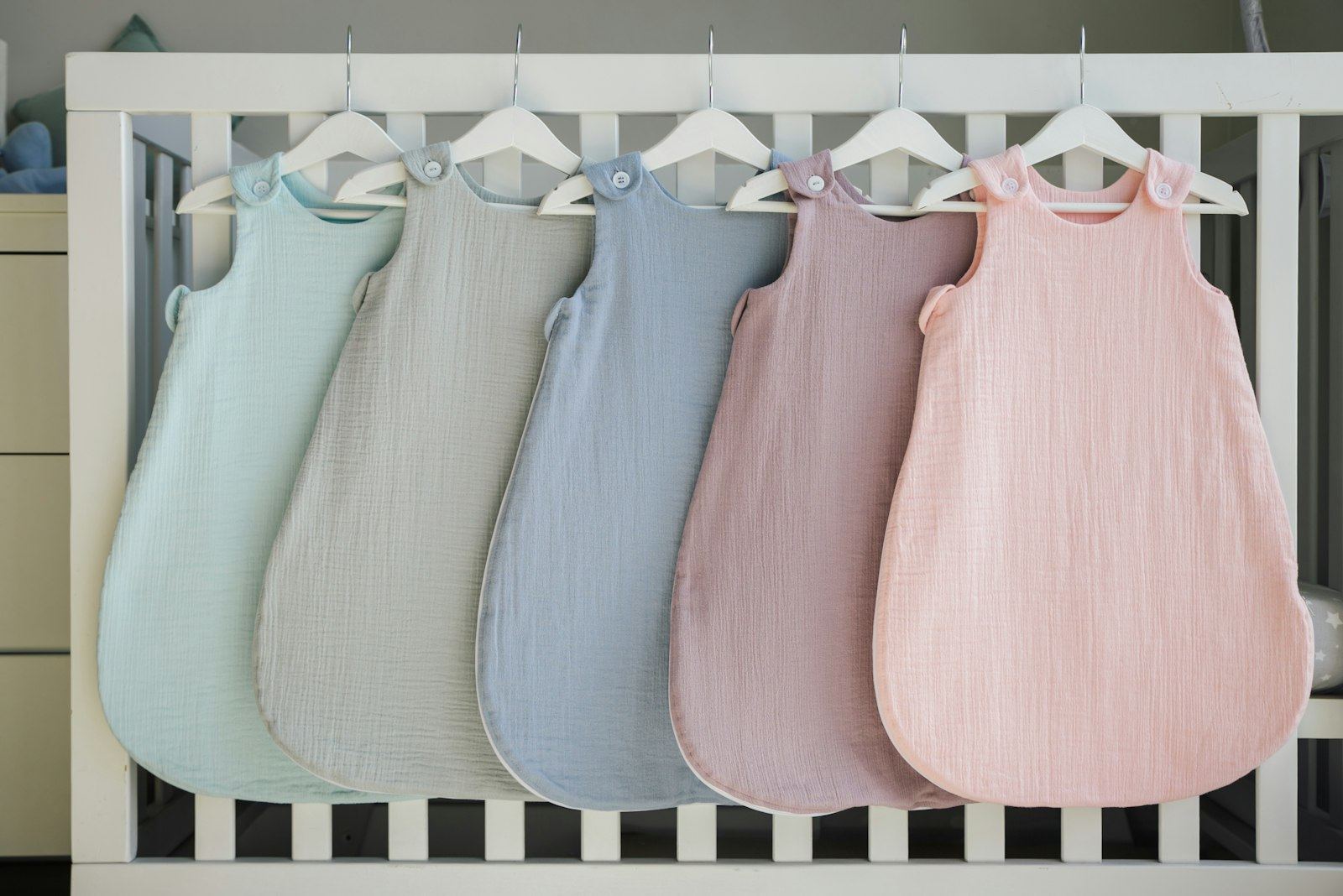
Babies can’t push a blanket off their face, which is why safe sleep experts want blankets out of the crib altogether. A sleep sack, also called a wearable blanket, solves the “but won’t my baby be cold?” problem: it’s a soft, sleeveless bag that zips over your baby’s pajamas and can’t end up over their head.
This guide explains what the American Academy of Pediatrics (AAP), the Consumer Product Safety Commission (CPSC), the NIH’s Safe to Sleep campaign and the International Hip Dysplasia Institute (IHDI) say about sleep sacks: when to use one, how to keep your baby the right temperature, and what to avoid. We don’t name brands or rank products.
Why use a sleep sack instead of a blanket
The AAP says to keep soft objects and loose bedding out of your baby’s sleep area, because they can increase the risk of entrapment, suffocation or strangulation. That includes blankets, quilts, comforters, pillows, non-fitted sheets, toys and bumper pads. The CPSC sums it up as “Bare is Best”: nothing but a fitted sheet in a crib, bassinet or play yard.
If you’re worried about your baby getting cold, the AAP says you can dress them in layers of clothing or use a wearable blanket. Its swaddling guidance adds that infant sleep clothing, such as layers or a wearable blanket or sleep sack, is preferred over blankets and other coverings to keep a baby warm. NICHD agrees: a wearable blanket or an extra layer of clothing keeps your baby warm without adding items to the sleep area.
A sleep sack is optional. Layered clothing alone works too. Either way, the rest of the safe sleep rules still apply: on the back, on a firm, flat surface, in a crib, bassinet or play yard that meets CPSC standards.
Getting the warmth right
Overheating is a risk in its own right. The AAP says overheating can increase the risk of SIDS, and that your baby only needs one more layer than you would wear in the same environment to be comfortable.
- Count the sleep sack as a layer. Over a onesie or light pajamas, a sleep sack is usually the “one extra layer.”
- Check your baby’s chest and skin. The AAP lists sweating, a hot chest and flushed skin as signs of overheating; its swaddling page adds damp hair, flushed cheeks, heat rash and rapid breathing.
- No hats indoors. The AAP says not to put a hat on your baby indoors once you’re home from the hospital. NICHD says to keep your baby’s head and face uncovered during sleep.
- About TOG ratings. Many sleep sacks carry a TOG number, a manufacturer’s measure of how warm the fabric is. The AAP and NICHD don’t give TOG recommendations. Use the maker’s chart as a rough guide, but let the “one layer more than you” rule and your baby’s skin be the final check.
Sizing and fit
- Follow the maker’s size chart for your baby’s weight and length rather than buying big to grow into.
- Snug at the neck and armholes. A sack that is too large can ride up. NICHD’s rule is to keep your baby’s head and face uncovered, so the neck opening should never be able to slip over your baby’s chin or face.
- Roomy below the waist. IHDI says commercial products for swaddling should have a loose pouch or sack for the legs and feet that allows plenty of hip movement. It warns that some products can confine the legs if they are tightened around the thighs.
- Simple design. Skip sacks with attached toys, loose ties or anything that adds bulk inside the sleep space.
Hip-healthy room for the legs
IHDI explains that in the womb a baby’s legs are bent up and across each other, and that the legs should be able to bend up and out at the hips. It says improper swaddling may lead to hip dysplasia, that the legs should not be tightly wrapped straight down and pressed together, and that infant hips should be positioned in slight flexion and abduction (bent and apart). A sleep sack that is wide at the bottom lets your baby’s legs stay in that natural, frog-like position.
Arms in or arms out?
Some sacks are plain wearable blankets with armholes. Others have wings or a snug band that wraps the arms and chest like a swaddle. The AAP draws a clear line between them:
- Swaddle-style sacks that compress the arms, chest and body should stop once your baby shows signs of starting to roll over, just like blanket swaddling.
- Sleep sacks that don’t swaddle and let your baby move freely can be used as long as you want.
The AAP says rolling usually happens around 3 to 4 months but can happen earlier, and its swaddling guidance notes some babies start working on rolling as early as 2 months. It also says there is no evidence on SIDS risk related to the arms being swaddled in or out. When your baby is ready to stop swaddling, an arms-free sleep sack is an easy next step. Our guide on how to swaddle a baby covers the signs to watch for.
Never use a weighted sleep sack
Weighted sleep sacks and swaddles are marketed to help babies sleep longer. The safe sleep authorities all say not to use them:
- The AAP says not to use weighted blankets, sleepers, swaddles or other weighted objects on or near your baby, and that weighted swaddles and blankets can place too much pressure on a baby’s chest and lungs.
- The CPSC says not to use weighted blankets or weighted swaddles.
- NICHD lists weighted items (weighted blankets, weighted swaddles, weighted objects) among the things to keep out of your baby’s sleep area.
Be wary of any sleep product that claims to reduce the risk of SIDS. The AAP says there’s no evidence for these claims.
Sleep sacks and night feeds
A sleep sack can stay on for night feeds, which means less undressing and a quicker return to sleep. A two-way zipper that opens from the bottom makes nighttime diaper changes easier without taking your baby’s arms out. If your baby warms up against your body during a long feed, check for signs of overheating before you lay them back down.
After feeding, place your baby back in their own sleep space, on their back. The AAP recommends room-sharing without bed-sharing for at least the first 6 months, and says room-sharing makes it easier to feed, comfort and monitor your baby at night. Breastfeeding helps too: the AAP says human milk reduces the risk of SIDS. If your baby often dozes off mid-feed, see our guide on what to do when your baby falls asleep while breastfeeding.
Washing and caring for a sleep sack
Follow the care label and wash before first use. Keep two or three on hand so there’s always a clean one after a leaky diaper or spit-up. Check zippers, seams and snaps regularly, and retire a sack with holes or loose threads.
When to call your pediatrician
The AAP says not to hesitate to talk with your pediatrician if you have any questions or concerns about the safety of your baby’s sleep environment, and that includes questions about swaddling or what to dress them in. Call your pediatrician if your baby seems unwell, and call 911 if your baby is struggling to breathe or can’t be woken. For the rest of a simple first-month list, see our newborn essentials, and for more on the early weeks visit our breastfeeding basics hub.
Shop on Amazon
Shop what this guide covers
Paid links: as an Amazon Associate we earn from qualifying purchases, at no extra cost to you. Links never change what we recommend. Disclosure
Frequently asked questions
Can my baby wear a sleep sack for naps too?
Yes. The AAP recommends the same safe sleep practices for naps and nighttime: on the back, on a firm, flat surface, with no loose bedding. A sleep sack works the same way at nap time.
Should my baby wear a hat with the sleep sack?
Not indoors. The AAP says not to put a hat on your baby indoors once you're home from the hospital, and NICHD says to keep your baby's head and face uncovered during sleep.
Can I put a blanket over the sleep sack on cold nights?
No. A sleep sack replaces the blanket. If the room is cold, add a layer of clothing underneath instead, keeping to about one layer more than you're wearing, per the AAP.
Is a sleep sack the same as a swaddle?
No. A swaddle or swaddle-style sack wraps the arms and chest snugly, and the AAP says it should stop once your baby shows signs of trying to roll. A sleep sack that doesn't swaddle leaves the arms free and, the AAP says, can be used as long as you want.
Sources
- HealthyChildren.org (AAP): How to Keep Your Sleeping Baby Safe: AAP Policy Explainedhttps://www.healthychildren.org/English/ages-stages/baby/sleep/Pages/A-Parents-Guide-to-Safe-Sleep.aspx
- HealthyChildren.org (AAP): Swaddling: Is It Safe for Your Baby?https://www.healthychildren.org/English/ages-stages/baby/diapers-clothing/Pages/Swaddling-Is-it-Safe.aspx
- HealthyChildren.org (AAP): Baby Products to Avoid: Unsafe Registry Picks & Secondhand Gearhttps://www.healthychildren.org/English/ages-stages/baby/sleep/Pages/Inclined-Sleepers-and-Other-Baby-Registry-Items-to-Avoid.aspx
- CPSC: Safe Sleep – Cribs and Infant Productshttps://www.cpsc.gov/SafeSleep
- NICHD Safe to Sleep: Ways To Reduce Baby's Riskhttps://safetosleep.nichd.nih.gov/reduce-risk/reduce
- International Hip Dysplasia Institute: Hip-Healthy Swaddlinghttps://hipdysplasia.org/infant-child/hip-healthy-swaddling/
This guide is general information, not medical advice. For your own situation, talk to your doctor, midwife, pharmacist or an IBCLC lactation consultant. Read our medical disclaimer and find breastfeeding support near you.
Related articles

How to Swaddle a Baby Safely: Step by Step, Hip-Healthy, and When to Stop
Step-by-step swaddling from AAP guidance, hip-healthy leg room, back to sleep only, when to stop, why to skip weighted swaddles, and swaddling around feeds.
Bassinet Guide: Safe Sleep Rules, Bedside Sleepers and What to Look For
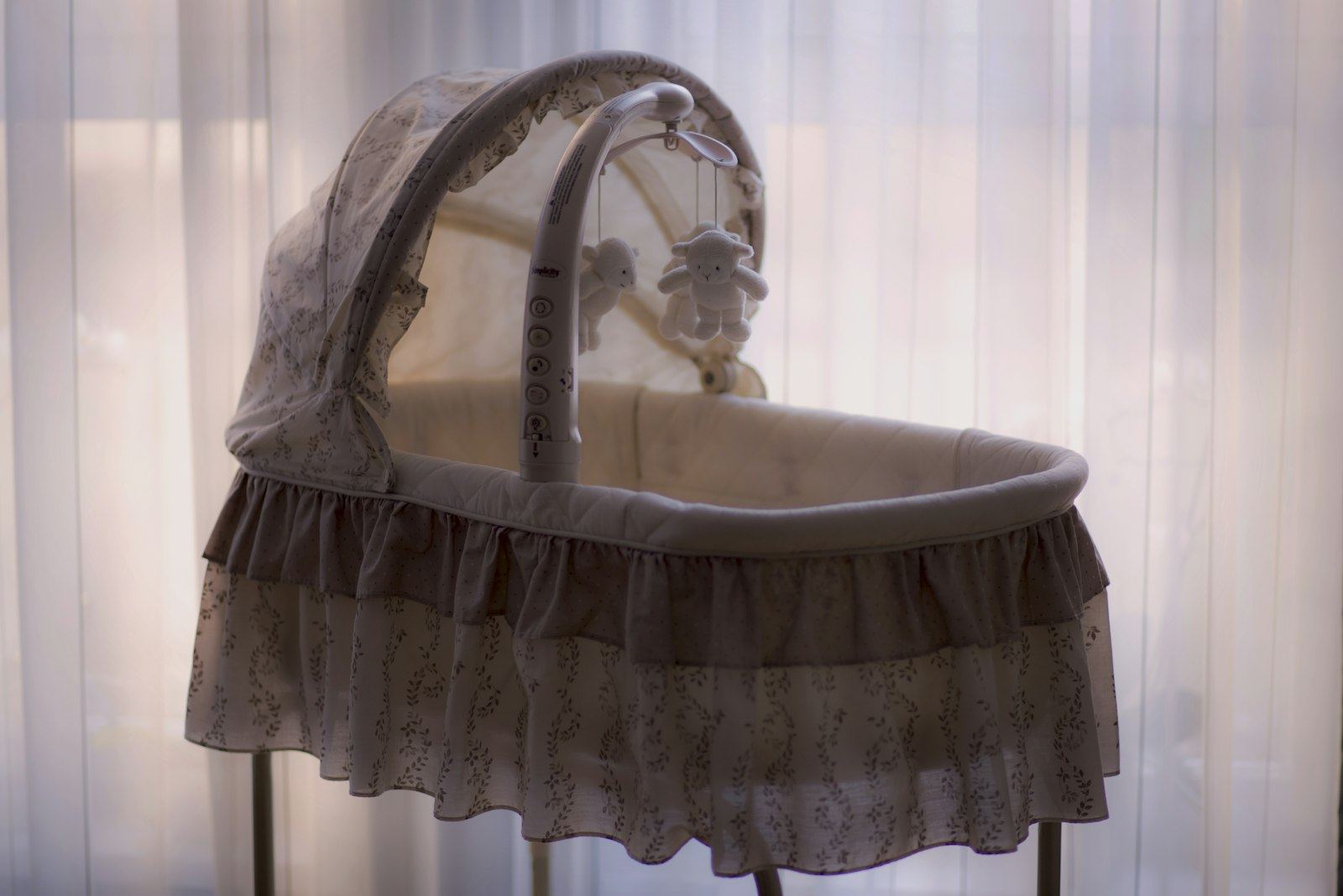
How to choose and use a bassinet or bedside sleeper safely: federal standards, a firm flat surface, fitted sheet only, and room-sharing for night feeds.
Newborn Essentials: A Minimal, Evidence-Based List for the First Month
The newborn essentials you actually need for the first month: a safe sleep space, car seat, diapers, clothes, feeding basics, and what not to buy.

Baby Carrier Guide: Types, Safe Newborn Fit and Breastfeeding
How to choose a baby carrier, wrap or ring sling, keep your newborn's airway clear and hips healthy, and what CPSC says about nursing in a sling.