Bassinet Guide: Safe Sleep Rules, Bedside Sleepers and What to Look For
By Breastfeeding Mom Editorial TeamUpdated 6 min read
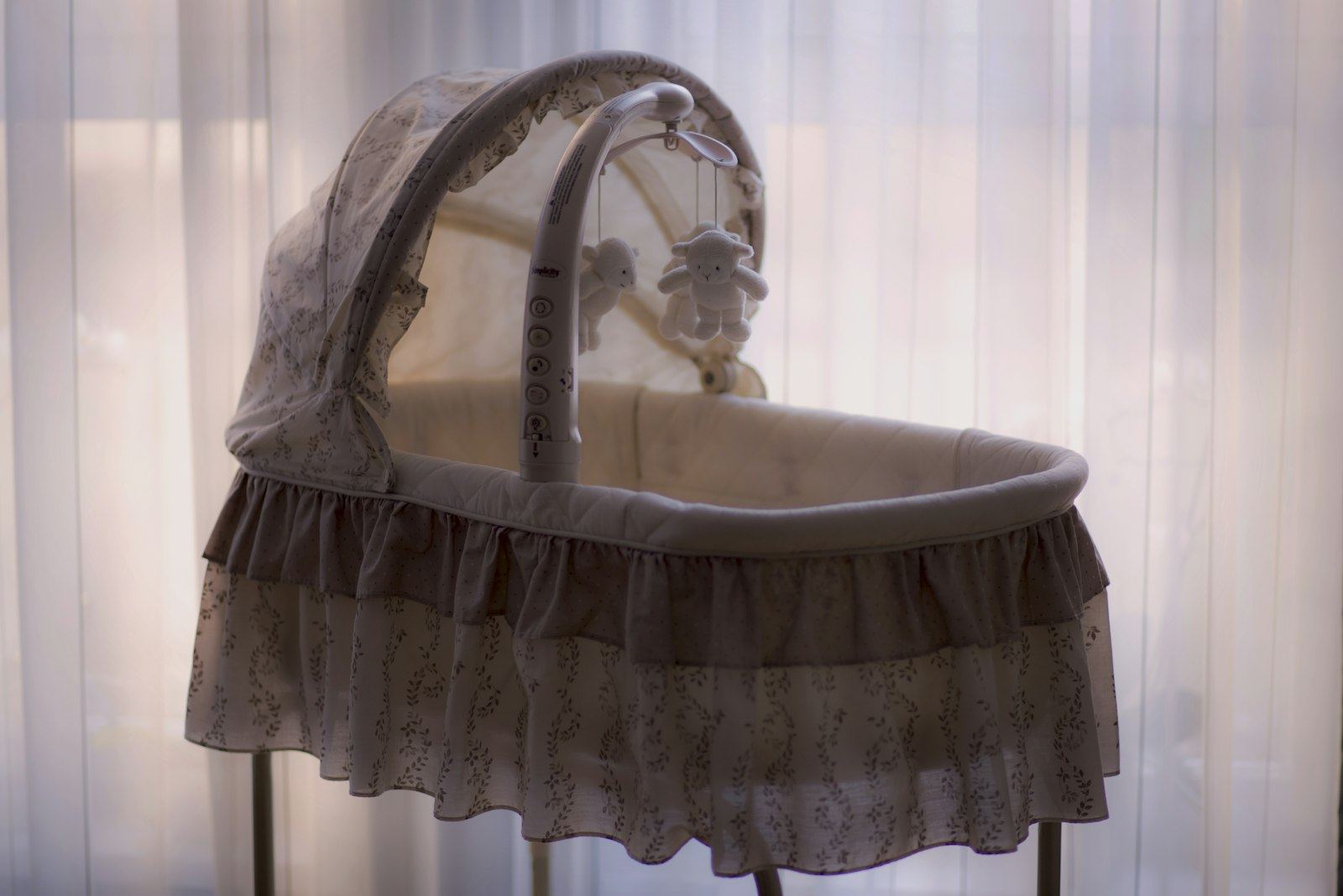
In the first months, your baby wakes often to feed, and you’ll want them close. A bassinet is a small bed that fits beside your own, so you can reach your baby without walking down the hall. It is one of the safe sleep spaces the American Academy of Pediatrics (AAP) recommends, along with a crib, portable crib or play yard.
This guide covers what the AAP, the Consumer Product Safety Commission (CPSC) and the NIH’s Safe to Sleep campaign say about bassinets and bedside sleepers, what to look for when you buy one, and how to use it safely. We don’t name brands or rank products: what matters is that it meets the federal standard and is set up correctly.
Why a bassinet helps with night feeds
The AAP recommends that you share a room with your baby, but never share a bed, for at least the first 6 months. That means keeping your baby’s sleep area in the room where you sleep, close to your bed but not in it. The AAP says room-sharing can decrease the risk of SIDS by as much as 50%, is much safer than bed-sharing, and makes it easier to feed, comfort and monitor your baby during the night.
Safe to Sleep (NICHD) makes the same point: keeping your baby’s sleep space close to your bed makes it easy to check on, feed and comfort them without getting all the way out of bed. A bassinet’s small footprint is what makes this practical in most bedrooms.
Breastfeeding itself is protective. The AAP says human milk reduces the risk of SIDS, and the longer you give your baby breast milk, the more protection it gives.
What the federal rules say
Bassinets are regulated products in the U.S.:
- Bassinets and cradles (16 CFR part 1218). The CPSC defines a bassinet or cradle as a small bed designed mainly to give infants a place to sleep, on legs, a stand, wheels or a rocking or swinging base. In its rest (non-rocking) position, the head-to-toe sleep surface is meant to be 10 degrees or less from horizontal. Bassinets made or imported on or after February 21, 2026 must meet the latest version of the standard (ASTM F2194-25).
- Bedside sleepers (16 CFR part 1222). A bedside sleeper is a rigid frame that attaches to an adult bed and gives the baby their own enclosed sleep space. The CPSC says bedside sleepers must also meet the bassinet standard.
- Other infant sleep products (16 CFR part 1236, June 2021). Any product marketed or intended for an infant up to 5 months to sleep in, that isn’t already covered by the crib, bassinet, play yard or bedside sleeper standards, must have a sleep surface of 10 degrees or less and meet the bassinet standard.
- The Safe Sleep for Babies Act. The CPSC says this law, in effect since November 12, 2022, bans the manufacture, sale, distribution and import of inclined sleepers for infants (a sleep surface greater than 10 degrees) and crib bumpers.
The AAP says alternative sleep surfaces, including in-bed sleepers, baby nests and pods, compact bassinets, travel bassinets and baby tents, are only an option if they comply with the June 2021 CPSC rule. If a product doesn’t meet federal safety standards, don’t use it.
Bassinet vs. bedside sleeper vs. in-bed sleeper
| Type | Where it goes | What to know |
|---|---|---|
| Freestanding bassinet | Next to your bed | Covered by the CPSC bassinet standard |
| Bedside sleeper | Attached to the side of your bed, baby in their own enclosed space | Covered by its own CPSC standard and must meet the bassinet standard; the CPSC lists bedside sleepers among products intended for sleep |
| In-bed sleeper | On the adult mattress, between parents | The AAP says use only if it meets the 2021 CPSC rule; its 2022 policy announcement grouped in-bed sleepers with “potentially dangerous” sleep products |
A bedside sleeper keeps your baby on a separate surface at the level of your bed, which some parents find handy for night feeds. An in-bed sleeper puts your baby on your bed, which is closer to the bed-sharing the AAP advises against under any circumstances. The safest choice is a separate sleep space next to the bed.
What to look for when you buy
- A label or certificate showing it meets federal standards. The AAP says to use a bassinet that meets CPSC safety standards.
- A firm, flat pad made for that bassinet. The AAP says a firm surface shouldn’t indent when your baby lies on it, and that any surface inclined more than 10 degrees isn’t safe for sleep.
- A pad that fits tightly, with no gaps around the edges. The AAP warns that mattresses sold separately from bassinets and play yards are usually not tight enough and can suffocate or trap a baby.
- Sturdy construction and a stable base. The AAP warns that many mini-bassinets and baskets don’t meet infant sleep standards, that their soft sides can make babies tip and fall out, and that lightweight bassinets are especially dangerous on counters, tables or other high surfaces.
- Clear instructions and weight limits. Every bassinet lists its own limits. Follow them, and move your baby to a crib or play yard once they reach them.
- No recalls. Check the CPSC website, especially for a used bassinet.
- No SIDS claims. The AAP says there’s no evidence that products claiming to reduce the risk of SIDS do so.
How to set it up and use it safely
- Back to sleep, every time. The AAP says to place your baby on their back for all naps and at night. NICHD says the side position isn’t safe either, not even for a nap.
- Bare is best. The CPSC says nothing but a fitted sheet in a crib, bassinet or play yard. The AAP lists pillows, quilts, comforters, mattress toppers, non-fitted sheets, blankets, toys and bumper pads as items to keep out.
- Keep it close, but separate. Put the bassinet next to your bed, not in it.
- Keep your baby warm without blankets. The AAP suggests layers of clothing or a wearable blanket, with only one layer more than you’re wearing. See our sleep sack guide.
- No weighted products. The AAP says not to use weighted blankets, sleepers, swaddles or other weighted objects on or near your baby, and the CPSC says not to use weighted blankets or weighted swaddles.
- If you swaddle, stop at signs of rolling. The AAP says to stop swaddling when your baby looks like they’re trying to roll over. Our guide on how to swaddle a baby covers this.
- Move sleeping babies to the bassinet. If your baby falls asleep in a car seat, stroller, swing, carrier or sling, the AAP says to move them to a firm sleep surface on their back as soon as possible.
When you feed your baby in bed
The AAP says that if you bring your baby into your bed to feed or comfort them, place them back in their own sleep space before you go to sleep. If there’s any chance you might fall asleep, remove pillows, blankets, sheets and other items that could cover your baby’s face, head or neck, and if you do fall asleep, move your baby back as soon as you wake. Avoid feeding on a couch or armchair when you’re drowsy: the AAP says the risk of sleep-related infant death is up to 67 times higher when infants sleep with someone on a couch, soft armchair or cushion.
Our guides to side-lying breastfeeding and what to do when your baby falls asleep at the breast walk through night feeds step by step. For the rest of your first-month list, see newborn essentials.
When to call your pediatrician
Talk with your pediatrician if you have any questions about your baby’s sleep space, if your baby was born early or has a medical condition, or if a product’s safety or recall status is unclear. The AAP notes that frequent night waking is normal and healthy in young babies, but ask your pediatrician if you’re worried about how your baby is sleeping or feeding.
For more on feeding in the early weeks, visit our breastfeeding basics hub.
Shop on Amazon
Shop what this guide covers
Paid links: as an Amazon Associate we earn from qualifying purchases, at no extra cost to you. Links never change what we recommend. Disclosure
Frequently asked questions
Can my baby nap in the bassinet during the day?
Yes. The AAP recommends the same rules for naps and nighttime: on the back, on a firm, flat surface, with nothing in the sleep space but a fitted sheet.
Can I add a softer mattress pad to make the bassinet comfier?
No. The AAP warns that mattresses sold separately from cribs, bassinets and play yards are usually not tight enough and the softness can suffocate or trap a baby. It also lists mattress toppers among the soft items to keep out of the sleep area. Use only the pad designed for your bassinet.
Is it OK to use a secondhand bassinet?
Check it carefully first. The AAP says to look up recalls on the CPSC website, especially for products that aren't new, and not to use a crib that has no instructions, is missing hardware or is broken. Apply the same caution to a bassinet.
What if my baby falls asleep in a swing or car seat?
Move them to their bassinet, on their back, as soon as you can. The AAP says swings, rockers and bouncers are safe for play but not for sleep, and that infant car seats are not made for sleep outside the car. The CPSC says inclined products with an angle greater than 10 degrees, such as rockers, gliders, soothers and swings, should never be used for infant sleep.
Sources
- HealthyChildren.org (AAP): How to Keep Your Sleeping Baby Safe: AAP Policy Explainedhttps://www.healthychildren.org/English/ages-stages/baby/sleep/Pages/A-Parents-Guide-to-Safe-Sleep.aspx
- AAP: American Academy of Pediatrics Updates Safe Sleep Recommendations: Back is Best (2022)https://www.aap.org/en/news-room/news-releases/aap/2022/american-academy-of-pediatrics-updates-safe-sleep-recommendations-back-is-best/
- HealthyChildren.org (AAP): Baby Products to Avoid: Unsafe Registry Picks & Secondhand Gearhttps://www.healthychildren.org/English/ages-stages/baby/sleep/Pages/Inclined-Sleepers-and-Other-Baby-Registry-Items-to-Avoid.aspx
- CPSC: Safe Sleep – Cribs and Infant Productshttps://www.cpsc.gov/SafeSleep
- CPSC: Bassinets and Cradles Business Guidance (16 CFR part 1218)https://www.cpsc.gov/Business--Manufacturing/Business-Education/Business-Guidance/Bassinets-and-Cradles
- CPSC: Bedside Sleepers Business Guidance (16 CFR part 1222)https://www.cpsc.gov/Business--Manufacturing/Business-Education/Business-Guidance/Bedside-Sleepers
- eCFR: 16 CFR Part 1236, Safety Standard for Infant Sleep Productshttps://www.ecfr.gov/current/title-16/chapter-II/subchapter-B/part-1236
- NICHD Safe to Sleep: Ways To Reduce Baby's Riskhttps://safetosleep.nichd.nih.gov/reduce-risk/reduce
This guide is general information, not medical advice. For your own situation, talk to your doctor, midwife, pharmacist or an IBCLC lactation consultant. Read our medical disclaimer and find breastfeeding support near you.
Related articles
Newborn Essentials: A Minimal, Evidence-Based List for the First Month
The newborn essentials you actually need for the first month: a safe sleep space, car seat, diapers, clothes, feeding basics, and what not to buy.
Sleep Sacks: How Wearable Blankets Keep Babies Warm Without Loose Bedding
What a sleep sack is, why the AAP prefers wearable blankets to loose blankets, how to size it, avoid overheating, keep hips free, and skip weighted ones.

How to Swaddle a Baby Safely: Step by Step, Hip-Healthy, and When to Stop
Step-by-step swaddling from AAP guidance, hip-healthy leg room, back to sleep only, when to stop, why to skip weighted swaddles, and swaddling around feeds.
Breastfeeding Pillow Guide: How to Choose and Use One Safely
How to choose a breastfeeding pillow, the main shapes and features, how to use one for a good latch, and the CPSC and AAP rules for safe use.