Breastfeeding Pillow Guide: How to Choose and Use One Safely
By Breastfeeding Mom Editorial TeamUpdated 5 min read
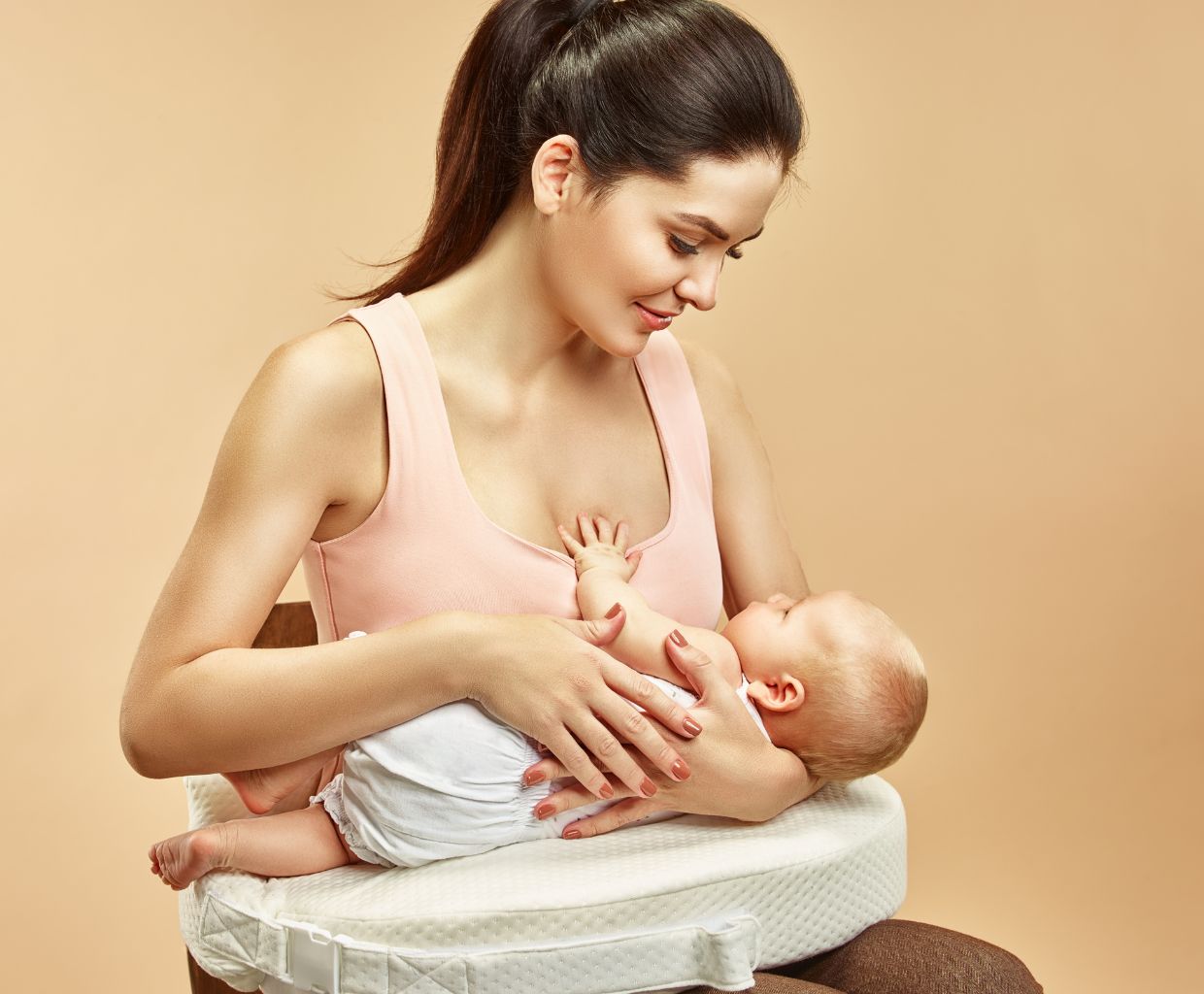
A breastfeeding pillow (or nursing pillow) is a firm cushion that wraps around your waist or sits on your lap to raise your baby to breast height. It can save your arms, shoulders and back, especially in the early weeks, after a C-section, or when you’re feeding twins.
It’s also a product with an important safety rule. Nursing pillows have been linked to infant deaths when babies were left to sleep or lounge on them. This guide covers how to choose one, how to use it for a comfortable latch, and the CPSC and AAP safety rules every parent should know. We don’t rank brands; we explain what to look for.
Do you need a breastfeeding pillow?
The AAP calls nursing pillows optional. Some parents love them, others never use one. They tend to help most when:
- You’re learning to latch and want both hands free to guide your baby.
- You’re recovering from a C-section and want to keep weight off your incision. See our guide to breastfeeding after a C-section.
- You’re feeding two babies at once. Our breastfeeding twins guide covers double positions.
- You have back, neck or wrist pain from holding your baby during long feeds.
Ordinary bed pillows, a rolled towel or a footstool under your feet can do a similar job.
Types of breastfeeding pillows
| Type | How it works | Pros | Cons |
|---|---|---|---|
| C- or U-shaped | Curves around your waist on your lap | Versatile; works for cradle and football holds | Can slip or leave a gap at your back |
| Wraparound with waist strap | Buckles around you like a belt | Stays in place; flat, firm top | Needs to match your waist size; bulkier |
| Flat, firm wedge | A firm, mostly flat surface on your lap | Good support, less sinking | Less flexible for some positions |
| Twin pillow | Extra-wide, firm platform | Supports two babies at once | Large and only useful for twins |
Note that the CPSC rule bans restraints for the baby on nursing pillows. A strap or belt that goes around you to hold the pillow in place is allowed.
What to look for when buying
- Firmness. A firm surface keeps your baby from sinking and helps keep their body in line with the breast. The federal standard now sets a minimum firmness so the surface can’t easily conform to a baby’s face.
- The right height for your body. Your baby’s nose should line up with your nipple without you leaning forward. If you’re tall or short-waisted, the “standard” height may be too low or too high.
- A snug fit around you. Gaps between the pillow and your body let a baby roll into the space.
- A washable, removable cover. Pillows get milk, spit-up and diaper leaks on them. Having a spare cover helps. Use only the cover made for that pillow: the CPSC is aware of infant deaths associated with slipcovers.
- Clear warning labels. Pillows made after April 23, 2025 must carry a permanent warning, and their packaging must warn against using them for sleep or in cribs, bassinets or play yards.
- No infant straps, harnesses or “lounger” features. A product sold for both nursing and lounging falls under a stricter CPSC rule for infant support cushions.
How to use a breastfeeding pillow for a good latch
- Sit upright with your back supported and your feet flat, or raised on a stool.
- Fit the pillow snugly around your waist or across your lap.
- Lay your baby on their side, facing you, tummy to tummy, with their ear, shoulder and hip in a line.
- Check the height. Your baby’s nose should be level with your nipple. Add a folded towel under the pillow if your baby is too low.
- Bring your baby to the breast, not your breast to your baby. Keep supporting your baby with your arm; the pillow helps, but it doesn’t replace your hands.
Our guide on how to breastfeed explains latch and positions in more detail.
Safety: never use a nursing pillow for sleep
This is the most important part of this guide. The CPSC is aware of 154 infant deaths and 64 injuries between 2010 and 2022 associated with nursing pillows, mostly in babies younger than 3 months. Most deaths happened when the pillow was used for sleep or placed in or on a sleep surface. In response, the CPSC adopted a mandatory federal safety standard (16 CFR part 1242) for nursing pillows manufactured after April 23, 2025, with requirements on firmness, openings, seams, restraints and warnings.
The CPSC and AAP safety rules are:
- Use the pillow only for nursing or feeding, while you are awake and paying attention.
- Never use it for infant sleep or lounging, and never prop a baby on it.
- Keep nursing pillows out of cribs, bassinets, play yards and any other place a baby sleeps.
- Never leave a baby alone on a nursing pillow, especially on a bed, sofa or other raised surface.
- If your baby falls asleep while feeding, or you feel drowsy, move your baby to their own sleep space: a flat, bare surface such as a crib, bassinet or play yard, on their back.
The AAP’s 2022 safe sleep guidance specifically lists semi-circular and other nursing pillows among the soft objects that should never be placed under a sleeping baby. It also warns that falling asleep with a baby on a couch or armchair carries a far higher risk of sleep-related death, so if you feed on the sofa at night and feel sleepy, move somewhere safer before you nod off. Our article on what to do when a baby falls asleep while breastfeeding covers this in more detail.
Infant support cushions are a separate rule
Some products look like nursing pillows but are sold for propping or lounging a baby. The CPSC’s infant support cushion rule (16 CFR part 1243), which applies to products manufactured after May 5, 2025, covers loungers, positioners and props, including nursing pillows that are also marketed for lounging. These products may not have restraints, must be firm, and their incline can’t exceed 10 degrees. Even so, they are never a place for sleep.
Cleaning and care
Wash the cover often, following the label. Check the pillow regularly: if it has gone soft, lumpy or flat, or the seams or cover are damaged, replace it. Store it out of the crib and away from where your baby sleeps.
For more help getting started, see our breastfeeding basics hub.
When to call a doctor or lactation consultant
Call 911 right away if your baby is not breathing, turns blue, or is limp or unresponsive.
A lactation consultant (IBCLC) can help if feeds are painful, your baby struggles to latch, or you can’t find a comfortable position, with or without a pillow. Our breastfeeding support page lists where to find one.
Frequently asked questions
Do I need a breastfeeding pillow?
No. The AAP describes nursing pillows as optional. Regular pillows, a folded blanket or a footstool can give similar support, and many parents stop using a pillow once their baby is bigger and feeding is easier.
Can I use a pregnancy pillow as a nursing pillow?
Some large body pillows can support your arms while you feed, but they are designed for an adult lying down, not for positioning a baby. Whatever you use, the same rule applies: feeding only, and never for your baby to sleep on.
Is a secondhand nursing pillow OK?
Check that it is firm, not flattened, and has an intact cover and seams, and look it up for recalls on the CPSC website. A pillow made before the federal standard took effect in 2025 may not meet the newer firmness and labeling rules.
When can I stop using a nursing pillow?
Whenever you no longer need it. As babies grow and gain head control, many parents find they can position them easily with just their arms.
Sources
- CPSC: Nursing Pillows (FAQ)https://www.cpsc.gov/FAQ/Nursing-Pillows
- CPSC: CPSC Approves New Federal Safety Standard for Nursing Pillows to Prevent Infant Deaths and Serious Injurieshttps://www.cpsc.gov/Newsroom/News-Releases/2024/CPSC-Approves-New-Federal-Safety-Standard-for-Nursing-Pillows-to-Prevent-Infant-Deaths-and-Serious-Injuries
- CPSC: Infant Support Cushions (Business Guidance)https://www.cpsc.gov/Business--Manufacturing/Business-Education/Business-Guidance/Infant-Support-Cushions
- HealthyChildren.org (AAP): How to Keep Your Sleeping Baby Safehttps://www.healthychildren.org/English/ages-stages/baby/sleep/Pages/A-Parents-Guide-to-Safe-Sleep.aspx
- AAP (Pediatrics): Evidence Base for 2022 Updated Recommendations for a Safe Infant Sleeping Environmenthttps://publications.aap.org/pediatrics/article/150/1/e2022057991/188305
- HealthyChildren.org (AAP): Nursing Supplieshttps://www.healthychildren.org/English/ages-stages/baby/breastfeeding/pages/Nursing-Supplies.aspx
This guide is general information, not medical advice. For your own situation, talk to your doctor, midwife, pharmacist or an IBCLC lactation consultant. Read our medical disclaimer and find breastfeeding support near you.
Related articles
Side-Lying Breastfeeding: How to Do It Safely
How to breastfeed lying on your side, step by step, who it helps most, how to switch sides, and what the AAP says about feeding in bed and safe sleep.

Breastfeeding Twins: Positions, Milk Supply and a Plan That Works
How to breastfeed twins: building enough milk, feeding together or one at a time, the best tandem positions, pumping for preterm twins and getting help.

How to Breastfeed: Step-by-Step Latch and the Best Positions
A step-by-step guide to getting a deep, comfortable latch, five breastfeeding positions to try, and the beginner mistakes that are easy to fix.

Breastfeeding After a C-Section: First Feeds, Positions and Pain Relief
How to breastfeed after a C-section: skin-to-skin in the OR, comfortable positions that protect your incision, pain relief, and help if milk is slow.