Pregnancy Pillow Guide: Side Sleeping, Shapes and Using One After Birth
By Breastfeeding Mom Editorial TeamUpdated 6 min read
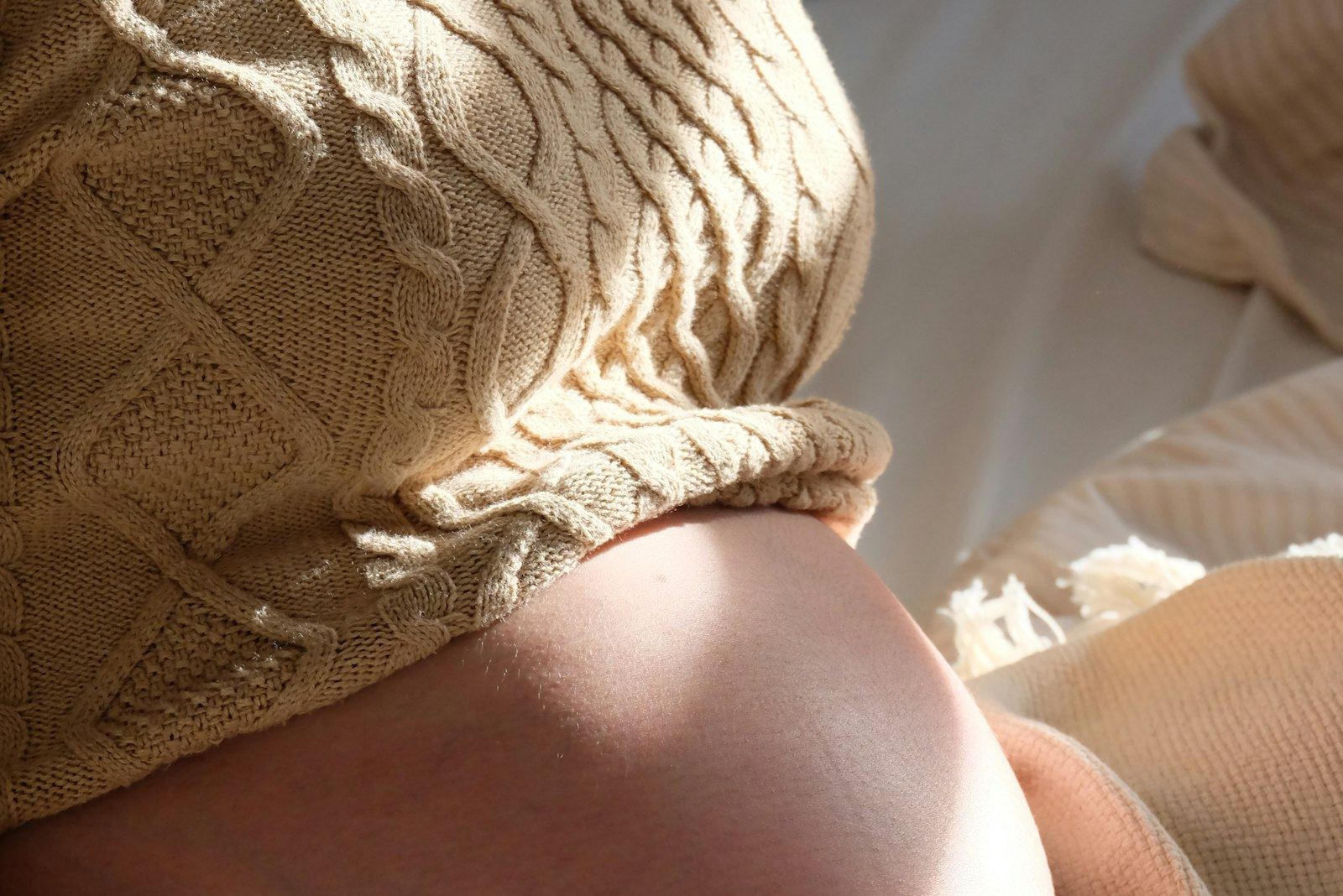
As your bump grows, getting comfortable in bed gets harder. The NHS notes that lying down can feel uncomfortable later in pregnancy, and many people end up building a fort of pillows around themselves. A pregnancy pillow, also called a maternity pillow, does the same job in one piece: it supports your bump, back and knees so you can stay on your side.
This guide covers what ACOG and the NHS say about sleep position in later pregnancy, the main pillow shapes, what to look for, and how to keep using the pillow after birth without it ending up near your baby’s sleep space. We don’t rank or test products; we explain what to look for.
Why side sleeping matters in later pregnancy
ACOG explains that as your belly grows, sleeping on your back puts the weight of your uterus on your spine and back muscles. In the second and third trimesters, lying on your back may compress a major blood vessel that takes blood to your uterus, which can make you feel dizzy and may reduce blood flow to your fetus. ACOG says sleeping on your side during the second and third trimesters may be best.
The NHS gives similar advice with a specific time point. It says research suggests that going to sleep on your back after 28 weeks of pregnancy can increase the risk of stillbirth, and its sleep page says that, after 28 weeks, “falling asleep on your back can double the risk of stillbirth.” It’s thought this may be to do with the flow of blood and oxygen to the baby. The NHS says the safest position to fall asleep in is on your side.
Two reassuring points from both sources:
- Either side is fine. ACOG says sleeping on your left side all pregnancy is difficult and not necessary; you can sleep on either side. The NHS says left or right.
- Waking on your back is not a reason to panic. Both say to simply turn onto your side and go back to sleep.
A pillow can’t hold you in place all night, but it can make side sleeping comfortable enough that you settle into it more easily.
What a pregnancy pillow does
ACOG’s own tips for side sleeping are to keep one or both knees bent, place a pillow between your knees and another under your belly, or try a full-length body pillow for support. The NHS suggests supporting your bump with pillows and putting a pillow between your knees.
ACOG’s back pain guidance repeats this: sleep on your side later in pregnancy, with pillows between the knees and under the belly, or a full-length body pillow. So a pregnancy pillow is simply a convenient way to get that support. It’s optional: ordinary pillows do the same job.
Pregnancy pillow shapes
| Shape | How you use it | Good to know |
|---|---|---|
| Full-length (straight) body pillow | Hug it, with the lower end between your knees | Simple and compact; supports one side at a time |
| U-shaped | Wraps around both sides, behind your back and in front | Supports back and front, so turning over is easier; takes up a lot of bed |
| C-shaped | Curves behind your back or head and between your knees | Less bulky than a U; you may need to move it when you turn |
| J- or L-shaped | A long pillow with a curve for your head or neck | A middle ground on size |
| Wedge | A small, firm wedge under your bump or behind your back | Travels easily; doesn’t support your knees |
There is no evidence in the sources we used that one shape is better than another. The right one is the shape that keeps you comfortable on your side.
What to look for
- Size that fits your bed and your partner. U-shaped pillows are the largest.
- Support where you need it: under your bump, between your knees, behind your back.
- Firmness you like. A pillow that flattens overnight may not keep your knees apart or your bump supported.
- A removable, washable cover. A spare cover means you’re never without one.
- A cover fabric you find comfortable against your skin through the night.
- Clear care instructions for the cover and the pillow itself.
Using a pregnancy pillow after your baby is born
Many parents keep using their pregnancy pillow after birth, for example to prop themselves up in bed, support a sore back, or rest an arm during a night feed. Our guide to side-lying breastfeeding explains how pillows behind your back and between your knees can make that position more comfortable, and our breastfeeding after a C-section guide covers pillows that keep pressure off your incision.
Two rules keep it safe:
A pregnancy pillow is not a nursing pillow. The CPSC’s federal safety standard for nursing pillows (16 CFR part 1242) sets requirements for firmness, openings, seams, restraints and warnings, and it specifically excludes maternity pillows, which it defines as large body pillows designed to support a pregnant adult’s body during sleep or while lying down. That means a pregnancy pillow doesn’t have to meet that standard. If you want a pillow to position your baby at the breast, see our breastfeeding pillow guide.
Keep it away from your baby’s sleep. The AAP lists pillows among the soft objects and loose bedding that can increase a baby’s risk of entrapment, suffocation or strangulation, and says to keep them out of your baby’s sleep area. It also says not to use products for sleep that aren’t specifically marketed for infant sleep. In practice:
- Never lay your baby to sleep on or against a pregnancy pillow, and never put one in a crib, bassinet or play yard.
- If there’s any chance you might fall asleep while your baby is in your bed, the AAP says to remove pillows, blankets, sheets and other items that could cover your baby’s face, head or neck or lead to overheating. If you do fall asleep, move your baby back to their own sleep space as soon as you wake up.
- Avoid falling asleep with your baby on a couch or armchair. The AAP says the risk of sleep-related infant death is up to 67 times higher when infants sleep with someone on a couch, soft armchair or cushion.
Our article on what to do when your baby falls asleep while breastfeeding covers moving a sleeping baby safely.
Cleaning and care
Wash the cover often, following its care label, especially after birth when milk, sweat and spit-up are part of daily life. Check the label before washing the pillow itself: some fillings can go in a machine, others can only be spot-cleaned. Replace the pillow if it goes flat, lumpy or loses its shape, or if the cover or seams split.
For more on staying well during pregnancy and the postpartum months, see our nutrition and health hub. If you’re expecting while still nursing an older child, our guide to being pregnant while breastfeeding may help.
When to call your doctor or midwife
A pillow helps with comfort, not with symptoms. Contact your ob-gyn or midwife if:
- Your baby is moving less than usual, or the pattern of movements changes. The NHS says this may be the first sign your baby is unwell and to contact your midwife or maternity unit immediately.
- You have severe back pain, or back pain that lasts more than two weeks. ACOG says to call your ob-gyn or obstetric care provider to rule out other causes.
- You have back pain with a fever, burning when you pee, or vaginal bleeding. ACOG notes back pain can be a sign of preterm labor or a urinary tract infection.
- Poor sleep comes with other signs of depression, such as feeling hopeless or losing interest in things you used to enjoy. The NHS says to speak to your doctor or midwife, because treatment can help.
Shop on Amazon
Shop what this guide covers
Paid links: as an Amazon Associate we earn from qualifying purchases, at no extra cost to you. Links never change what we recommend. Disclosure
Frequently asked questions
Do I have to sleep on my left side?
No. ACOG says you can sleep on either side, right or left, and the NHS says the safest position to fall asleep in is on your side, either left or right.
What if I wake up on my back?
Don't worry. ACOG says not to panic and just turn to one side, and the NHS says to turn onto your side before going back to sleep.
When should I start using a pregnancy pillow?
Whenever you find it comfortable. ACOG says back sleeping may not be good for you as your belly grows, and the NHS side-sleeping advice applies from 28 weeks, so many people start using extra pillows in the second or third trimester.
Do I need a special pillow, or will regular pillows do?
Regular pillows work. ACOG's suggestions are a pillow between your knees and another under your belly, or a full-length body pillow. A dedicated pregnancy pillow is optional.
Sources
- ACOG: Can I sleep on my back when I'm pregnant?https://www.acog.org/womens-health/experts-and-stories/ask-acog/can-i-sleep-on-my-back-when-im-pregnant
- ACOG: The Top 6 Pregnancy Questions I Hear From First-Time Momshttps://www.acog.org/womens-health/experts-and-stories/the-latest/the-top-6-pregnancy-questions-i-hear-from-first-time-moms
- ACOG: Back Pain During Pregnancyhttps://www.acog.org/womens-health/faqs/back-pain-during-pregnancy
- NHS: Preventing stillbirthhttps://www.nhs.uk/conditions/stillbirth/prevention/
- NHS: Tiredness and sleep problems in pregnancyhttps://www.nhs.uk/pregnancy/common-symptoms/tiredness/
- CPSC: Nursing Pillows (FAQ)https://www.cpsc.gov/FAQ/Nursing-Pillows
- eCFR: 16 CFR Part 1242, Safety Standard for Nursing Pillowshttps://www.ecfr.gov/current/title-16/chapter-II/subchapter-B/part-1242
- HealthyChildren.org (AAP): How to Keep Your Sleeping Baby Safe: AAP Policy Explainedhttps://www.healthychildren.org/English/ages-stages/baby/sleep/Pages/A-Parents-Guide-to-Safe-Sleep.aspx
This guide is general information, not medical advice. For your own situation, talk to your doctor, midwife, pharmacist or an IBCLC lactation consultant. Read our medical disclaimer and find breastfeeding support near you.
Related articles
Hemorrhoid Cushion After Birth: Do Donut Pillows Help?
What sources say about donut and other cushions for postpartum hemorrhoids and perineal pain, how to sit more comfortably, and when to call your provider.
Does Breastfeeding Make You Tired? Why It Happens and When to Worry
Why breastfeeding can make you sleepy, how night feeds affect your rest, and the medical causes of exhaustion, like anemia and thyroid problems.

Padsicles and Perineal Cold Packs: How to Use Cold Safely After Birth
What padsicles are, what the research says about cold for perineal pain, how long to apply it, a simple home method, store-bought packs and warning signs.
Postpartum Pads: What to Use for Bleeding After Birth and for How Long
Why you need pads, not tampons or cups, after birth, how long lochia lasts, what to look for in maternity pads, and when bleeding is too heavy.