How to Swaddle a Baby Safely: Step by Step, Hip-Healthy, and When to Stop
By Breastfeeding Mom Editorial TeamUpdated 6 min read

Many parents first see swaddling in the hospital, when a nurse wraps their newborn into a neat little bundle. The American Academy of Pediatrics (AAP) says a thin blanket wrapped snugly around your baby’s body can resemble the womb and help soothe your newborn, and that done correctly, swaddling can help calm infants and promote sleep.
Done incorrectly, it carries real risks: rolling onto the tummy while wrapped, overheating, and hip problems from legs wrapped straight. This guide walks through the AAP’s steps, the International Hip Dysplasia Institute’s (IHDI) advice on hip-healthy swaddling, the safe sleep rules that go with it, and how swaddling fits around breastfeeding.
Before you start: the safe swaddling rules
The AAP says you can swaddle your baby if you like, but keep in mind that swaddling doesn’t reduce the risk of SIDS. Its rules for swaddling safely:
- Back to sleep only. Always place a swaddled baby on their back. The AAP says some studies have shown an increased risk of SIDS and unintentional suffocation when swaddled babies are placed on their stomach or roll onto it.
- Not too tight. The swaddle should not be too tight or make it hard for your baby to breathe or move their hips.
- Stop at signs of rolling. Stop swaddling as soon as your baby shows any signs of trying to roll over.
- No weighted swaddles. Don’t use weighted swaddle blankets or weighted objects like rice bags inside the swaddle.
- A firm, flat surface with no loose blankets. Your baby is safest in their own crib or bassinet, not in your bed.
- Watch for overheating. The AAP says swaddling can increase the chance your baby will overheat. Signs include sweating, damp hair, flushed cheeks, heat rash and rapid breathing.
How to swaddle a baby, step by step
These steps follow the AAP’s instructions. Use only a thin blanket.
- Lay the blanket flat and fold one corner down.
- Place your baby face-up on the blanket, with their head above the folded corner.
- Wrap the first side. Straighten your baby’s left arm and bring the left corner of the blanket over their body, tucking it between their right arm and the right side of their body.
- Wrap the second side. Tuck the right arm down, then fold the right corner over your baby’s body and tuck it under their left side.
- Fold the bottom loosely. Fold or twist the bottom of the blanket loosely and tuck it under one side of your baby. Leave plenty of room for the legs.
- Check the fit. Make sure your baby’s hips can move and the blanket isn’t too tight. The AAP says you should be able to get at least two or three fingers between your baby’s chest and the swaddle.
- Lay your baby down on their back in their own sleep space, with nothing else in it but a fitted sheet.
IHDI describes a similar method: fold back one corner, place your baby so the top of the fabric is at shoulder level, bring each arm down and wrap the cloth over the arm and chest, then twist or fold the bottom end and tuck it behind your baby, making sure both legs are bent up and out.
Keep the hips loose
The AAP says babies who are swaddled too tightly may develop a problem with their hips, and that straightening and tightly wrapping a baby’s legs can lead to hip dislocation or hip dysplasia. It notes that the Pediatric Orthopaedic Society of North America, with the AAP Section on Orthopaedics, promotes “hip-healthy swaddling” that lets the legs bend up and out.
IHDI explains why. In the womb, a baby’s legs are bent up and across each other, and suddenly straightening them can loosen the joints and damage the soft cartilage of the socket. Its position statement says swaddling with the hips and knees extended increases the risk of hip dysplasia and dislocation, and recommends that the hips stay in slight flexion and abduction (bent and apart) with the knees slightly bent.
In practice:
- The upper body can be snug; the bottom should be loose.
- Your baby’s legs should be able to fall into a frog-like position.
- Never wrap the legs straight down and pressed together.
- With a swaddle sack, IHDI says choose one with a loose pouch for the legs and feet, and watch for designs that tighten around the thighs.
When to stop swaddling
The AAP says to stop as soon as your baby shows any signs of trying to roll over. Its 2022 policy announcement says this usually happens at 3 to 4 months but may occur earlier, and HealthyChildren.org notes some babies start working on rolling as early as 2 months. NICHD’s Safe to Sleep gives a slightly different marker (stop when your baby starts rolling over, usually around 3 months), so watch your baby’s own signs rather than a date. Swaddling is no longer appropriate at that point because a baby who rolls onto their stomach while swaddled has a higher risk of suffocation.
The same applies to wearable blankets or sleep sacks that compress the arms, chest and body. Sleep sacks that don’t swaddle and let your baby move freely can be used as long as you want, so they make a natural next step. See our sleep sack guide.
Why weighted swaddles are off the table
The AAP says not to use weighted swaddles or weighted blankets, which can place too much pressure on a baby’s chest and lungs. The CPSC says not to use weighted blankets or weighted swaddles, and NICHD lists weighted swaddles among the items to keep out of your baby’s sleep area. The AAP also cautions against any product that claims to reduce the risk of SIDS.
There’s a further reason to keep things simple: the AAP says swaddling may decrease a baby’s arousal, making it harder for them to wake up, and that decreased arousal may be one of the main reasons babies die of SIDS.
Swaddling and breastfeeding
Start with skin-to-skin. The AAP says a newborn should be placed skin-to-skin with their parent as soon after birth as possible, for at least an hour. Swaddling can wait.
Watch for early hunger cues. The CDC lists signs a baby from birth to 5 months may be hungry: hands to the mouth, turning toward the breast, puckering, smacking or licking lips, and clenched hands. It says crying is often a late sign of hunger. A swaddle with the arms wrapped in can make hand cues harder to see, so keep an eye on your baby’s face and mouth too. Our guide to how often to breastfeed explains newborn feeding patterns.
Unwrap for feeds. Loosening or removing the swaddle while you nurse lets you see your baby’s hands and gives you skin contact. It also helps avoid overheating, which the AAP says swaddling can increase. Our how to breastfeed guide covers latch and positions.
Back in their own space afterward. If you rewrap your baby after a feed, check the fit again and lay them on their back in their own sleep space. The AAP recommends room-sharing without bed-sharing for at least the first 6 months and says it makes it easier to feed, comfort and monitor your baby at night. If you’re thinking about a pacifier at bedtime, read our guide to pacifiers for breastfed babies first: the AAP advises waiting until breastfeeding is established.
When to call your pediatrician
The AAP says not to hesitate to talk with your pediatrician if you have any questions or concerns about the safety of your baby’s sleep environment. Ask if you’re unsure whether your baby is starting to roll, if your baby was born early or has a hip or other medical condition, or if your baby seems too hot or unwell after being swaddled. Call 911 if your baby is struggling to breathe or can’t be woken.
For more on the early weeks, visit our breastfeeding basics hub and our list of newborn essentials.
Shop on Amazon
Shop what this guide covers
Paid links: as an Amazon Associate we earn from qualifying purchases, at no extra cost to you. Links never change what we recommend. Disclosure
Frequently asked questions
Does swaddling reduce the risk of SIDS?
No. The AAP says swaddling doesn't reduce the risk of SIDS. It can help calm a newborn, but it doesn't replace any safe sleep practice.
My baby breaks out of the swaddle. Is that a problem?
A loose swaddle is a loose blanket. The AAP warns that a swaddling blanket that comes unwrapped could cover your baby's face and increase the risk of suffocation. Rewrap snugly around the chest, or switch to a swaddle sack or an arms-free sleep sack.
Can my baby sleep swaddled at daycare?
Ask the center. The AAP notes some child care centers have policies against swaddling because of the risks of SIDS or suffocation if a baby rolls while swaddled, plus overheating and hip dysplasia, especially for older babies swaddled by different caregivers.
Should I swaddle with arms in or out?
The AAP says there is no evidence regarding SIDS risk related to the arms being swaddled in or out. Whatever you choose, stop swaddling once your baby shows signs of trying to roll.
Sources
- HealthyChildren.org (AAP): Swaddling: Is It Safe for Your Baby?https://www.healthychildren.org/English/ages-stages/baby/diapers-clothing/Pages/Swaddling-Is-it-Safe.aspx
- HealthyChildren.org (AAP): How to Keep Your Sleeping Baby Safe: AAP Policy Explainedhttps://www.healthychildren.org/English/ages-stages/baby/sleep/Pages/A-Parents-Guide-to-Safe-Sleep.aspx
- AAP: American Academy of Pediatrics Updates Safe Sleep Recommendations: Back is Best (2022)https://www.aap.org/en/news-room/news-releases/aap/2022/american-academy-of-pediatrics-updates-safe-sleep-recommendations-back-is-best/
- International Hip Dysplasia Institute: Hip-Healthy Swaddlinghttps://hipdysplasia.org/infant-child/hip-healthy-swaddling/
- International Hip Dysplasia Institute: Swaddling: IHDI Position Statementhttps://hipdysplasia.org/swaddling-ihdi-position-statement/
- CPSC: Safe Sleep – Cribs and Infant Productshttps://www.cpsc.gov/SafeSleep
- NICHD Safe to Sleep: Ways To Reduce Baby's Riskhttps://safetosleep.nichd.nih.gov/reduce-risk/reduce
- CDC: Signs Your Child Is Hungry or Fullhttps://www.cdc.gov/infant-toddler-nutrition/mealtime/signs-your-child-is-hungry-or-full.html
This guide is general information, not medical advice. For your own situation, talk to your doctor, midwife, pharmacist or an IBCLC lactation consultant. Read our medical disclaimer and find breastfeeding support near you.
Related articles
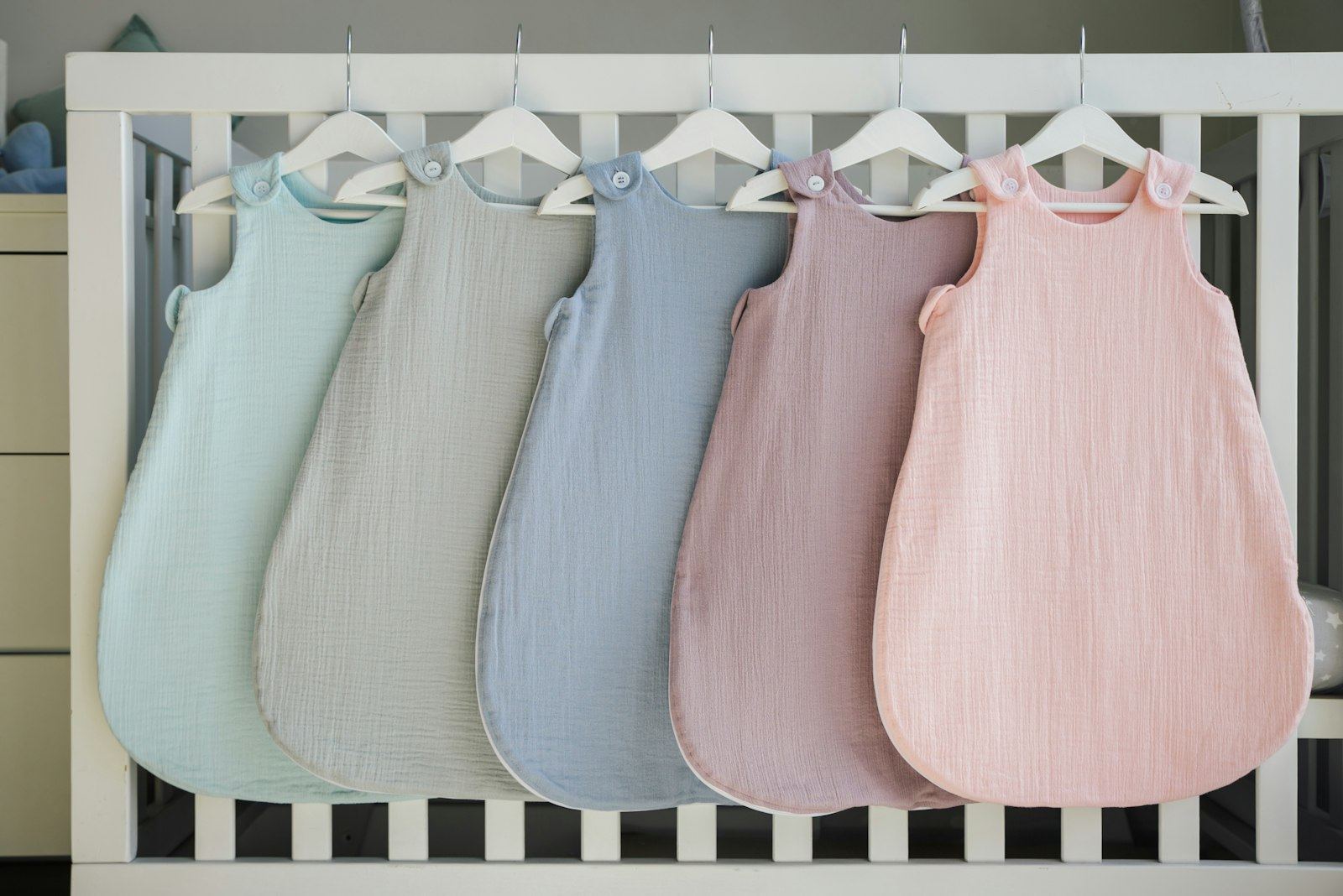
Sleep Sacks: How Wearable Blankets Keep Babies Warm Without Loose Bedding
What a sleep sack is, why the AAP prefers wearable blankets to loose blankets, how to size it, avoid overheating, keep hips free, and skip weighted ones.

Baby Carrier Guide: Types, Safe Newborn Fit and Breastfeeding
How to choose a baby carrier, wrap or ring sling, keep your newborn's airway clear and hips healthy, and what CPSC says about nursing in a sling.

Bassinet Guide: Safe Sleep Rules, Bedside Sleepers and What to Look For
How to choose and use a bassinet or bedside sleeper safely: federal standards, a firm flat surface, fitted sheet only, and room-sharing for night feeds.

Side-Lying Breastfeeding: How to Do It Safely
How to breastfeed lying on your side, step by step, who it helps most, how to switch sides, and what the AAP says about feeding in bed and safe sleep.