Baby Acne and Breast Milk: Does It Help, and What Actually Works?
By Breastfeeding Mom Editorial TeamUpdated 6 min read
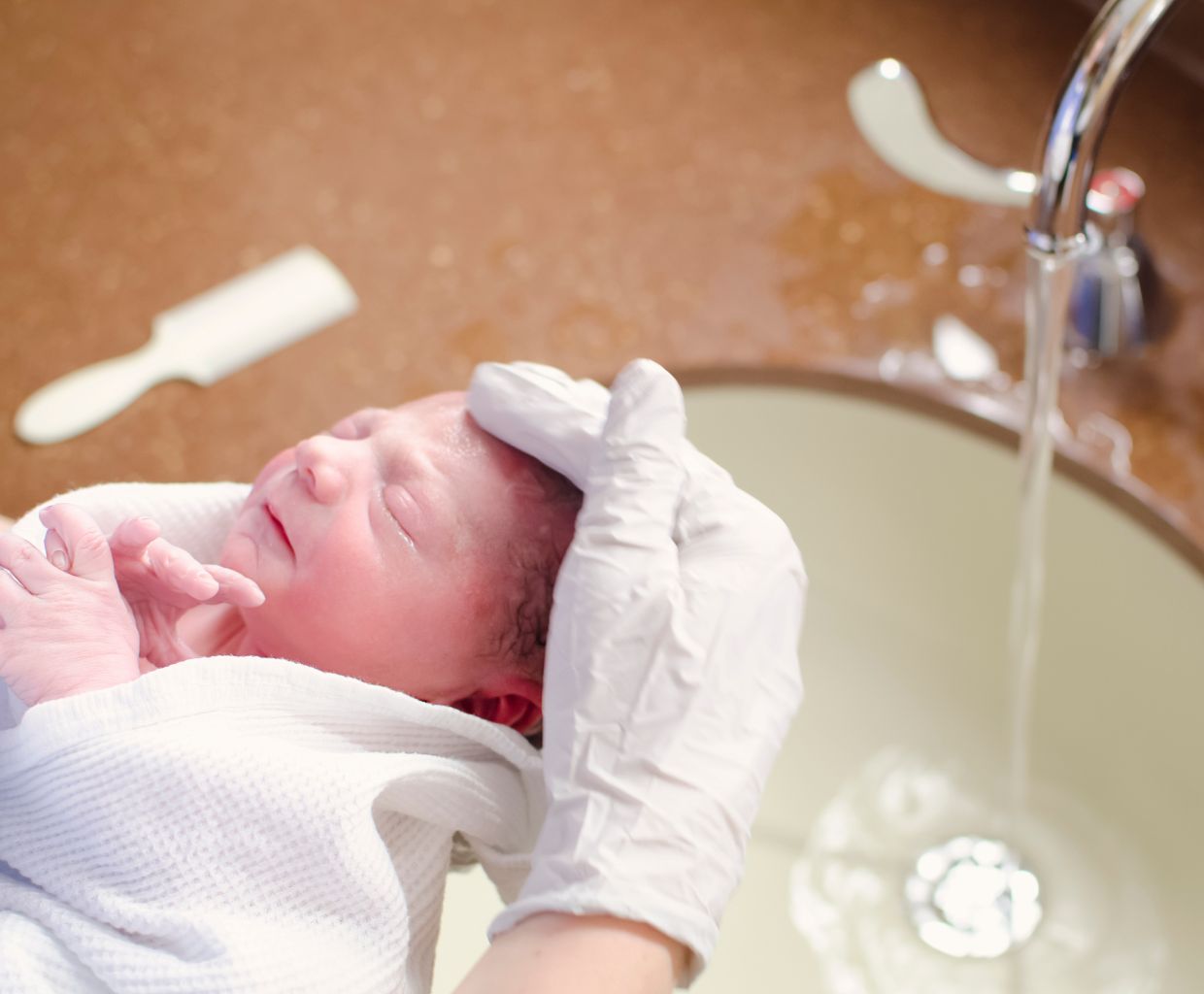
Those little red bumps on your newborn’s cheeks can appear just as you’re getting the hang of feeding, and it’s natural to want to do something about them. Dabbing breast milk on baby acne is one of the most popular home remedies around. It’s free, it’s on hand, and breast milk is full of immune factors, so the idea makes intuitive sense.
Here’s what baby acne actually is, what the research does (and doesn’t) say about breast milk on the skin, and the simple care that pediatric sources recommend. For more on the early weeks of feeding, see our breastfeeding basics hub.
What is baby acne?
Baby acne (neonatal acne) is a common newborn rash of small red bumps or pimples, mostly on the face. It is harmless and usually clears without treatment.
| What sources say | |
|---|---|
| How common | More than 30% of newborns (HealthyChildren.org); nearly 20%, or more than 1 in 5 (Cleveland Clinic) |
| When it starts | Usually at 2 to 4 weeks of age (HealthyChildren.org); can be present at birth or appear before 2 months (Cleveland Clinic); up to 6 weeks after birth (NHS) |
| Where | Cheeks, nose, forehead and chin, sometimes the scalp, neck, chest and back |
| How long | A few days to a couple of weeks, sometimes up to a month (Cleveland Clinic); can last until 4 to 6 months (HealthyChildren.org) |
| Treatment | Usually none needed. The NHS says plainly: you do not need to treat baby acne |
The figures differ because studies define and count newborn rashes in different ways. What every source agrees on is that baby acne is common and goes away on its own.
What causes it?
Nobody knows for sure. HealthyChildren.org, the American Academy of Pediatrics (AAP) parent site, links it to maternal hormones passed to the baby just before birth. A 2021 review in a pediatric journal describes androgen hormones from the placenta and the baby’s own adrenal glands enlarging the oil glands in the skin.
Some dermatologists also think a skin yeast called Malassezia plays a part, and call the rash “neonatal cephalic pustulosis.” The evidence is mixed: one study of 104 newborns found that babies with the rash were no more likely to carry the yeast than babies without it.
Baby acne or something else?
Several newborn skin conditions look alike. A doctor can tell them apart, but these clues help:
| Condition | What it looks like | Timing |
|---|---|---|
| Baby acne | Red bumps and small pimples; Cleveland Clinic says no blackheads | Starts in the first weeks |
| Milia | Tiny white bumps on the nose and cheeks; blocked pores, not pimples | Present at birth in about 40% of newborns, gone by 1 to 2 months (HealthyChildren.org) |
| Erythema toxicum | A newborn rash that can include small pimple-like bumps; HealthyChildren.org says it occurs in half of newborns | Newborn period |
| Infantile acne | Can include blackheads and may take longer to clear | Starts between 2 months and 1 year (Cleveland Clinic) |
Dry, rough patches may be something else, such as eczema, so mention them to your doctor. If a rash comes with other symptoms such as vomiting, blood or mucus in the stool or poor weight gain, ask your doctor about allergy; our guide to cow’s milk protein allergy in breastfed babies explains the signs.
Does breast milk help baby acne?
Honest answer: nobody knows, because it hasn’t been properly tested. When we searched the medical literature (Europe PMC, October 2026), we found no clinical trial of breast milk applied to baby acne.
What does exist:
- Lots of parents use it. In a 2020 survey of 1,187 breastfeeding mothers in Poland, treating baby acne was among the most common non-food uses of breast milk, along with caring for cracked nipples and diaper rash. The authors pointed out how few studies support these uses and stressed the need for prompt medical examination when a baby has a skin problem.
- Some evidence for other rashes. A 2026 systematic review found five small studies (238 babies) of breast milk for diaper rash. Results looked promising, but the certainty of the evidence was low to very low, and the authors said it should not replace standard care.
- Mixed results for eczema. A 2022 review describes a trial that reported similar results for breast milk and 1% hydrocortisone cream in infant eczema, and a very small Norwegian study that found no effect of breast milk compared with a usual moisturizer.
- Plausible ingredients. Breast milk contains antibodies, lactoferrin and other immune factors (see what breast milk is made of). But what milk does in a lab dish or in your baby’s gut doesn’t prove it clears pimples on the skin.
There’s one more twist. Cleveland Clinic notes that hormones in breast milk might even contribute to baby acne, though it stresses that this shouldn’t change how you feed your baby.
If you’d like to try it anyway
Breast milk on unbroken skin is unlikely to do harm, and baby acne clears on its own in any case. Cleveland Clinic suggests checking with your baby’s provider before putting anything on newborn skin, because home remedies can irritate it. If you go ahead, these are our own common-sense suggestions rather than tested advice:
- Use only your own fresh milk, a few drops on clean skin
- Don’t use it on broken, weeping or crusted skin
- Stop and call your doctor if the rash spreads or looks worse
How to care for baby acne
This is what pediatric sources recommend:
- Wash gently with warm water and pat dry. Don’t scrub. (Cleveland Clinic)
- Skip oils, lotions and ointments. HealthyChildren.org says baby oil and ointments make baby acne worse.
- Wipe off spit-up and drool soon after feeds. Cleveland Clinic notes that sensitive newborn skin can react to food, vomit or drool left on it.
- Don’t squeeze or pick at the spots.
- Don’t use adult acne products on your baby unless your doctor recommends one.
If the acne is severe or lasts a long time, your baby’s doctor may suggest an antifungal cream such as ketoconazole or a mild hydrocortisone cream, according to Cleveland Clinic. Use these only as directed.
If you have breakouts of your own, our guide to salicylic acid while breastfeeding covers which acne products are considered compatible with nursing.
When to call your baby’s doctor
HealthyChildren.org advises calling your doctor or seeking care now if your baby:
- Is under 1 month old and looks or acts unwell in any way
- Has a fever and is under 12 weeks old (don’t give fever medicine before they are seen)
- Has pimples with pus (unless they look like erythema toxicum), or tiny blisters with clear fluid
- Has skin that looks infected, with spreading redness, sores or pus
- Has a painful rash, or purple or blood-colored spots that weren’t there at birth
Call 911 if your baby is very weak or not moving, or you think it’s a life-threatening emergency.
Make a regular appointment if:
- The acne hasn’t cleared after a few weeks, or gets worse (Cleveland Clinic)
- Acne first appears after 2 months of age, which may be infantile acne
- There are blackheads, deep lumps or the acne is severe. A 2021 review notes that severe, long-lasting newborn acne should be examined to rule out an underlying hormone problem
Call promptly if the rash comes with blisters, peeling skin, fussiness, fever or feeding problems (Cleveland Clinic).
Most of the time, though, baby acne is a phase that passes on its own long before your baby notices it.
Frequently asked questions
Can I put breast milk on my baby's face?
A few drops of your own milk on unbroken skin is unlikely to cause harm, and many parents try it. There is simply no research showing it clears baby acne. Cleveland Clinic suggests checking with your baby's provider before using any product or home remedy on newborn skin.
Does breastfeeding cause baby acne?
The main suspected cause is hormones passed from parent to baby around birth. Cleveland Clinic notes that hormones in breast milk might play a part, but says this shouldn't change the way you feed your baby.
Can I use baby oil, lotion or coconut oil on baby acne?
It's best not to. HealthyChildren.org (AAP) says baby oil and ointments make baby acne worse, and Cleveland Clinic advises avoiding lotions, oils and greasy products that can clog pores.
How long does baby acne last?
Sources vary. Cleveland Clinic says it often lasts a few days to a couple of weeks, sometimes up to a month, while HealthyChildren.org says it can last until 4 to 6 months of age. Either way, it usually clears without treatment.
Sources
- HealthyChildren.org (AAP): Newborn Rashes and Birthmarkshttps://www.healthychildren.org/English/tips-tools/symptom-checker/Pages/symptomviewer.aspx?symptom=Newborn+Rashes+and+Birthmarks
- Cleveland Clinic: Baby Acnehttps://my.clevelandclinic.org/health/diseases/17822-baby-acne
- NHS: Rashes in babies and childrenhttps://www.nhs.uk/symptoms/rashes-babies-and-children/
- Karcz K et al. Non-nutritional 'paramedical' usage of human milk: knowledge and opinion of breastfeeding mothers in Poland (Ginekol Pol, 2020)https://europepmc.org/article/MED/32141053
- Qandeel RNJ et al. Topical maternal breast milk versus commercial topical products for diaper dermatitis in infants: a systematic review (J Res Nurs, 2026)https://europepmc.org/article/MED/42812452
- Demirtaş MS, Yalçın SS. The Use of Human Milk for Therapeutic Purposes Other Than Nutrition (Turk Arch Pediatr, 2022)https://europepmc.org/article/MED/35781228
- Ayhan M et al. Colonization of neonate skin by Malassezia species: relationship with neonatal cephalic pustulosis (J Am Acad Dermatol, 2007)https://europepmc.org/article/MED/17889963
- Godínez-Chaparro JA, Cruz HV. Acne in the newborn (Bol Med Hosp Infant Mex, 2021)https://europepmc.org/article/MED/34571513
This guide is general information, not medical advice. For your own situation, talk to your doctor, midwife, pharmacist or an IBCLC lactation consultant. Read our medical disclaimer and find breastfeeding support near you.
Related articles
Colostrum: What It Is, How Much Your Baby Needs and Why It Matters
What human colostrum is, how much your newborn takes per feed, what's in it, why it matters, and how it differs from bovine colostrum supplements.
Diaper Caddy: What to Put in It and How to Use It Safely
How to set up a diaper caddy for changes and night feeds: what to pack, what to look for, safe changing habits, diaper rash basics and hand hygiene.
Burp Cloths: What to Look For, How to Burp, and When Spit-Up Needs a Doctor
Why babies spit up, how many burp cloths are handy, muslin vs other fabrics, the AAP's three burping positions and the spit-up signs that need a doctor.
How Breastfeeding Works: How Your Body Makes and Releases Milk
How breast milk is made and released: the parts of the breast, prolactin and oxytocin, colostrum, milk coming in and why supply follows demand.