How Long to Pump: Minutes per Session and per Day
By Breastfeeding Mom Editorial TeamUpdated 5 min read
When you start pumping, it’s hard to know when to stop. Is 10 minutes enough? Should you keep going until nothing comes out? And how much of your day will it actually take?
The short answer is that your milk flow is a better guide than the clock. Here’s how long to pump per session, how single and double pumping compare and what to expect at each stage.
How long to pump per session
Most pumping sessions take about 15 to 20 minutes with a double electric pump. Cleveland Clinic says a session can continue as long as you’re comfortable and milk is flowing, which is typically about 10 to 15 minutes per breast.
A simple rule that works for most people:
- Pump until your milk stops flowing or slows to an occasional drip.
- Keep pumping for about 2 more minutes. Children’s Wisconsin, for example, advises pumping for 2 minutes past the last drop.
- Stop when your breasts feel soft and comfortable.
Those extra couple of minutes can trigger another let-down and signal your body to keep making milk. La Leche League International (LLLI) also suggests extending each session by a couple of minutes as one way to boost supply.
Signs you can stop
- Milk has stopped spraying or dripping for about 2 minutes
- Your breasts feel noticeably softer and lighter
- Another let-down hasn’t started
If milk starts flowing again, keep going until it slows down once more.
Single vs double pumping: how long each takes
Double pumping, which means pumping both breasts at the same time, cuts your session time roughly in half. LLLI says it may take about 15 minutes to pump both breasts together, compared with 30 minutes or more when pumping each breast separately. Double pumping also gives strong stimulation, which helps maintain your supply.
| Method | Typical time per session |
|---|---|
| Double electric pump | About 15–20 minutes total |
| Single electric pump | About 10–15 minutes per breast, so 20–30 minutes or more |
| Manual pump or hand expression | Often longer; switch sides when flow slows |
These are typical ranges, not rules. Some people empty in 10 minutes; others need closer to 30.
How long to pump at each stage
The first days: colostrum
Colostrum comes in small amounts, so you may get only a few drops at first. That’s normal. In its pumping guidelines for parents of hospitalized babies, Children’s Wisconsin recommends pumping about every 3 hours, or 8 times in 24 hours, and hand expressing extra colostrum after pumping during the first 3 to 4 days. Learn more in our guide to when breast milk comes in.
Once your milk comes in
Once your supply increases, sessions often get longer because there’s more milk to remove. Pump until the flow stops plus about 2 minutes. LLLI recommends 8 to 10 sessions a day, every 2 to 3 hours, to establish your supply if you’re exclusively pumping, unless your provider advises otherwise.
Established supply
Some people find their sessions get a little shorter once pumping becomes routine and let-down comes more easily. Once your supply is steady, LLLI says exclusive pumpers can consider gradually cutting back to 5 to 7 sessions a day, or whatever their provider recommends. Our pumping schedule guide has sample schedules by age.
Pumping at work
Cleveland Clinic suggests planning 30 to 40 minutes for each workday pumping session: about 20 minutes of pumping plus 10 to 20 minutes to set up and clean up. Pumping roughly every 3 hours is a common goal, but if you pump less per session than your baby eats, pumping more often may help.
How long exclusive pumping takes per day
Exclusive pumping is a real time commitment, especially at the start. Here’s a rough guide we calculated from 15- to 20-minute double-pumping sessions (sessions × minutes):
| Sessions per day | Approximate pumping time per day |
|---|---|
| 8–10 (early weeks) | 120–200 minutes (2 hours to 3 hours 20 minutes) |
| 6–7 | 90–140 minutes (1½ hours to 2 hours 20 minutes) |
| 5 | 75–100 minutes (1¼ hours to 1 hour 40 minutes) |
Add time for setting up, washing parts and storing milk. To see how much milk your baby needs per day at their age, try our breast milk intake calculator.
Tips to make pumping sessions more efficient
- Check your flange fit. Cleveland Clinic notes that pumping pain can be a sign that your flanges don’t fit properly. Our flange size calculator can help you find the right size.
- Use let-down mode first. Most electric pumps start with fast, light suction to trigger let-down, then switch to slower, deeper expression suction.
- Try hand expression first. LLLI mentions that some parents get better results by hand expressing for 1 to 2 minutes before using the pump.
- Massage while you pump. Gentle breast massage or compression during a session can help milk flow.
- Get comfortable. Relax, look at a photo or video of your baby and keep a drink nearby.
- Don’t turn the suction up to hurt. The strongest setting isn’t always the best. Use the highest setting that still feels comfortable.
If you’re trying to increase supply, pumping more often usually helps more than pumping longer. Power pumping is one way to add extra stimulation for a short time.
When to get help
Talk to a lactation consultant (IBCLC) or your doctor if:
- Pumping is painful, or your nipples are cracked, blistered or bleeding
- Your output drops suddenly or keeps falling
- Your breasts still feel full and lumpy after a full session
- You get a painful, red area on your breast or a fever
- Sessions regularly take much longer than 30 minutes without much milk
You’ll find more guides on equipment, schedules and storage in our pumping section.
Frequently asked questions
Is 10 minutes of pumping enough?
It can be, if your milk flows quickly and your breasts feel soft afterward. If you stop while milk is still flowing, or your supply is dropping, try pumping until the flow stops plus about 2 more minutes.
Should I pump longer to make more milk?
Adding a couple of minutes per session can help, but pumping more often usually makes a bigger difference than pumping longer. Power pumping is another option for a short-term boost.
Why do I get less milk the longer I pump?
Milk flows fastest during let-down and then slows. You may get a second or third let-down if you keep going, so watch for flow to pick up again before stopping.
Can I use a wearable pump to build my supply?
It may not be the best choice early on. La Leche League notes that wearable or mobile pumps are generally not designed to establish a milk supply, so in the early weeks a hospital-grade or double electric pump is usually a better choice.
Sources
- Cleveland Clinic: Breast Pump Types, Parts and Tutorialhttps://my.clevelandclinic.org/health/articles/25244-breast-pump
- Cleveland Clinic: Pumping at Work, Example Schedule and Helpful Tipshttps://health.clevelandclinic.org/pumping-schedule-pumping-at-work
- La Leche League International: Pumping Milkhttps://llli.org/breastfeeding-info/pumping-milk/
- La Leche League International: Life as an Exclusive Expresserhttps://llli.org/news/life-as-an-exclusive-expresser/
- Children's Wisconsin: Breast Milk Pumping Guidelineshttps://childrenswi.org/teaching-sheet/lactation/breastfeeding--breast-milk-pumping-guidelines
This guide is general information, not medical advice. For your own situation, talk to your doctor, midwife, pharmacist or an IBCLC lactation consultant. Read our medical disclaimer and find breastfeeding support near you.
Related articles
Exclusive Pumping: How to Start, Build and Keep Your Supply
A practical guide to exclusive pumping: how to start after birth, how often to pump, the right equipment, keeping your supply up and getting support.
Pumping Schedule: Sample Plans for Every Situation
Sample pumping schedules in easy tables for exclusive pumping, building a stash while nursing, going back to work and 12-hour shifts.
Power Pumping: The One-Hour Schedule and What to Expect
What power pumping is, the classic 20-10-10-10-10 one-hour schedule, how long to try it and what the evidence really shows.
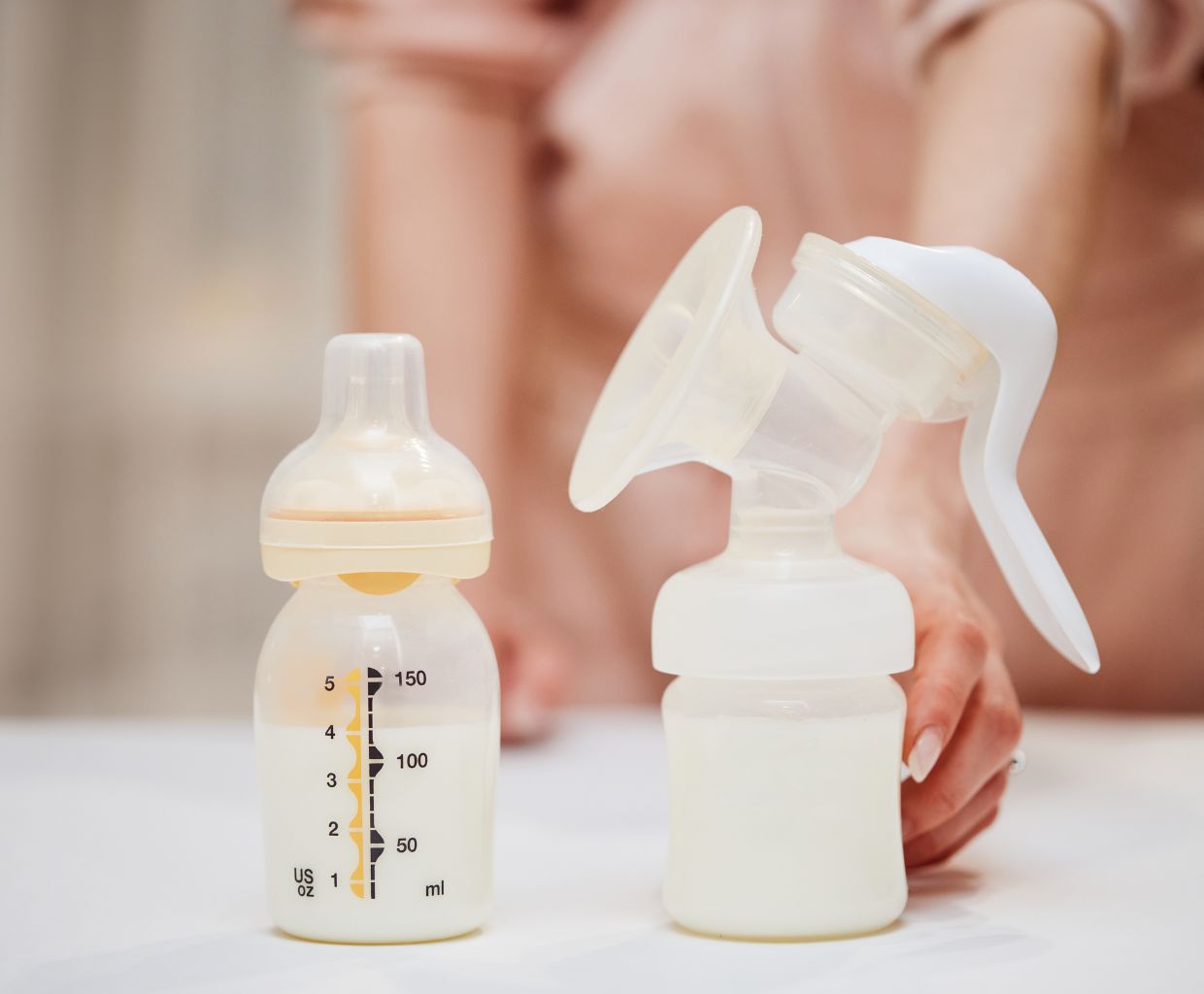
Manual Breast Pump: Lever vs Silicone Pumps and How to Use One
How manual breast pumps work, lever vs silicone suction pumps, who they suit, how to use one step by step and how to keep the parts clean.