Manual Breast Pump: Lever vs Silicone Pumps and How to Use One
By Breastfeeding Mom Editorial TeamUpdated 5 min read
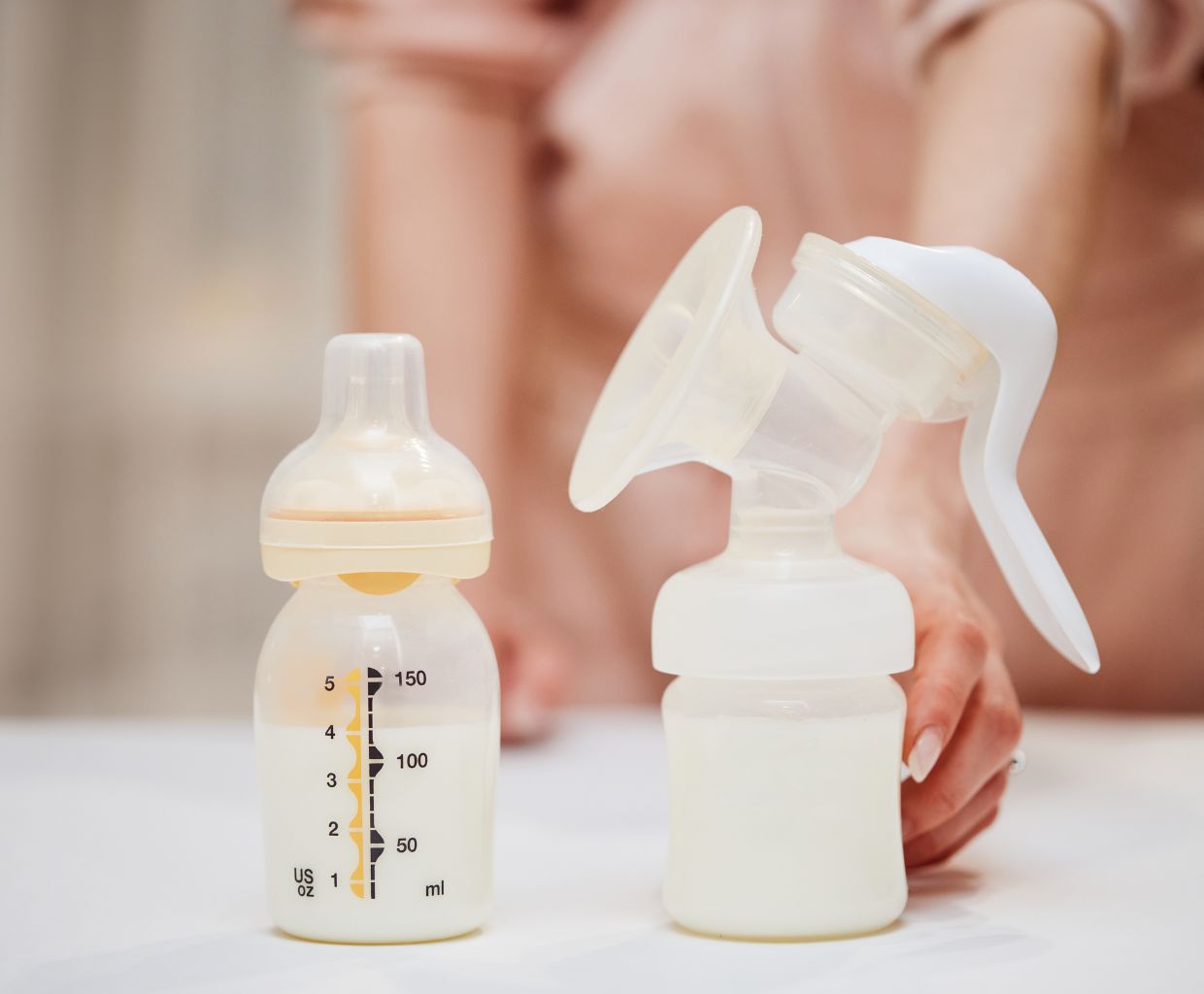
Not everyone needs a big electric pump. If you mostly breastfeed and only want a bottle now and then, relief from fullness, or a pump that fits in your diaper bag, a manual breast pump may be all you need.
Manual pumps are simple, quiet and inexpensive, but there are two quite different kinds, and each suits a different job. Here’s how they work, how to choose and how to use one well.
How a manual breast pump works
Every breast pump creates a seal around your nipple and applies and releases suction to draw milk out. The FDA describes manual pumps as pumps where a handle or lever is squeezed to create suction. You supply the power, so you also control the speed and rhythm.
There are two main types.
Lever (hand) pumps
A lever pump has a flange (breast shield), a pump body with a valve, a handle you squeeze and a bottle that catches the milk. Each squeeze creates suction; each release lets milk flow into the bottle.
Cleveland Clinic notes that manual pumps are low-cost, need no electricity or batteries and are easy to carry. They let you control the pace and rhythm, but sessions take longer and most pump one breast at a time.
Silicone suction pumps
These are one-piece silicone bottles that you squeeze, place over your nipple and release. The pump then holds a gentle, steady suction. Many people use them on one breast while the baby feeds on the other, to catch milk from the let-down.
The University of Reading’s guide to breast pumps notes that some mothers get a good amount of milk this way, especially when they lean forward and gently massage the breast, while others get very little. It describes them as well suited to releasing some pressure without trying to get as much milk out as possible, and as easy to clean.
One caution: Cleveland Clinic suggests checking with your provider before using a silicone collection device if you already have an oversupply, because removing extra milk can signal your body to make more.
A style to skip
The FDA notes that some experts discourage “bicycle horn” pumps, the kind with a rubber bulb, because they can be hard to clean and dry. La Leche League International (LLLI) also says this style is no longer recommended.
Lever vs silicone vs electric: which one fits?
| Lever pump | Silicone suction pump | Double electric pump | |
|---|---|---|---|
| Power source | Your hand | Steady suction you set once | Motor, outlet or battery |
| Effort | Moderate, hand can tire | Low | Low |
| Speed | Slower, one breast at a time | Passive, during feeds | Fastest, both breasts at once |
| Noise | Quiet | Silent | Some motor noise |
| Best for | Occasional bottles, travel, backup | Catching let-down, easing fullness | Daily pumping, work, exclusive pumping |
LLLI suggests manual pumps for occasional pumping, and a double electric pump if you’re away from your baby for 8 hours or more or pump three or more times a day. If you’re pumping for every feed, read our guide to exclusive pumping before choosing equipment.
A manual pump also makes a smart backup. The FDA points out that a manual pump can help you keep up your pumping schedule during an emergency or power outage.
How to use a manual pump step by step
- Wash your hands and make sure the pump parts are clean and assembled.
- Get comfortable. Sit somewhere warm and relaxed. Looking at a photo of your baby can help your let-down.
- Massage your breast for a few minutes first. The NHS says this helps the let-down reflex.
- Center your nipple in the flange so it can move freely in the tunnel without rubbing.
- Squeeze the handle at a steady, comfortable pace. The NHS notes that milk may take a few minutes to start flowing, so give it time before you change anything.
- Switch breasts when the flow slows, then go back. The NHS notes that one breast may make more milk than the other.
- Break the seal gently by slipping a finger between your breast and the flange.
- Cap, label and store the milk with the date. Freshly expressed milk keeps up to 4 hours at room temperature (77°F [25°C] or colder) and up to 4 days in the fridge. See how long breast milk lasts in the fridge for details.
If your hand tires, switch hands or take a short break. Pumping should never be painful.
What to look for in a manual pump
We don’t rank brands, but these features make a real difference:
- Flange size options. Many pumps come with one standard size, which doesn’t fit everyone. Use our flange size calculator to find your starting size, then check that the pump offers it or accepts inserts.
- A comfortable handle that you can squeeze many times without strain.
- Few, simple parts that come apart fully for cleaning.
- Bottle compatibility, so you can pump straight into a bottle or storage container.
- Replaceable valves and membranes, since these small parts wear out and affect suction.
- Single-user design. The FDA considers breast pumps single-user devices unless they’re designed for multiple users, so buy your own rather than borrowing.
How to clean a manual pump
Manual pumps are easy to clean because there’s no tubing or motor, but milk can collect in the valve and handle joints. The CDC recommends:
- Taking the pump apart after every use and rinsing every part that touched milk under running water
- Washing in a basin used only for feeding items, with dish soap, or in the dishwasher if the manufacturer allows it, rather than directly in the sink
- Air-drying completely on a clean towel or paper towel instead of rubbing parts dry
- Sanitizing at least once a day by steaming, boiling for 5 minutes or using a dishwasher’s sanitize setting, especially for babies under 2 months, preterm babies or babies with weakened immune systems
Replace any part that’s cracked, stretched or shows mold.
Manual pump or hand expression?
If you don’t have a pump with you, hand expression works too, and it costs nothing. Many people use both: hand expression in the first days for small amounts of colostrum, and a manual pump later for occasional bottles. Our guide to hand expressing breast milk walks you through it.
When to call a lactation consultant
Reach out to an IBCLC or your doctor if:
- Pumping is painful, or your nipples are sore, cracked or bleeding
- You get very little milk despite good fit and technique
- Your breasts stay hard and painful after pumping, which may be engorgement or a clogged duct
- You’re not sure whether a manual pump can meet your needs
For more on choosing equipment and planning sessions, explore our pumping guides.
Frequently asked questions
Can I build a freezer stash with a manual pump?
Yes, many people collect extra milk with a manual pump, especially by pumping one breast while the baby nurses on the other or using a silicone pump to catch let-down. It takes more effort than an electric pump, so it works best for small, regular additions.
Is a manual pump enough for exclusive pumping?
Usually not. Exclusive pumping often means 8 or more sessions a day at first, and lactation programs generally recommend a double electric pump for that. A manual pump is a useful backup during power outages or when your main pump breaks.
Do manual pumps hurt?
They shouldn't. Mild tugging is normal, but pain, pinching or bleeding usually means the flange doesn't fit, your nipple isn't centered or you're squeezing too hard or too fast. Slow down and check your fit.
Can I share or buy a used manual pump?
The FDA considers breast pumps single-user devices unless they're designed for multiple users. Because milk-contact parts can carry germs, it's safest to use your own pump and parts.
Sources
- FDA: Types of Breast Pumpshttps://www.fda.gov/medical-devices/breast-pumps/types-breast-pumps
- Cleveland Clinic: What To Know About Breast Pumpshttps://my.clevelandclinic.org/health/articles/25244-breast-pump
- La Leche League International: Pumping Milkhttps://llli.org/breastfeeding-info/pumping-milk/
- University of Reading: Resources for Supporting Breastfeeding and Return to Paid Work, Mother Guide 6: Breast Pumps (PDF)https://research.reading.ac.uk/workfeed/wp-content/uploads/sites/333/2025/07/Mother-guide-6.pdf
- NHS Best Start in Life: Expressing Breast Milk With a Pumphttps://www.nhs.uk/start-for-life/baby/feeding-your-baby/breastfeeding/expressing-your-breast-milk/expressing-breast-milk-with-a-pump/
- CDC: How to Clean and Sanitize Breast Pumpshttps://www.cdc.gov/hygiene/childcare/breast-pump.html
This guide is general information, not medical advice. For your own situation, talk to your doctor, midwife, pharmacist or an IBCLC lactation consultant. Read our medical disclaimer and find breastfeeding support near you.
Related articles
Wearable Breast Pump: How They Work, Pros and Cons, and Fit
An honest guide to wearable breast pumps: how they work, how they compare with traditional pumps, flange fit, cleaning and who they suit best.
Exclusive Pumping: How to Start, Build and Keep Your Supply
A practical guide to exclusive pumping: how to start after birth, how often to pump, the right equipment, keeping your supply up and getting support.
How Long to Pump: Minutes per Session and per Day
How many minutes to pump per session, single vs double pumping, when to stop, and how much time exclusive pumping takes each day at every stage.
Hand Expressing Breast Milk: Step-by-Step Guide
Learn how to hand express breast milk step by step, when it helps most, how to collect colostrum and how to combine hand expression with pumping.