Portable Breast Pump: Types, What to Check and Using One on the Go
By Breastfeeding Mom Editorial TeamUpdated 6 min read

If you pump at work, in the car or while traveling, you want a pump that goes where you go. Shops sell many pumps as “portable,” but the word covers everything from a pocket-sized hand pump to a rechargeable electric pump with a carrying case, so it tells you very little by itself.
This guide explains what portable means, how the main types compare and what to check before you choose. It doesn’t rank brands or quote prices. Our guide to how to choose a breast pump covers the wider decision.
What “portable” means
The University of Reading’s guide on breast pumps explains it well. Portable means the pump can be used with batteries, or charged at a plug socket so that it holds the charge and you can bring it with you somewhere. The guide also points out that many pumps labeled portable are as large as your head, while others are small enough to fit in a pocket.
It is also not the same as wearable. With a portable pump, the Reading guide says, you usually have to hold it against your body, often sitting slightly forward, unless you add a special bra that holds it. A pumping bra is the usual fix.
Types of portable pumps
| Type | How it is powered | Good to know |
|---|---|---|
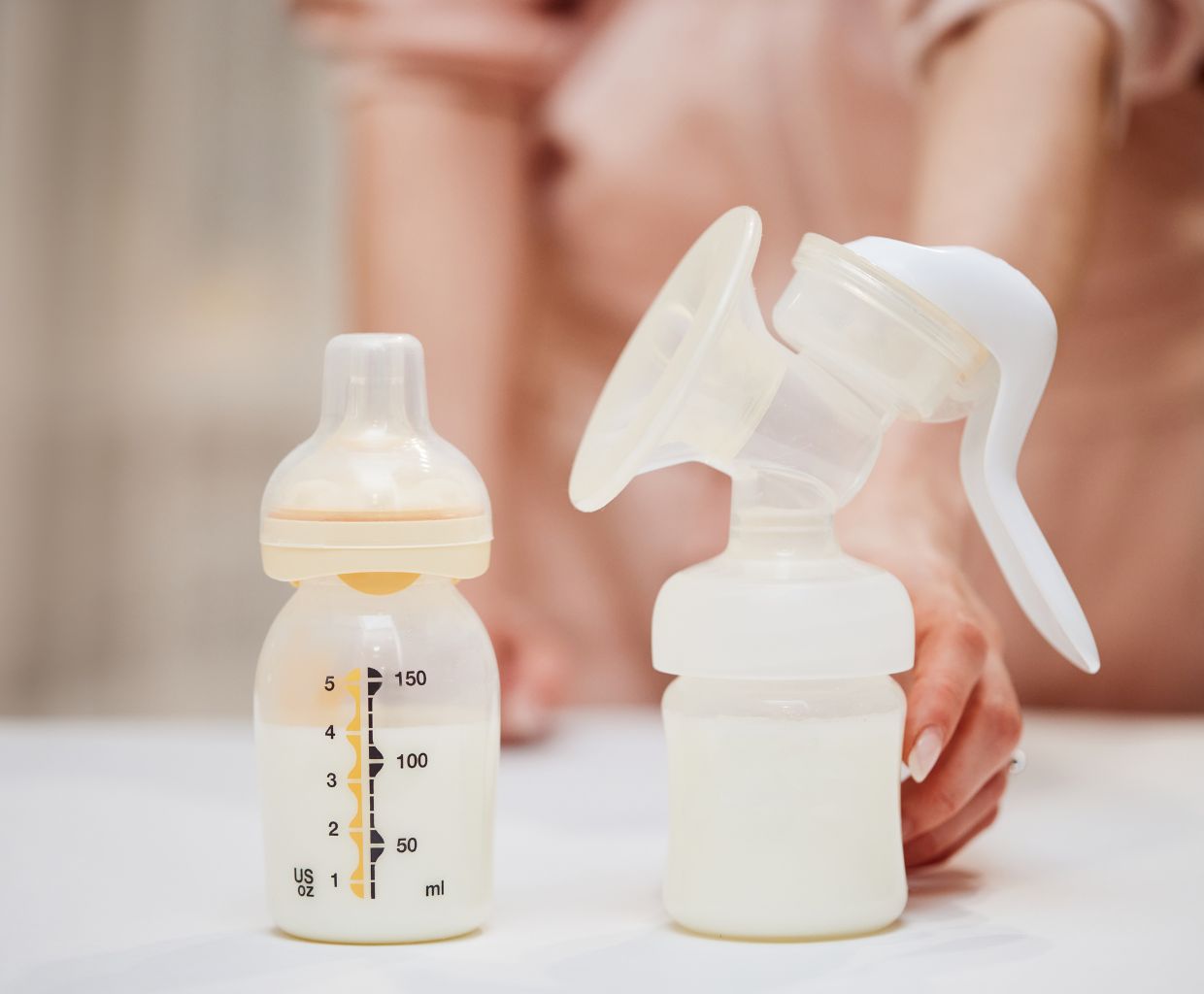
| Manual (lever) pump | Your hand, no power needed | Cleveland Clinic says manual pumps can be easily transportable and the Reading guide describes them as light and easy to assemble. They cost less than electric pumps, but sessions take longer. See our manual breast pump guide. |
| Battery or rechargeable electric pump | Replaceable batteries or a rechargeable battery | Cleveland Clinic says you don’t have to be near an outlet and can pump on the go. Most are single pumps, according to the FDA. |
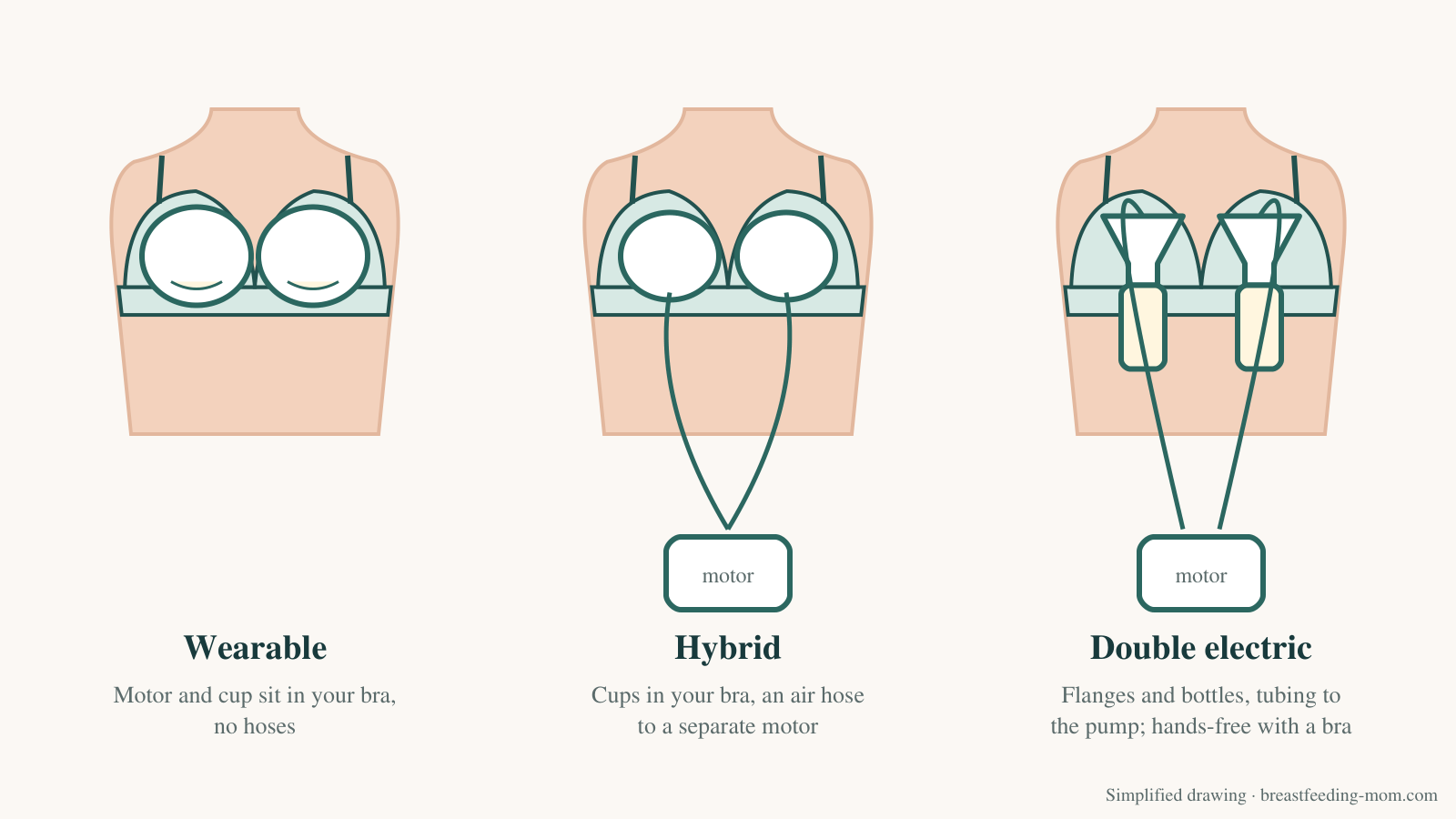
| Wearable pump | Rechargeable, sits inside your bra | Cleveland Clinic notes it frees up your hands. The Reading guide says wearables are designed to be quiet, are not the most powerful pumps, and can move in the bra and lose their seal. See our wearable breast pump guide. |
| Hybrid pump | In-bra cups with an air hose to a separate motor | The Reading guide says these are often more powerful than wearables, but louder and more visible, and still allow hands-free tasks. |
| Silicone milk collector | Passive or gentle suction | Cleveland Clinic describes these as catching milk from one breast while your baby feeds on the other. It advises talking to your provider first if you have an oversupply. |
The FDA describes powered pumps as running on batteries or on a cord plugged into an electrical outlet. A pump that only plugs in isn’t portable in the sense above, but many people keep one at home and a lighter pump for outings.
Is a portable pump powerful enough?
That depends on how often you pump. La Leche League International (LLLI) suggests a hand pump for occasional pumping and a small electric pump (which can be plugged in or battery-run) if you will be away a few hours and only need to pump once or twice. It says that if you will be away for 8 or more hours, a double electric pump is likely the best choice. Cleveland Clinic says a manual pump gets the job done if you pump rarely, while powered pumps, especially double pumps, suit frequent pumping and pumping away from home.
The Reading guide adds that if your milk supply is well established, having a very powerful pump may be less important than having a convenient one. If you are building your supply or pumping for most feeds, see our guides to exclusive pumping and hospital-grade breast pumps.
What to check before you buy
- Power source and backup. Does it run on batteries, a rechargeable battery or both? The FDA advises being prepared for emergencies when electricity or extra batteries may not be available, with extra supplies and a back-up method such as a manual pump. We don’t give battery life figures because they differ from model to model; read the manufacturer’s information.
- One breast or two. The FDA says most manual and battery-powered pumps pump one breast at a time, while some electric pumps are double. The Reading guide says pumping both breasts at once is more effective and saves time.
- Adjustable suction. The FDA notes that some powered pumps offer adjustable suction patterns, and that a dial or switch controls the degree of suction.
- Flange sizes. The Reading guide says most pumps are sold with 24 mm flanges by default, and cites a pilot study suggesting a tighter fit can be more comfortable and effective. Try our flange size calculator and check that the pump offers your size. For wearable pumps, the guide says silicone flange liners are the only option.
- Replaceable parts. The Reading guide notes that small parts such as duckbill valves or diaphragms need regular replacement. Our pump part replacement schedule shows when.
- Noise, weight and ease of transport. LLLI lists cost, efficiency, how easy it is to transport and how much noise it makes as the factors to weigh.
- Warranty and returns. The Reading guide says many pumps are guaranteed for only one year. The FDA advises checking the return policy and customer support, and notes that most stores won’t accept returns for health reasons.
- Single-user design. The FDA considers breast pumps to be single-user devices unless designed for multiple users, so buy new for yourself, and don’t borrow one.
- Coverage. The FDA suggests asking your private health insurer about coverage for pumping equipment. Our guide to free breast pumps through insurance explains how to ask.
Using a portable pump at work and on trips
The Reading guide describes a practical setup. Some mothers left the pump body at work and had spare sets of bottles, flanges or in-bra cups, which reduced what they carried each day and how much they had to clean at work. If you have an employer that must give you space, our guide to pumping at work covers your rights.
For flying, the TSA lists breast pumps as allowed in carry-on and checked bags and says the final decision rests with the officer at the checkpoint. Our TSA and breast milk guide covers milk, ice packs and what to expect at screening.
To carry the milk you pump, see our guide to a breast milk cooler and our chart of how long breast milk lasts in the fridge.
Cleaning on the go
The CDC says to take the pump kit apart after pumping and separate every part that touches milk (flanges, valves, membranes, connectors and milk collection bottles), rinse them under running water and clean them as soon as possible. Wash them by hand with soap and warm water, using soap intended for dishes (the CDC says not to use antibacterial soap), or in a dishwasher. Rinse off all the soap and let the parts air-dry thoroughly; the CDC says not to rub or pat them dry with a dish towel. Check the manufacturer’s instructions before scrubbing with a brush, because brushing can damage some pump parts.
When you can’t wash right away, the CDC says manufacturer wipes can be convenient, but parts that contact milk should still be washed with soap and warm water before reuse. Sanitizing once a day matters most for babies who are younger than 2 months, were born prematurely or have a weakened immune system. Check the manufacturer’s instructions for what can be steamed or boiled. Our guide to cleaning breast pump parts has the full steps. If any part grows mold, Cleveland Clinic says to throw it out and replace it.
When to call a doctor or lactation consultant
The FDA says pumping should not be painful or cause sore nipples or bleeding. Contact your doctor if you are injured or have persistent pain or bleeding. The FDA lists soreness, yellowish discharge, a fever or flu-like symptoms as possible signs of infection, and says to check with your provider if symptoms don’t improve within 24 to 48 hours.
An IBCLC can check your flange fit, settings and whether the pump suits your schedule. If your pump breaks or you spot mold, the FDA asks people to report pump problems through MedWatch. For more guides, browse our pumping hub or find breastfeeding support.
Shop on Amazon
Shop what this guide covers
Paid links: as an Amazon Associate we earn from qualifying purchases, at no extra cost to you. Links never change what we recommend. Disclosure
Frequently asked questions
Is a portable pump the same as a wearable pump?
No. A University of Reading guide on breast pumps says portable is not the same as wearable: a portable pump runs on batteries or a charge you can carry with you, but you still hold it to your body. A wearable pump tucks into your bra and is hands-free.
Can I take a portable breast pump on a plane?
Yes. TSA's page lists breast pumps as allowed in both carry-on and checked bags, with the final decision resting with the TSA officer at the checkpoint. See our guide to flying with breast milk for milk, ice packs and screening.
Can I use a portable pump as my only pump?
It depends on how often you pump. La Leche League International says a small electric pump may suit you if you are away only a few hours and pump once or twice, and that a double electric pump is likely best if you will be away 8 or more hours. A manual or battery pump also makes a useful backup.
Can I buy a used portable pump?
The FDA considers breast pumps to be single-user devices unless they are designed for multiple users, and says reused single-user pumps can carry infectious particles. A used pump may also affect your warranty.
How do I clean a pump when I'm out?
The CDC says milk-contact parts should be taken apart and cleaned as soon as possible after pumping, with dish soap and warm water. Manufacturer wipes can be convenient when you don't have soap and water, but the parts should still be washed before reuse.
Sources
- FDA: Types of Breast Pumpshttps://www.fda.gov/medical-devices/breast-pumps/types-breast-pumps
- FDA: Buying or Renting a Breast Pumphttps://www.fda.gov/medical-devices/breast-pumps/buying-and-renting-breast-pump
- FDA: Breast Pumps, Injury and Infectionhttps://www.fda.gov/medical-devices/breast-pumps/injury-and-infection
- Cleveland Clinic: What To Know About Breast Pumpshttps://my.clevelandclinic.org/health/articles/25244-breast-pump
- University of Reading: Resources for Supporting Breastfeeding and Return to Paid Work, Mother Guide 6: Breast Pumps (PDF)https://research.reading.ac.uk/workfeed/wp-content/uploads/sites/333/2025/07/Mother-guide-6.pdf
- La Leche League International: Pumping Milkhttps://llli.org/breastfeeding-info/pumping-milk/
- CDC: Breast Pump Hygienehttps://www.cdc.gov/hygiene/about/about-breast-pump-hygiene.html
- TSA: Breast Pumphttps://www.tsa.gov/travel/security-screening/whatcanibring/items/breast-pump
This guide is general information, not medical advice. For your own situation, talk to your doctor, midwife, pharmacist or an IBCLC lactation consultant. Read our medical disclaimer and find breastfeeding support near you.
Related articles
Wearable Breast Pump: How They Work, Pros and Cons, and Fit
An honest guide to wearable breast pumps: how they work, how they compare with traditional pumps, flange fit, cleaning and who they suit best.

How to Choose a Breast Pump: What to Look For
There's no single best breast pump. Choose by how you'll use it, using the FDA's questions on type, fit, cleaning, power, parts and returns.
Manual Breast Pump: Lever vs Silicone Pumps and How to Use One
How manual breast pumps work, lever vs silicone suction pumps, who they suit, how to use one step by step and how to keep the parts clean.

Pumping Essentials: A Checklist for Home, Work and Exclusive Pumping
A practical pumping essentials checklist: the pump and right flange size, spare parts, storage, cleaning supplies, work gear and what's optional.