Hospital-Grade Breast Pump: What It Means, Who Needs One and Insurance
By Breastfeeding Mom Editorial TeamUpdated 6 min read
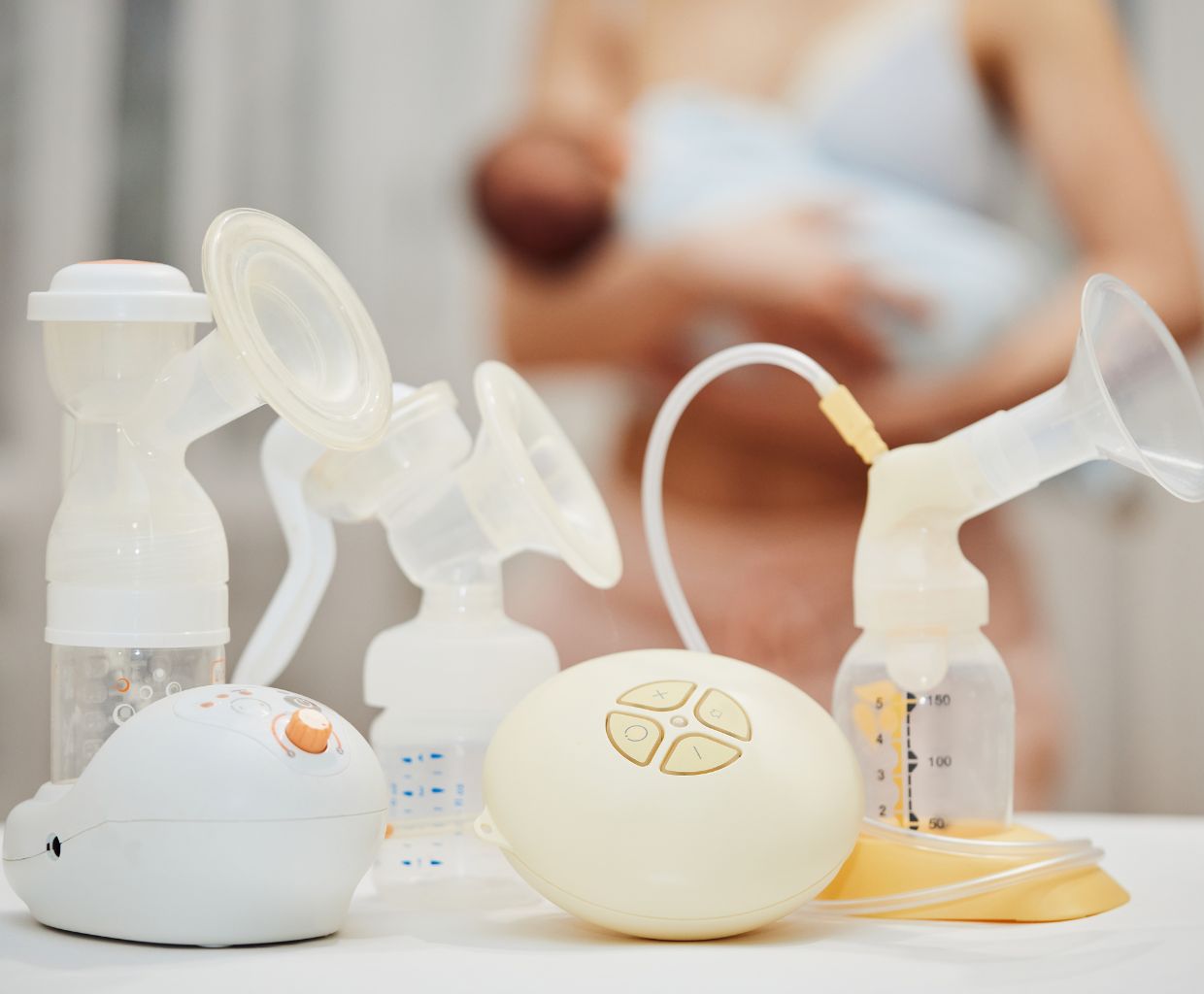
If you’ve started shopping for a pump, you’ve probably seen the words “hospital-grade” on boxes, rental listings and online ads. It sounds like the best possible pump, so it’s natural to wonder whether you need one.
The honest answer is that the term is less clear than it sounds. This guide explains what it does and doesn’t mean, who might want to rent one, and how breast pump coverage works under the Affordable Care Act (ACA). We don’t rank brands or quote prices here. For the wider picture, see our pumping guides.
What “hospital-grade” means (and doesn’t)
The FDA is direct about this: the term “hospital-grade pump” is not recognized by the FDA, and there is no consistent definition for it. Different companies may use the label to mean different things, so it doesn’t guarantee a specific standard of power or quality.
What the FDA does recognize is a difference in who a pump is designed for:
| Single-user pump | Multiple-user pump | |
|---|---|---|
| Designed for | One person only | Several people, one after another |
| Typically | Sold for personal use in stores and online | Rented by hospitals, lactation consultants and specialty medical supply stores |
| Shared or resold? | No | Yes, with a new accessory kit for each renter |
The FDA says that, apart from multiple-user pumps, it considers breast pumps to be single-user devices, because there’s no way to guarantee a pump can be cleaned and disinfected between different women. Rental pumps are described as designed to reduce the risk of contamination, and each renter must buy a new kit that includes the breast shields and tubing. The FDA notes that pumps safe for multiple users are “sometimes referred to as hospital-grade,” which is where the label comes from.
So the practical question isn’t “is it hospital-grade?” but “is this pump designed for multiple users, and who is renting it to me?”
Does a hospital-grade pump get more milk?
It’s a common belief, but the research is thin. We found one small randomized crossover study from Australia that compared a hospital-grade pump with a personal-use pump from the same manufacturer.
- Who: 28 mothers (after exclusions) who were 1 to 6 months postpartum with healthy term babies, pumping for 15 minutes on each pump.
- Milk volume: The hospital-grade pump collected more in the raw numbers (about 147 g versus 125 g combined). But once the researchers adjusted for how full the breasts were, the difference was no longer significant.
- Milk removal: About 77% of available milk was removed with the hospital-grade pump and about 75% with the personal pump, which was not a significant difference.
- Comfort: Comfort ratings were similar. The hospital-grade pump’s sound was rated more pleasant and its suction smoother.
The authors point out limits: the sample was small, the mothers were healthy and experienced pumpers with term babies, only one session was compared, and the pump maker funded the study (the authors say it had no role in the design or analysis). The results may not apply to preterm babies or to mothers still building their supply. Treat this as one data point, not proof either way.
Who may want to rent one
The same Australian paper describes hospital-grade (multiuser) pumps as the clinical standard of care in neonatal intensive care units and specialist lactation services, and says they use a closed system designed for hygienic multiuser use.
The clearest use case is when your baby can’t feed well at the breast and you’re relying on a pump to start your supply. The Canadian Paediatric Society’s 2023 position statement on milk in the NICU says:
- Supply is time-sensitive, and mothers should aim for at least 500 mL (about 17 oz) a day within the first 14 days after birth.
- Milk should be expressed by hand or pump at least 7 to 8 times per 24 hours, including at least one session overnight.
- It calls for access to a hospital-grade double pump in the units where mothers and babies are cared for after birth.
That statement is about preterm and ill babies. If your baby is in the NICU, ask the hospital’s lactation team what pump is available to you and whether you can use one at home.
If you’re worried about low supply with a healthy baby, we didn’t find research showing that renting a hospital-grade pump fixes it. A lactation consultant (IBCLC) can look at your latch, feeding frequency, flange fit and pumping routine first. Our guides on how to increase milk supply, exclusive pumping and power pumping cover those steps.
Renting safely
The FDA suggests you:
- Ask your doctor, your baby’s doctor or a certified lactation consultant for references.
- Check with your local Better Business Bureau and the pump manufacturer that the rental company is reputable and the pump is safe for multiple users.
- Plan to buy your own accessory kit.
Don’t buy or borrow a used pump that was designed for one person. The FDA warns that reused pumps can carry infectious particles that can make you or your baby sick, and that buying a used pump or sharing one may breach the manufacturer’s warranty. Whatever pump you use, our flange size calculator can help you start with the right fit, and our guide to cleaning breast pump parts shows how to keep parts safe.
Breast pump coverage under the ACA
In the US, the ACA requires most health plans to cover breastfeeding support and equipment. This is what the federal sources say:
- Plans must cover a pump. HealthCare.gov says plans must provide breastfeeding support, counseling and equipment for the duration of breastfeeding, and that your plan must cover the cost of a breast pump, either a rental unit or a new one you keep.
- No cost-sharing. CMS guidance says the lactation support and equipment in the federal women’s preventive services guidelines must be covered without cost-sharing, subject to reasonable medical management, which may include purchase instead of rental.
- Double electric pumps are named. The Women’s Preventive Services Initiative (WPSI) recommendation on breastfeeding services and supplies lists double electric breast pumps (including parts and maintenance) and milk storage supplies as breastfeeding equipment. It says access to double electric pumps should not depend on a previous failure of a manual pump. HRSA’s own guideline page blocked our access, so ask your plan how it applies this.
- Grandfathered plans are exempt. HealthCare.gov says the requirement applies to Marketplace plans and other health plans except grandfathered plans.
What varies by plan
HealthCare.gov says your plan may have guidelines on whether the covered pump is manual or electric, the length of a rental, and when you receive it (before or after birth). Some plans require pre-authorization from your doctor.
None of the federal pages we read says plans must cover a hospital-grade rental specifically, so don’t assume it. Call the number on your insurance card and ask:
- Which pumps do you cover, and do you cover rentals as well as purchases?
- Do I need a prescription or pre-authorization?
- Do I have to use a particular supplier?
- When can I get the pump, and are replacement parts covered?
This page is about private insurance. For other coverage, the FDA says some state health departments offer programs to help women buy or rent a pump, and some women may qualify for a pump through WIC.
When to call a doctor or lactation consultant
Contact your doctor or an IBCLC if:
- Pumping hurts, or your nipples are cracked or bleeding
- Your baby isn’t gaining weight well or has fewer wet and dirty diapers than expected
- Your milk output is low or dropping and you’re not sure why
- You have a firm, red or painful area on your breast, a fever or flu-like symptoms, which can be signs of a clogged milk duct or mastitis
- Your baby is premature or sick and you need help starting your supply
You’ll find ways to reach lactation help on our breastfeeding support page. If you’re pumping at a job, our guide to pumping at work covers your options. If a wearable or manual pump is on your list instead, see our guides to wearable breast pumps and manual breast pumps.
Frequently asked questions
Is a hospital-grade pump more powerful than a personal pump?
Not necessarily in everyday use. In a small crossover study of 28 mothers of healthy term babies, a hospital-grade and a personal pump removed similar amounts of milk once breast fullness was taken into account. The mothers did rate the hospital-grade pump's sound more pleasant and its suction smoother, but the study was small and funded by the pump's maker.
Can I buy a used hospital-grade pump?
The FDA warns against sharing or buying used single-user pumps, because they can carry infectious particles. Only pumps designed for multiple users should be used by more than one person, and each renter needs a new accessory kit.
Does insurance cover a hospital-grade pump rental?
Healthcare.gov says plans must cover the cost of a pump, rented or new, but plans may set rules on manual versus electric, rental length and timing. The federal pages we read don't say that every plan must cover a hospital-grade rental, so ask your plan directly.
Do I need a prescription to get a pump through insurance?
It depends on your plan. Healthcare.gov says some plans require pre-authorization from your doctor, so ask your plan before you buy or rent.
Can I get help paying for a pump if I'm not covered?
The FDA says some state health departments run programs to help women buy or rent pumps, and some women may qualify for breastfeeding supplies, including a pump, through the WIC program. Contact your state health department or local WIC office.
Sources
- FDA: Buying and Renting a Breast Pumphttps://www.fda.gov/medical-devices/breast-pumps/buying-and-renting-breast-pump
- HealthCare.gov: Breastfeeding benefitshttps://www.healthcare.gov/coverage/breast-feeding-benefits/
- CMS: FAQs about Affordable Care Act Implementation (Part XII)https://www.cms.gov/cciio/resources/fact-sheets-and-faqs/aca_implementation_faqs12
- Women's Preventive Services Initiative: Breastfeeding Services and Supplieshttps://www.womenspreventivehealth.org/recommendations/breastfeeding-services-and-supplies/
- Canadian Paediatric Society: Breastfeeding and human milk in the NICU, from birth to discharge (2023)https://pmc.ncbi.nlm.nih.gov/articles/PMC11022875/
- Warden AH, et al. Comparison of milk removal efficiency and maternal perception between a hospital-grade and personal-use pump. Healthcare (Basel). 2026https://pmc.ncbi.nlm.nih.gov/articles/PMC13465220/
This guide is general information, not medical advice. For your own situation, talk to your doctor, midwife, pharmacist or an IBCLC lactation consultant. Read our medical disclaimer and find breastfeeding support near you.
Related articles
Free Breast Pump Through Insurance: How to Get Yours
Most US health plans must cover a breast pump without cost-sharing. What the ACA requires, what your plan decides, and the questions to ask before you order.
Exclusive Pumping: How to Start, Build and Keep Your Supply
A practical guide to exclusive pumping: how to start after birth, how often to pump, the right equipment, keeping your supply up and getting support.
Wearable Breast Pump: How They Work, Pros and Cons, and Fit
An honest guide to wearable breast pumps: how they work, how they compare with traditional pumps, flange fit, cleaning and who they suit best.
Manual Breast Pump: Lever vs Silicone Pumps and How to Use One
How manual breast pumps work, lever vs silicone suction pumps, who they suit, how to use one step by step and how to keep the parts clean.