Breast Pump Coverage: Medicaid, TRICARE and Blue Cross
By Breastfeeding Mom Editorial TeamUpdated 6 min read
“Free breast pump through Medicaid,” “TRICARE breast pump,” “Blue Cross breast pump”: these are three different searches with three different answers. The Affordable Care Act (ACA) sets one federal rule for most private plans, but Medicaid and TRICARE have their own benefits, and your specific plan fills in the details.
This guide covers what each program publishes on its own pages, what varies, and what to ask before you order. We read these pages in October 2026, and coverage rules change, so confirm with your plan. For the general rules on private insurance, start with our guide to getting a free breast pump through insurance.
Blue Cross and other private plans
For private health plans, including Marketplace plans and job-based plans, the starting point is the ACA. HealthCare.gov says plans must provide breastfeeding support, counseling and equipment for the duration of breastfeeding, and must cover the cost of a breast pump, either a rental unit or a new one you keep. It applies to all health insurance plans except grandfathered plans. Your plan may set guidelines on manual versus electric, rental length and when you get the pump, and some plans require pre-authorization from your doctor.
“Blue Cross” doesn’t describe a single policy. The Blue Cross Blue Shield Association describes itself as a national association of independent, community-based and locally operated companies. So the Blue Cross plan you have is set by your local company and your employer or Marketplace plan. We didn’t read any individual Blue Cross plan’s pump policy, so we can’t tell you what yours covers. Call the member services number on your card and use the question list in our insurance guide.
TRICARE
TRICARE publishes a specific benefit page, last updated October 5, 2026 when we read it. It is labeled “Covered by All Plans.”
Who qualifies. You may qualify if you’re at least 27 weeks pregnant, have given birth, or legally adopt an infant and intend to personally breastfeed.
Pumps. TRICARE covers one manual or standard electric breast pump per birth event, and hospital-grade pump rentals when medically necessary.
Supplies. You can get covered supplies starting at 27 weeks of pregnancy and for up to three years after the birth event. The page lists limits, including:
- Valves and membranes: one per month for 12 months after the birth event
- Storage bags: 100 bags every 30 days after the birth event
- Tubing and tubing adapters: one set per birth event
- Replacement bottles, bottle caps and locking rings: limited quantities every 12 months
TRICARE says you can get more supplies than listed if your provider prescribes them and they’re medically necessary, with a new prescription specifying what you need.
Requirements. You need a prescription from a TRICARE-authorized doctor, physician assistant, nurse practitioner or nurse midwife, and the prescription must specify a manual or standard electric pump. A hospital-grade rental needs a referral and authorization through your provider and your TRICARE regional contractor.
Costs. You pay nothing for covered pumps and supplies from network providers and network equipment suppliers. If you use non-network providers or suppliers, or retail and online stores, you may have to pay up front and file a claim; TRICARE reimburses up to the TRICARE-allowable amount.
Exclusions. TRICARE doesn’t cover pump batteries, battery-powered adapters and battery packs; accessories such as nursing bras, cleaning supplies and travel bags; or extended warranties.
Counseling. TRICARE’s breastfeeding counseling page says it covers counseling during inpatient maternity stays, outpatient follow-up visits and well-child visits, plus up to six individual outpatient breastfeeding counseling sessions per birth event. Sessions can be in person or virtual, with authorized providers, and some non-medical counselors may be available through a separate demonstration program.
Medicaid
Medicaid is run by each state, and we found no single federal page that sets one national pump benefit.
What we could confirm from federal and state pages:
- Federal background. A 2012 CMS issue brief says States must cover pregnancy-related services and that the definition is broad enough to cover lactation services. It also says lactation services are not specifically mentioned in the Medicaid statute or federal regulations, so not all states separately pay for them, and states vary widely in scope. That brief is old, so use it for context, not for current rules.
- New York (state page): members enrolled in New York Medicaid qualify for a breast pump at no cost with a prescription. Coverage includes manual and double electric personal-use pumps and a hospital-grade electric rental if you meet the criteria. It’s available throughout pregnancy and up to 12 months postpartum, through a Medicaid-participating pharmacy or equipment vendor, and members may qualify for a new pump for each pregnancy.
- North Carolina (policy notice, effective February 2023): an electric breast pump requires prior authorization and is medically necessary in listed situations, such as a newborn detained in the hospital after the mother is discharged, a newborn condition that interferes with feeding, or a maternal condition that lowers milk production. For a medically necessary hospital-grade rental, authorization may be limited to one month at a time. That notice is from 2023, so check the current policy.
The two examples show the range: one state publishes a broad, prescription-based benefit, and another sets medical-necessity criteria and prior authorization for electric pumps. Your state may be different from both.
How to check your state
- Find your state Medicaid agency’s page on breast pumps or “durable medical equipment” and breastfeeding.
- If you’re in a Medicaid managed care plan, call member services, because the plan may handle the benefit.
- Ask whether a prescription or prior authorization is needed, which suppliers or pharmacies to use, which pump types are covered, when you can order, and how long your Medicaid coverage lasts after birth.
How the programs compare
| Private plans (including Blue Cross) | TRICARE | Medicaid | |
|---|---|---|---|
| Where the rule comes from | ACA, HRSA guideline | TRICARE benefit page | Each state |
| Pump types named | Rental or new; manual versus electric set by plan | Manual or standard electric; hospital-grade rental when medically necessary | Varies by state (NY lists manual, double electric and hospital-grade rental) |
| Prescription | Some plans require pre-authorization | Required | Varies (NY requires one) |
| Timing | Plan decides before or after birth | From 27 weeks pregnant | Varies (NY: pregnancy to 12 months postpartum) |
| Who to ask | Your plan | TRICARE regional contractor | State Medicaid agency or managed care plan |
Other ways to get help
The FDA says some state health departments have programs to help women buy or rent a pump, and that some women may qualify for a pump through WIC. If you’re deciding which pump to get, our guide on how to choose a breast pump covers what to look for, and our hospital-grade breast pump guide explains rentals. If you’ll be pumping at work, our guide explains your options there. For the full list of topics, see our pumping hub.
When to call a doctor or lactation consultant
If your baby can’t feed well at the breast and you need to pump right away, don’t wait for coverage paperwork. Tell the hospital’s lactation team or your baby’s doctor, who may be able to arrange a pump for the short term.
If pumping hurts, your nipples are damaged, or your milk supply seems to be dropping, contact your doctor or a lactation consultant (IBCLC). Our breastfeeding support page lists ways to reach one, including WIC.
Frequently asked questions
Does Medicaid cover a hospital-grade pump rental?
It varies by state. New York's Medicaid page says Medicaid will cover renting a hospital-grade electric pump if you meet the criteria. North Carolina's policy notice says that when a hospital-grade rental is medically necessary, the prior authorization may be limited to one month at a time. Check your own state.
Will TRICARE cover a wearable or battery-powered pump?
TRICARE's page says it covers one manual or standard electric breast pump per birth event and doesn't mention wearable pumps. It lists breast pump batteries, battery-powered adapters and battery packs as exclusions. Ask your TRICARE regional contractor before you buy.
Do all Blue Cross plans cover breast pumps the same way?
No. The Blue Cross Blue Shield Association says it is a national association of independent, community-based and locally operated companies, so plans and rules differ by company and by plan. The ACA rule applies to most private plans, but your plan decides details like pump type, rental length and supplier.
Can I get a new pump for each pregnancy?
New York's Medicaid page says members may qualify for a new pump for each pregnancy, and TRICARE counts coverage per birth event. For other programs, the federal pages we read don't give a rule, so ask your plan.
What if my coverage doesn't include a pump?
The FDA says some state health departments run programs to help women buy or rent a breast pump, and that some women may qualify for a pump through the WIC program. Contact your state health department or local WIC office.
Sources
- HealthCare.gov: Breastfeeding benefitshttps://www.healthcare.gov/coverage/breast-feeding-benefits/
- TRICARE: Breast Pumps and Supplieshttps://tricare.mil/CoveredServices/IsItCovered/BreastPumpsSupplies.aspx
- TRICARE: Breastfeeding Counselinghttps://tricare.mil/CoveredServices/IsItCovered/BreastfeedingCounseling
- New York State Department of Health: New York State Medicaid Coverage of Breast Pumpshttps://www.health.ny.gov/community/pregnancy/breastfeeding/medicaid_coverage/breast_pump_coverage.htm
- NC Medicaid: Updates to Clinical Coverage Policy 5A-3, Nursing Equipment and Supplies (2023)https://medicaid.ncdhhs.gov/blog/2023/03/01/updates-clinical-coverage-policy-5a-3-nursing-equipment-and-supplies
- CMS (Medicaid.gov): Medicaid Coverage of Lactation Services, issue brief (2012)https://www.medicaid.gov/medicaid/quality-of-care/downloads/lactation_services_issuebrief_01102012.pdf
- Blue Cross Blue Shield Association: The Blue Cross and Blue Shield Systemhttps://www.bcbs.com/about-us/blue-cross-blue-shield-system
- FDA: Buying and Renting a Breast Pumphttps://www.fda.gov/medical-devices/breast-pumps/buying-and-renting-breast-pump
This guide is general information, not medical advice. For your own situation, talk to your doctor, midwife, pharmacist or an IBCLC lactation consultant. Read our medical disclaimer and find breastfeeding support near you.
Related articles
Free Breast Pump Through Insurance: How to Get Yours
Most US health plans must cover a breast pump without cost-sharing. What the ACA requires, what your plan decides, and the questions to ask before you order.
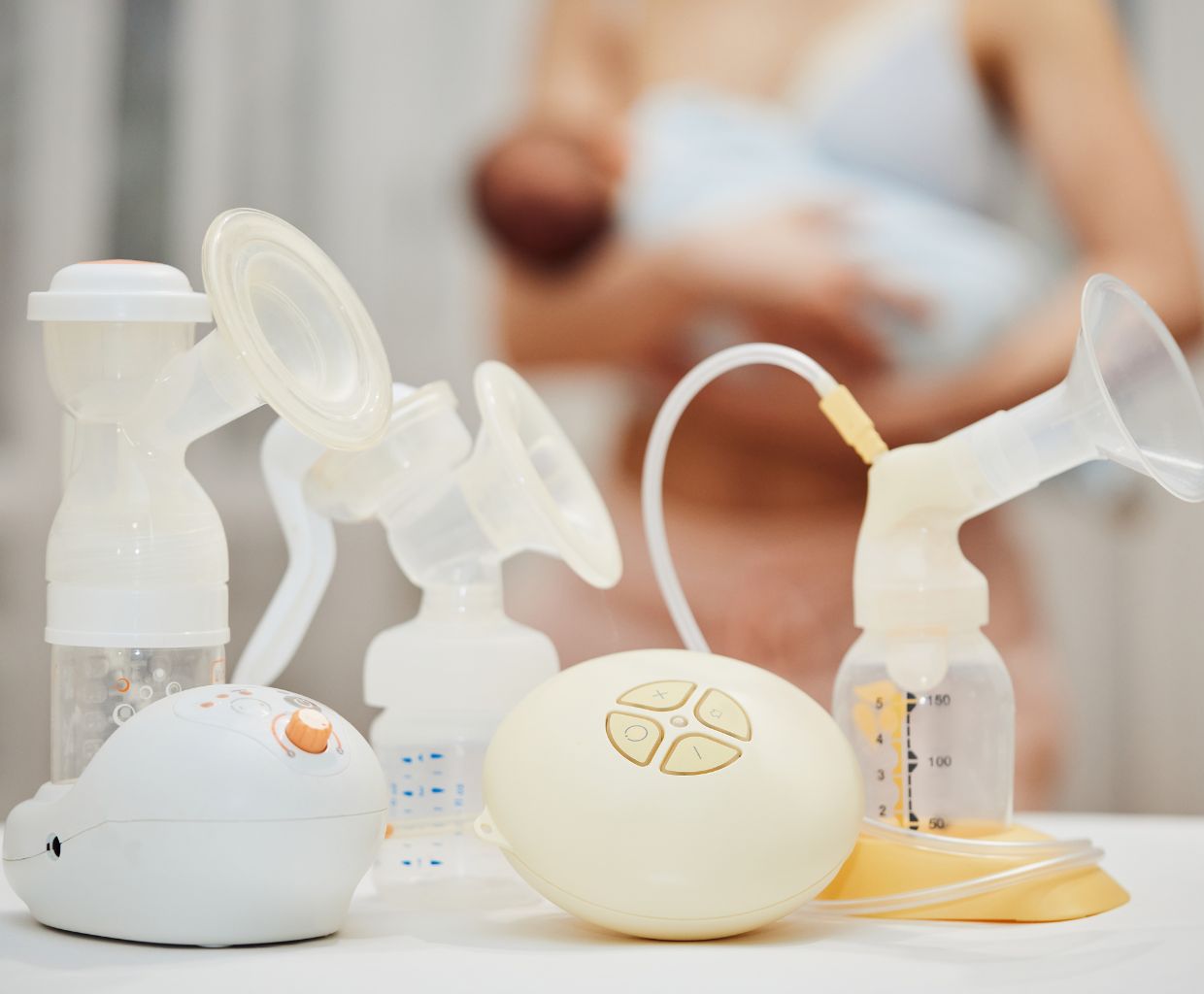
Hospital-Grade Breast Pump: What It Means, Who Needs One and Insurance
What 'hospital-grade' really means (the FDA doesn't define it), who may need a rental pump, and what US health plans must cover under the ACA.
How to Choose a Breast Pump: What to Look For
There's no single best breast pump. Choose by how you'll use it, using the FDA's questions on type, fit, cleaning, power, parts and returns.

Portable Breast Pump: Types, What to Check and Using One on the Go
What "portable" really means for a breast pump, how battery, manual and wearable pumps differ, and what to check before you buy or travel with one.