Pumping at Work: Your Rights, a Plan and Storing Milk
By Breastfeeding Mom Editorial TeamUpdated 6 min read
Going back to work doesn’t have to mean the end of breast milk for your baby. Many parents keep providing milk by pumping during the workday, and in the U.S. the law backs you up.
This guide covers your rights under federal law, how to talk to your employer, how often to pump, what to bring and how to store your milk safely at work. It’s general information, not legal advice. For your specific situation, contact the agencies listed below or an employment lawyer.
Your rights under the PUMP Act
The PUMP for Nursing Mothers Act expanded the pumping protections in the Fair Labor Standards Act (FLSA). According to the U.S. Department of Labor’s Fact Sheet #73:
- Who’s covered: nearly all employees covered by the FLSA, as of December 29, 2022.
- How long: up to one year after your child’s birth.
- Break time: reasonable break time each time you need to express milk. Your employer can’t deny a needed break, and how often and how long you need will vary.
- The space: a place other than a bathroom that is shielded from view and free from intrusion from coworkers and the public. A temporary or converted space can qualify if it meets these conditions.
- Pay: breaks can be unpaid only if you’re completely relieved from duty. If your employer provides paid breaks, you must be paid the same way as other employees for pumping during them. Any work you do while pumping must be paid.
- Remote work: teleworkers get the same breaks and must be free from observation by employer-required cameras or video calls.
Exceptions to know about
- Employers with fewer than 50 employees may not have to comply if it would cause undue hardship, judged by the difficulty or expense relative to the employer’s size and resources.
- Airline crewmembers are exempt, and some rail and motorcoach employees may be exempt under certain conditions.
- State and local laws may give you more protection, and the FLSA doesn’t override them.
The Pregnant Workers Fairness Act
The EEOC explains that the Pregnant Workers Fairness Act (PWFA) can also cover pumping breaks and space, as accommodations for lactation. It generally applies to employers with 15 or more employees, so it may help if a small employer is exempt from the FLSA rules. Under the PWFA there’s no fixed time limit; it depends on your needs.
Under both laws, your employer can’t require a doctor’s note for pump breaks, there are no special words or forms needed to ask, and retaliation is prohibited.
If your rights aren’t respected
- FLSA (break time and space): contact the Department of Labor’s Wage and Hour Division at 1-866-487-9243 or through its website. The time limit is generally two years, but the agency recommends reporting as soon as possible.
- PWFA (accommodations): file a charge with the EEOC. Deadlines are 180 or 300 days from the violation, depending on where you live.
Talking to your employer
A conversation before you return makes the first weeks much easier.
- Check your company’s policy. LLLI suggests asking your manager and HR department about the company’s rules on pump breaks.
- Find the space. If there’s no lactation room, HealthyChildren.org advises working with your employer to identify a space. Visiting it during your leave lets you sort out details before day one.
- Ask practical questions: Is there an outlet, a chair and a table? Can the door lock? Is there a sink nearby and a fridge for milk?
- Agree on timing. Explain roughly how many breaks you’ll need and how long each takes, including setup and cleanup.
- Put it in writing. An email summarizing what you agreed is a helpful record, even though no form is legally required.
- Do a practice run. LLLI suggests a trial run at your workplace before you start.
How often to pump at work
LLLI’s guidance is simple: try to pump as many times as your baby will feed while you’re apart. HealthyChildren.org mentions breaks one to three times a day; how many you need depends on your hours, your commute and your baby’s age.
| Time | What happens |
|---|---|
| Before work | Breastfeed or pump at home |
| Mid-morning | Pump |
| Lunch | Pump |
| Mid-afternoon | Pump |
| After work | Breastfeed as soon as you’re together |
HealthyChildren.org advises pumping for at least 10 minutes per session, even if the flow stops sooner, and notes that skipped sessions and short pumping times are common causes of a lower supply. If you can, start back mid-week, which gives you a short trial run.
For more sample plans, including 12-hour shifts, see our pumping schedule guide.
What to pack
- Your pump, charger and a backup power option
- Clean pump parts, plus a spare set if you can’t wash them at work
- Bottles or breast milk storage bags, labels and a marker
- An insulated cooler with frozen ice packs
- A hands-free pumping bra so you can relax or eat while you pump
- Breast pads, a spare top, water and snacks
- A photo or video of your baby to help let-down
A wearable breast pump can be handy for a quick session at your desk, but it isn’t a substitute for proper break time and a private space.
Storing breast milk at work
The CDC is clear that expressed breast milk is food. It can be stored alongside other foods in a refrigerator used for food, and employers, coworkers and cleaning staff shouldn’t treat it as a biohazard. The CDC adds that keeping milk in a shared fridge or washing pump parts in a break room is unlikely to cause sanitation or safety problems.
CDC storage times for freshly expressed milk:
| Where | How long |
|---|---|
| Room temperature, 77°F (25°C) or colder | Up to 4 hours |
| Insulated cooler with frozen ice packs | Up to 24 hours |
| Refrigerator | Up to 4 days |
| Freezer | About 6 months is best; up to 12 months is acceptable |
If there’s no fridge at work, LLLI says you’ll need your own insulated cooler. Our guide to choosing a breast milk cooler explains what to look for. Once you get home, use the milk, refrigerate it or freeze it. Label every container with the date it was expressed, and with your baby’s name if it’s going to childcare.
Cleaning pump parts at work
The CDC recommends cleaning every part that touches milk after each use: take the parts apart, rinse them under running water, wash them in a basin or container used only for feeding items rather than directly in the sink, and let them air-dry completely. If you share a pump at work, wipe the dials, switch and counter with a disinfectant wipe before and after use.
Taking care of your supply
The first weeks back can be tiring, and your output may dip. Try to:
- Keep your sessions consistent, even on busy days
- Relax during breaks rather than answering emails
- Nurse often when you’re with your baby, including evenings and weekends
- Drink when you’re thirsty
When to call a lactation consultant
Talk to an IBCLC or your doctor if:
- Your supply drops and doesn’t recover within a few days of regular pumping
- Pumping is painful, or your nipples are cracked or bleeding
- You notice a tender lump, redness, fever or flu-like symptoms
- You’re struggling to fit enough sessions into your workday
A lactation consultant can help you adjust your plan, and the agencies above can help with workplace problems. For more on equipment and schedules, browse our pumping guides.
Frequently asked questions
Does my employer have to pay me for pumping breaks?
Not always. Under the FLSA, pumping breaks can be unpaid if you're completely relieved from duty. If your employer offers paid breaks and you pump during them, you must be paid the same as other employees, and any time you work while pumping must be paid.
Can my employer make me pump in a bathroom?
No. The Department of Labor says the space must be a place other than a bathroom, shielded from view and free from intrusion from coworkers and the public. A bathroom is not allowed even if it's private.
Do I need a doctor's note to take pumping breaks?
No. The EEOC and the Department of Labor say an employer may not require a doctor's note for pump breaks, and there are no required words or forms for asking.
What if I work from home?
Teleworkers have the same right to pump breaks. The Department of Labor adds that you must be free from observation by any employer-provided or required video system, such as a work camera or video call.
What if I need to pump after my baby's first birthday?
The FLSA right lasts up to one year after birth. Under the Pregnant Workers Fairness Act, the EEOC says there's no set time limit, and how long you qualify for an accommodation depends on your needs. State laws may also give you more protection.
Sources
- U.S. Department of Labor: Fact Sheet #73, FLSA Protections for Employees to Pump Breast Milk at Workhttps://www.dol.gov/agencies/whd/fact-sheets/73-flsa-break-time-nursing-mothers
- U.S. EEOC: Time and Place to Pump at Work, Your Rightshttps://www.eeoc.gov/time-and-place-pump-work-your-rights
- CDC: Proper Storage and Preparation of Breast Milkhttps://www.cdc.gov/breastfeeding/breast-milk-preparation-and-storage/handling-breastmilk.html
- CDC: Breastfeeding Frequently Asked Questionshttps://www.cdc.gov/breastfeeding/php/guidelines-recommendations/faqs.html
- La Leche League International: Working and Breastfeedinghttps://llli.org/breastfeeding-info/working-and-breastfeeding/
- HealthyChildren.org (AAP): Expressing Breast Milk at Workhttps://www.healthychildren.org/English/ages-stages/baby/breastfeeding/Pages/Expressing-Breastmilk-on-the-Job.aspx
This guide is general information, not medical advice. For your own situation, talk to your doctor, midwife, pharmacist or an IBCLC lactation consultant. Read our medical disclaimer and find breastfeeding support near you.
Related articles
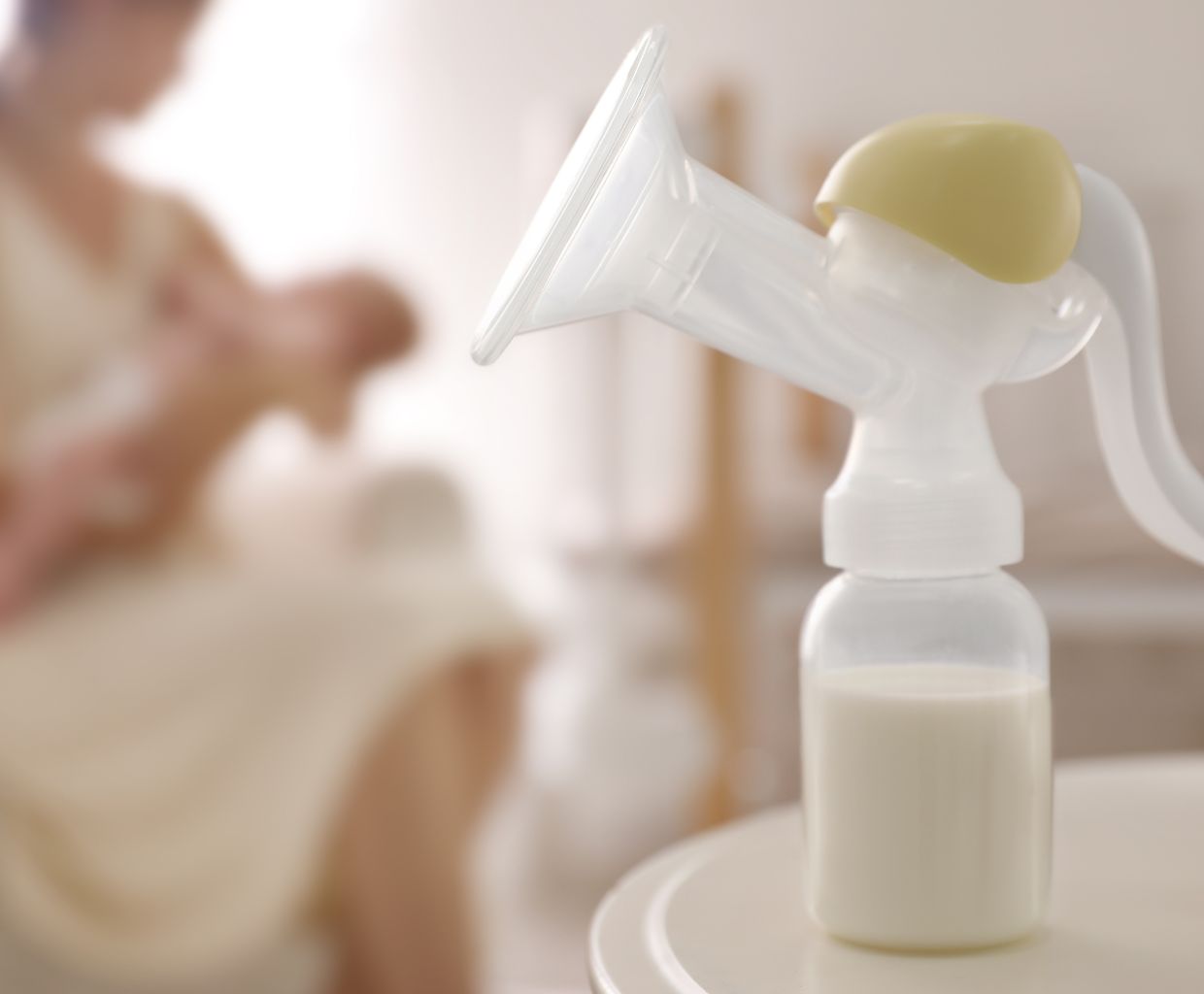
Pumping Schedule: Sample Plans for Every Situation
Sample pumping schedules in easy tables for exclusive pumping, building a stash while nursing, going back to work and 12-hour shifts.
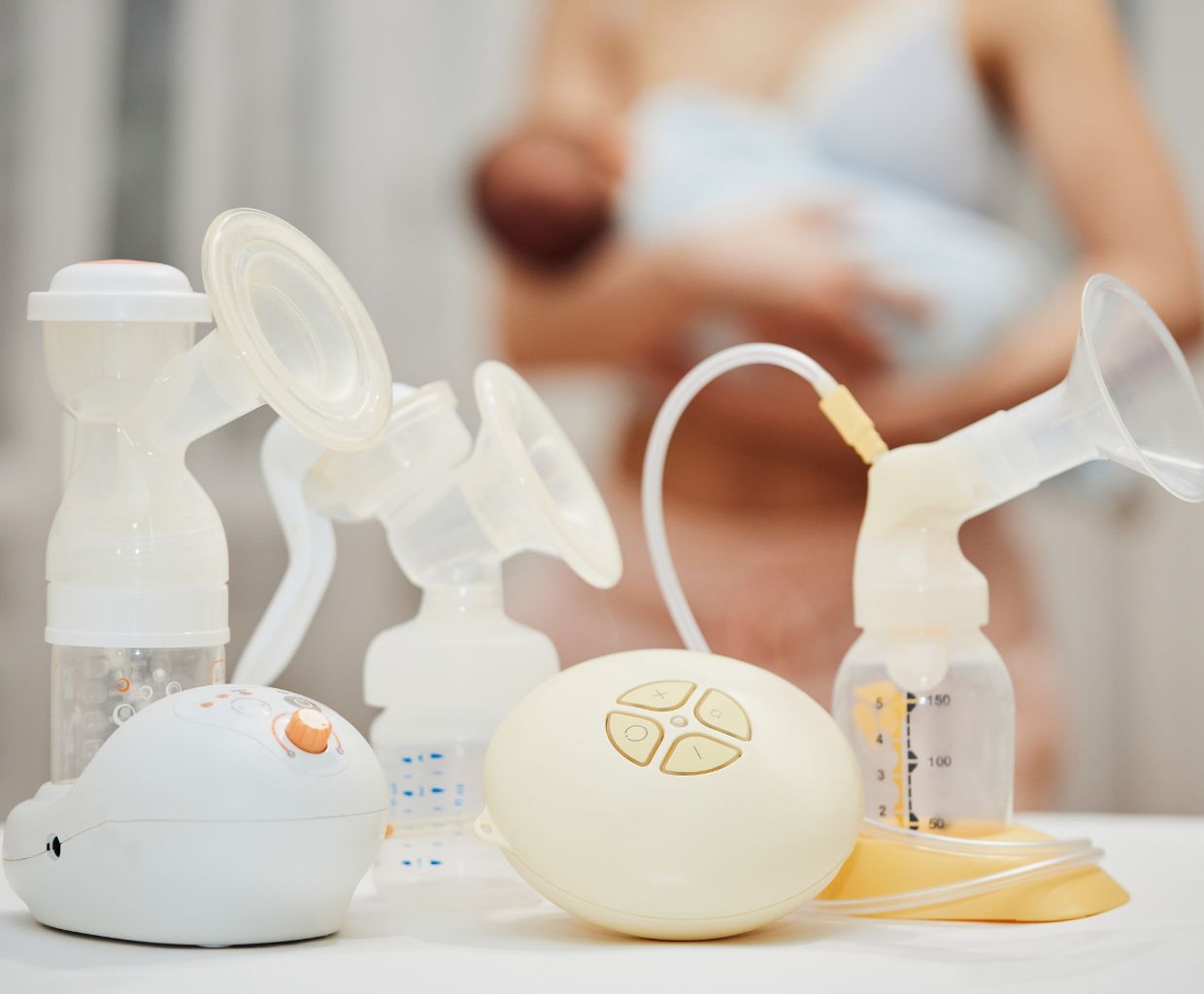
Exclusive Pumping: How to Start, Build and Keep Your Supply
A practical guide to exclusive pumping: how to start after birth, how often to pump, the right equipment, keeping your supply up and getting support.
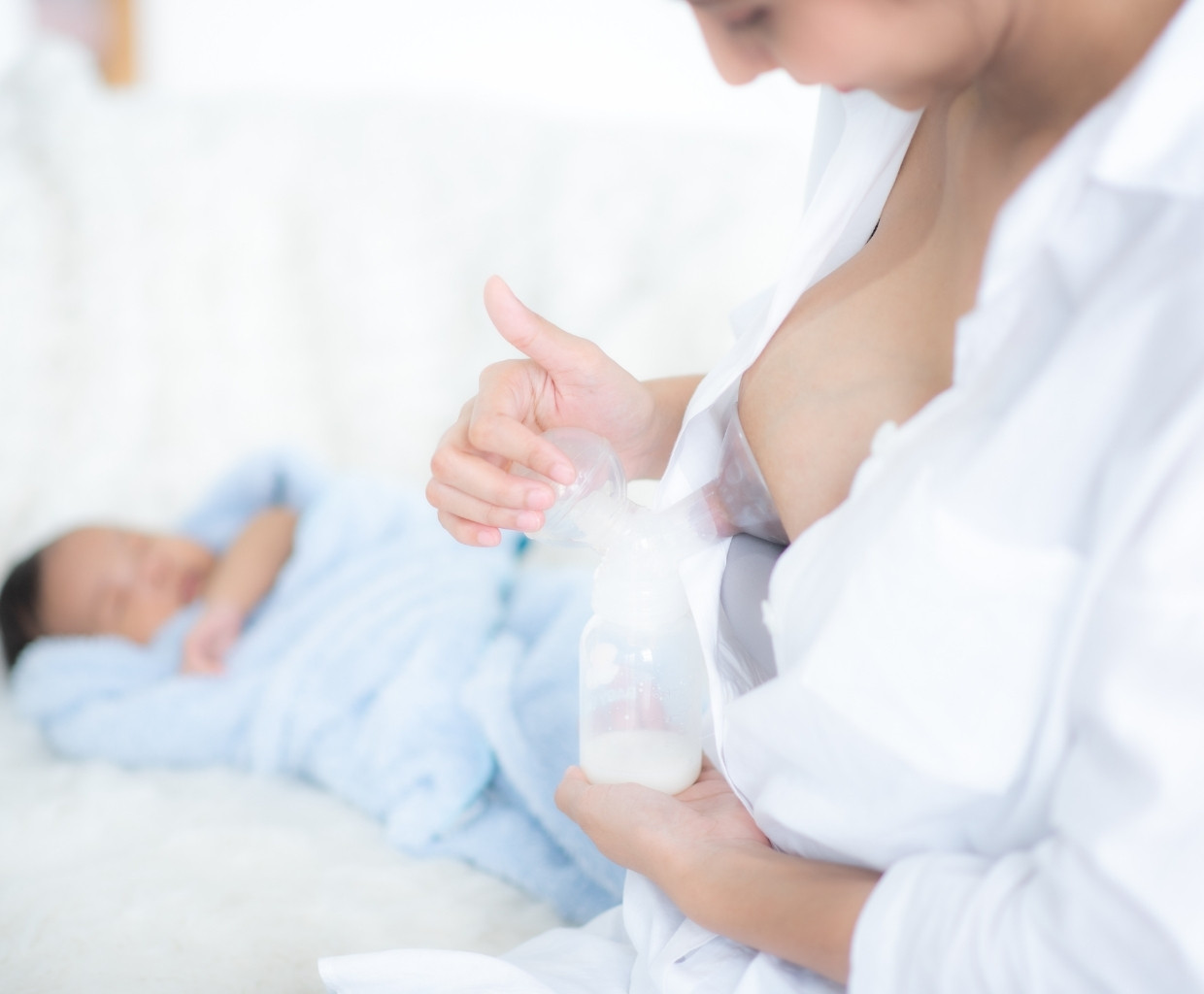
How Long to Pump: Minutes per Session and per Day
How many minutes to pump per session, single vs double pumping, when to stop, and how much time exclusive pumping takes each day at every stage.
Wearable Breast Pump: How They Work, Pros and Cons, and Fit
An honest guide to wearable breast pumps: how they work, how they compare with traditional pumps, flange fit, cleaning and who they suit best.