Moringa and Breastfeeding: Does It Boost Milk Supply, and Is It Safe?
By Breastfeeding Mom Editorial TeamUpdated 6 min read
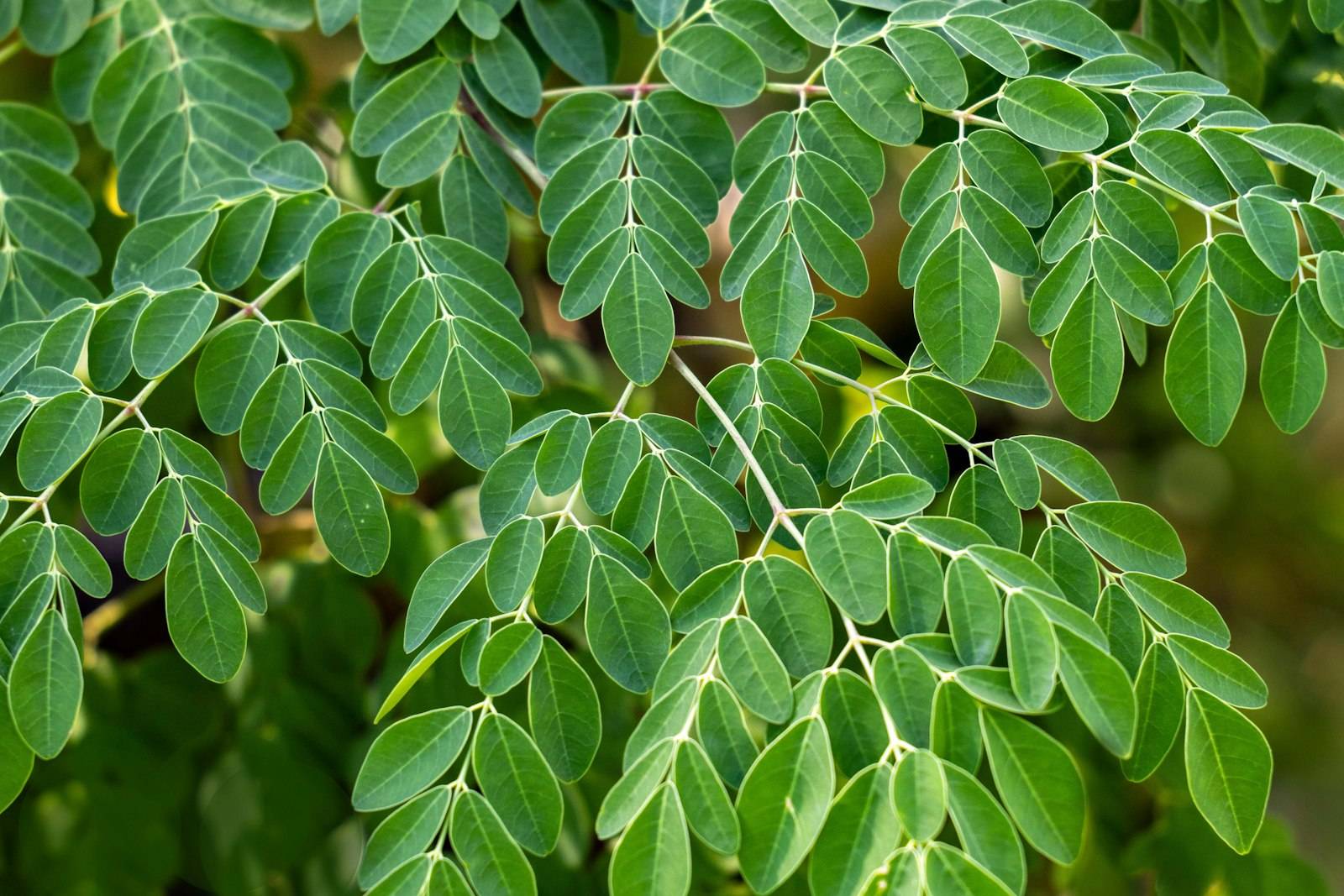
Moringa shows up in lactation teas, capsules and powders, often under its Philippine name malunggay. If you’re worried about your milk supply, the claims can sound convincing. This guide looks at what the research actually found, how reliable it is, and what’s known about safety. It is general information, so check with your doctor, pharmacist or lactation consultant (IBCLC) before you take any supplement. For the bigger picture, see our milk supply guides.
What is moringa?
Moringa (Moringa oleifera) is a tree whose leaves are eaten as food and used as traditional medicine in Asia and Africa. NIH’s LactMed database says the leaves contain vitamins, minerals, essential amino acids and several glycosides. It has long been used as a galactagogue, a substance taken to increase milk supply, particularly in the Philippines.
The Academy of Breastfeeding Medicine (ABM) lists moringa leaf in its Protocol #9 among the herbs used as galactogogues but gives it no further detail. The ABM’s overall conclusion is that it cannot recommend any specific galactogogue, and it says that before using one, a lactation expert should thoroughly evaluate the whole feeding process.
What the research found
Here is what we found, from the most reliable sources downward.
Reviews
- Cochrane review (2020). This review pooled 41 randomized trials of galactagogues in mothers of healthy term babies, 27 of them natural products including moringa. The certainty of evidence was low to very low, mainly because most trials weren’t blinded, they differed widely, and their measurements were imprecise. The milk-volume results for natural galactagogues couldn’t be combined, and for each product they suggested either benefit or little or no difference. For moringa and a mixed tea, there was very low-certainty evidence that infant weight may increase. The authors said they were very uncertain about the size of any effect and called for high-quality trials.
- Review in mothers of preterm babies (2026). This review of 10 randomized trials of herbal galactagogues, each testing a different herb or mix, found low-certainty evidence that several products, including moringa leaf capsules, increase milk production. Two trials had a high risk of bias and the others had “some concerns.” The authors said higher-quality trials are needed.
- LactMed. LactMed’s current moringa entry says the most recent and comprehensive meta-analysis (14 studies, 865 subjects) indicates moringa increases serum prolactin and milk volume and quality, while noting that the long-term benefit to breastfed infants has not been well studied. We couldn’t open that meta-analysis ourselves, so we can’t tell you how strong its studies were. The two reviews above, which we did read, both describe low or very low certainty.
Individual trials
| Trial | Who | What was tested | Result |
|---|---|---|---|
| Estrella et al., 2000 (as described in the 2026 preterm review) | 68 mothers of preterm babies, Philippines | 250 mg moringa leaf capsule twice daily vs. placebo, starting day 3 after birth | The review reports more milk with moringa and treats the evidence as low-certainty |
| Fungtammasan and Phupong, 2022 | 88 postpartum mothers, Thailand, double-blind and placebo-controlled | 900 mg a day of moringa leaf capsules vs. placebo | Median milk volume on day 3: 73.5 vs. 50 mL, not a statistically significant difference (p = 0.19) |
| Kenya pilot, 2025 | 50 breastfeeding mother-baby pairs, randomized by location, single-blinded | 20 g a day of dried leaf powder in corn porridge vs. porridge alone, for 3 months | 24-hour expressed milk at 3 months: about 947 vs. 618 mL (p = 0.003), with no change in milk fat, protein or infant growth |
How to read this:
- In the Thai trial, the authors noted the moringa group had 47% more milk and concluded the herb may be used as a galactagogue. But the pre-planned comparison was not statistically significant, so the honest summary is “no clear effect shown” rather than “it worked.”
- The Kenya study was small, randomized by location instead of by individual mother, and the powder dose (20 g a day) is far above what’s in a typical capsule. The authors themselves say more studies are needed. It’s also a different setting from US mothers, so it may not apply to you.
- Trials differ in who took part, the dose, the product, how milk was measured and how long it lasted, which is why Cochrane couldn’t combine the results.
The bottom line: some trials point to a possible benefit, but the research is small, short and inconsistent, and nobody has shown that moringa works for most mothers. If supply improves while you take it, that may be because you’re also feeding or pumping more often.
Is moringa safe while breastfeeding?
LactMed says moringa leaves are widely used as food and medicine in Asia and Africa, and that studies have found no serious short-term adverse effects in nursing mothers who ate them or in their breastfed infants. Two important caveats:
- Blood clotting. LactMed says moringa may stimulate blood clotting, so caution is advisable in anyone at high risk for blood clots. If you’ve had a clot or have risk factors, ask your doctor before using it.
- Limited data. LactMed says long-term benefit to breastfed infants has not been well studied. We found no reliable data on interactions with specific medicines, so tell your pharmacist everything you take.
Supplements are not FDA-approved for milk supply
In the US, the FDA says it doesn’t have the authority to approve dietary supplements before they’re marketed. Unlike drugs, which must be proven safe and effective for their intended use before marketing, supplements don’t go through that approval, and the FDA generally doesn’t approve supplement claims or labeling before use. Manufacturers are responsible for making sure their products are safe. So no moringa product has been approved by the FDA for increasing milk supply.
LactMed adds that dietary supplements may contain multiple ingredients, labels and contents often differ, and a quality seal from an independent testing group can show a product contains what it says but doesn’t certify that it’s safe or effective. It also warns that clinical results on one product may not apply to another.
Before you reach for a supplement
LactMed says galactagogues should never replace evaluation and counseling on factors that affect milk production. That fits the ABM’s advice. Start here:
- Feed or pump often, including at night. Our guide on how to increase milk supply walks through the steps, and power pumping is one technique some parents try.
- Have an IBCLC check the latch, positioning and pump fit.
- Ask your doctor about medical causes of low supply.
- If you still want to try a herb, compare it with what we say about fenugreek and the other herbs in our lactation supplements guide. Food-based ideas are in foods to increase milk supply, and many mother’s milk teas are herb blends with their own cautions.
When to call a doctor or lactation consultant
Stop the supplement and get medical help right away if you have signs of an allergic reaction such as hives, swelling of the face or throat, or trouble breathing. Call your doctor if you have unusual symptoms after starting it, or if you have a history of blood clots.
Call your baby’s doctor if your baby has diarrhea, a rash, is unusually fussy or isn’t having enough wet and dirty diapers. Our baby poop color chart shows typical diaper counts by age. If you’re worried your baby isn’t getting enough milk, see an IBCLC. Our breastfeeding support page lists where to find one.
Frequently asked questions
How much moringa should I take to increase milk supply?
There is no established dose. Trials have used very different amounts, from capsules to about 20 grams of leaf powder a day in porridge, and no authority recommends one. Ask your doctor or an IBCLC before trying it, and follow the product label.
How long does moringa take to work?
We don't know. The trials we found measured milk over a few days to three months with mixed results, and supply often improves anyway when you feed or pump more often.
Is moringa safe for my baby?
LactMed says studies found no serious short-term adverse effects in nursing mothers who ate moringa leaves or in their breastfed infants, but long-term benefit to breastfed babies has not been well studied. Watch your baby for rash, diarrhea or fussiness and call the pediatrician if you notice changes.
Can I take moringa with other lactation supplements?
It's best not to combine several supply products. Many blends contain multiple herbs, each with its own cautions, and LactMed says labels don't always match what's in the product. Check every ingredient with your pharmacist.
Is moringa in foods and teas the same as capsules?
Not necessarily. LactMed says results on one product may not apply to others, and the amount of moringa in a tea or blend is often unclear. The trials used specific capsules or measured leaf powder.
Sources
- LactMed: Moringahttps://www.ncbi.nlm.nih.gov/books/NBK501899/
- Academy of Breastfeeding Medicine Clinical Protocol #9: Use of Galactogogues in Initiating or Augmenting Maternal Milk Production (2018)https://www.bfmed.org/assets/DOCUMENTS/PROTOCOLS/9-galactogogues-protocol-english.pdf
- Foong SC, et al. Oral galactagogues (natural therapies or drugs) for increasing breast milk production in mothers of non-hospitalised term infants. Cochrane Database Syst Rev. 2020https://pubmed.ncbi.nlm.nih.gov/32421208/
- Cragg A, et al. Herbal galactagogues to improve breastmilk production and lactation in mothers of preterm babies: a systematic review of clinical trials. Eur J Clin Nutr. 2026https://pubmed.ncbi.nlm.nih.gov/41350450/
- Fungtammasan S, Phupong V. The effect of Moringa oleifera capsule in increasing breast milk volume in early postpartum patients: a double-blind, randomized controlled trial. Eur J Obstet Gynecol Reprod Biol X. 2022https://pubmed.ncbi.nlm.nih.gov/36440058/
- Effect of maternal Moringa oleifera leaf supplementation on maternal and infant nutritional status and human milk. Curr Dev Nutr. 2025https://pubmed.ncbi.nlm.nih.gov/41282517/
- FDA: Questions and Answers on Dietary Supplementshttps://www.fda.gov/food/information-consumers-using-dietary-supplements/questions-and-answers-dietary-supplements
This guide is general information, not medical advice. For your own situation, talk to your doctor, midwife, pharmacist or an IBCLC lactation consultant. Read our medical disclaimer and find breastfeeding support near you.
Related articles
Lactation Supplements: Do Fenugreek, Moringa and Other Herbs Work?
An honest look at lactation supplements like fenugreek, moringa, goat's rue, brewer's yeast and blessed thistle: evidence, side effects and safety.
Fenugreek for Breastfeeding: Does It Work, and Is It Safe?
Fenugreek is the best-known herb for milk supply, but the evidence is weak. Learn the side effects, the maple-syrup smell and who should avoid it.
Mother's Milk Tea: Herbs, Evidence and Safety
What's in mother's milk and lactation teas, what the research says about fenugreek, fennel and blessed thistle, and how to drink them safely.

How to Increase Milk Supply: What Works and What Doesn't
Practical, evidence-based ways to increase breast milk supply, plus an honest look at fenugreek, domperidone and other galactagogues.