Breastfeeding vs Pumping: Pros, Cons and How to Choose
By Breastfeeding Mom Editorial TeamUpdated 7 min read
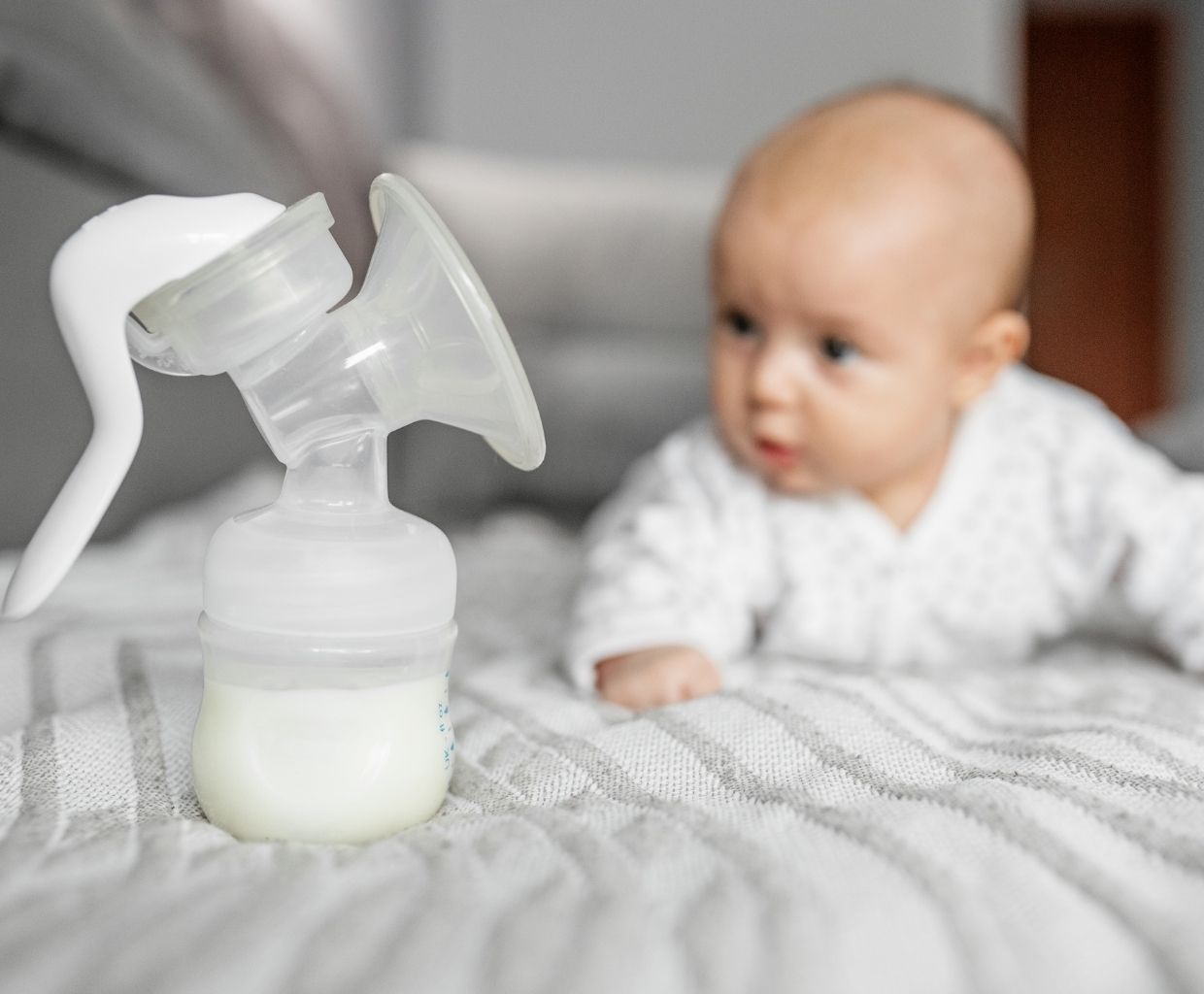
Should you nurse your baby at the breast, pump and give bottles, or mix the two? It’s one of the most common questions new parents ask, and it often comes with guilt attached. Here’s the good news first: whichever you choose, your baby is getting breast milk.
This guide lays out what each option involves day to day, what the research does and doesn’t show, and how to decide. You don’t have to pick one forever. Many families move between them as life changes.
Most parents do both
“Breastfeeding vs pumping” sounds like a choice between two camps, but in practice most breastfeeding parents pump at least sometimes. In a large US study of breastfeeding mothers (the Infant Feeding Practices Study II), 85% of mothers of babies aged 1.5 to 4.5 months had expressed milk at some point. About a quarter were pumping on a regular schedule, and the most common reason was so someone else could feed the baby. Regular pumping was linked to having a job.
A smaller group pumps without ever nursing at the breast. In an Ohio study of 478 women, 6.9% (33 women) pumped but never fed at the breast. This is usually called exclusive pumping, and our exclusive pumping guide covers how to start and keep it going.
The options at a glance
| Nursing at the breast | Exclusive pumping | Combining both | |
|---|---|---|---|
| What baby gets | Breast milk, straight from you | Your breast milk by bottle | Breast milk at the breast and by bottle |
| Equipment | None needed | Pump, parts, bottles, storage | Pump plus bottles for some feeds |
| Washing and storage | None | After every session | For pumped feeds only |
| Who can feed baby | Only you | Anyone | Anyone, for bottle feeds |
| Knowing how much baby drinks | No | Yes | Partly |
| Time per feed | Feeding only | Pumping, feeding and cleaning | Varies |
| Works without you there | No | Yes | Yes, with a stash |
The case for nursing at the breast
Less work per feed. There’s nothing to wash, sterilize, label or warm. Milk is ready at the right temperature, wherever you are, including at 3 a.m.
No storage rules to track. Pumped milk comes with time limits. The CDC says freshly expressed milk keeps up to 4 hours at room temperature (77°F [25°C] or colder) and up to 4 days in the fridge, and a leftover bottle should be used within 2 hours. Milk straight from the breast skips all of that.
Some outcomes may differ. Researchers have only recently started separating the milk (breast milk or formula) from the method (breast or bottle). A few studies hint that the method matters:
- In a US study of 1,899 babies, those fed only by bottle gained more weight per month than babies fed at the breast, even when the bottle contained only breast milk (89 g, about 3 oz, more a month). The authors suggest that the way milk is delivered, not just the type of milk, may affect weight gain.
- In an Ohio study, longer expressed-milk feeding was linked to higher odds of ear infections in a small subgroup of babies who never had formula (106 babies), while feeding at the breast was linked to less diarrhea.
These are observational studies, so they show associations, not cause and effect. Families who pump a lot often differ in other ways, such as work schedules, childcare or a preterm birth. Treat this as “possibly a modest difference”, not a reason to feel bad about pumping.
Duration. Women who pumped without ever feeding at the breast had a much shorter total time making milk in the Moms2Moms study, even after accounting for preterm birth and income, and started formula earlier. A 2025 review of 27 studies found the same pattern and also noted that exclusive pumpers often get inconsistent advice from health workers. Part of that gap may come from the reasons people start pumping in the first place, and part from the extra workload.
The case for pumping
Other people can feed your baby. A partner, grandparent or caregiver can take a feed, which can mean a longer stretch of sleep for you or time away. This was the top reason mothers gave for pumping in the US study above.
It works around work and separation. If you go back to work, pumping lets your baby keep getting your milk while you’re apart. Our pumping at work guide covers your legal rights and planning.
It solves problems nursing can’t. Pumping keeps breast milk in your baby’s diet when latching is painful or not working, when your baby is in the NICU, or when nursing at the breast just isn’t right for you. The 2025 review found that most exclusive pumpers had originally planned to nurse and turned to pumping after running into problems. Its authors concluded that feeding only expressed milk is a valid option when a parent can’t or doesn’t want to nurse directly.
You can see how much your baby drinks. Some parents find this reassuring. Our breast milk intake calculator gives typical amounts by age and weight.
Downsides of each
Nursing at the breast:
- You’re the only one who can do the feed, which can be exhausting, especially during cluster feeding.
- Early latch problems, sore nipples or a slow start can make the first weeks hard.
- Being away from your baby takes planning.
Pumping:
- More time: each pumped feed means pumping, feeding and washing parts. Our guide to cleaning breast pump parts explains the CDC steps.
- Equipment costs and upkeep. In the US, HealthCare.gov says most health plans must cover a breast pump (rental or one you keep) and breastfeeding support for as long as you breastfeed. Grandfathered plans are the exception, and your plan may set rules on the type of pump and when you get it.
- A poorly fitting flange can make pumping painful and less effective. Our flange size calculator is a good starting point.
- Pumping sessions have to be kept up even on busy days, because your body is getting its supply signals from the pump instead of your baby.
Combining breastfeeding and pumping
For many families the answer is “both”. Common patterns include:
- Nursing at home and pumping at work
- Nursing most feeds and pumping once a day so a partner can give a bottle
- Pumping after some feeds to build a freezer stash before going back to work
- Pumping to protect supply while working on latch problems with a lactation consultant
A few tips make combining easier:
- Wait until nursing is going well if you can, then introduce the bottle.
- Pump when your baby would feed. If your baby gets a bottle, pump around the same time to keep your supply matched to their needs. Our pumping schedule generator builds a plan around your baby’s age and your day.
- Use paced bottle feeding, which lets your baby control the flow and may make switching between breast and bottle smoother. See our paced bottle feeding guide.
How to decide
Questions to ask yourself:
- Is nursing at the breast working and comfortable? If yes, you may only need a pump for occasional bottles. If no, get help first: many latch problems are fixable.
- Will you be away from your baby regularly? Work or study usually means some pumping.
- How much time and help do you have? Exclusive pumping is easier with someone to share washing and feeds.
- What matters most to you? Convenience, sharing feeds, knowing amounts, or the closeness of nursing. All are valid reasons.
Whatever you choose, it can change. You can go from pumping to nursing, from nursing to some pumping, or add formula through combination feeding. More guides are in our pumping section.
When to get help
Contact a lactation consultant (IBCLC), your doctor or your baby’s doctor if:
- Nursing or pumping hurts, or your nipples are cracked or bleeding
- Your baby isn’t gaining weight well, has fewer wet diapers than expected or seems hungry after feeds
- Your milk supply drops suddenly or you’re struggling to keep up with pumping
- Your breasts have a hard, red, painful area or you have a fever
- You feel overwhelmed, anxious or low for more than a couple of weeks
Our breastfeeding support page explains how to find an IBCLC, a La Leche League group or WIC help near you.
Frequently asked questions
Do you produce more milk pumping or breastfeeding?
Supply follows how often and how well milk is removed, whether by your baby or a pump. If you're worried about your supply, an IBCLC can look at your feeding or pumping pattern with you.
Is exclusive pumping harder than breastfeeding?
It usually takes more time, because you pump, then feed, then wash parts. Studies of exclusive pumpers describe shorter milk-feeding duration on average and inconsistent advice from health workers. Good support and a realistic schedule make a big difference.
Can I switch from pumping to breastfeeding later?
Some parents do, though it can take time and patience, and we found no good data on how often it works. Skin-to-skin contact, offering the breast when your baby is calm and help from an IBCLC are commonly suggested, so ask an IBCLC what is realistic for you.
Does my insurance pay for a breast pump?
In the US, HealthCare.gov says most health plans must cover a breast pump, either a rental or one you keep, plus breastfeeding support and counseling. Grandfathered plans are the exception, and your plan may set rules on the type of pump and timing.
Sources
- Labiner-Wolfe J, et al. Prevalence of Breast Milk Expression and Associated Factors. Pediatrics, 2008https://doi.org/10.1542/peds.2008-1315h
- Keim SA, et al. Pumping Milk Without Ever Feeding at the Breast in the Moms2Moms Study. Breastfeeding Medicine, 2017https://pmc.ncbi.nlm.nih.gov/articles/PMC5646745/
- Rosenbaum K, McAlister B. An Integrative Review of Exclusive Breast Milk Expression. J Midwifery Womens Health, 2025https://pmc.ncbi.nlm.nih.gov/articles/PMC11980767/
- Li R, et al. Risk of Bottle-feeding for Rapid Weight Gain During the First Year of Life. Arch Pediatr Adolesc Med, 2012https://doi.org/10.1001/archpediatrics.2011.1665
- Boone KM, et al. Feeding at the Breast and Expressed Milk Feeding: Associations with Otitis Media and Diarrhea in Infants. J Pediatr, 2016https://pmc.ncbi.nlm.nih.gov/articles/PMC9554740/
- CDC: Proper Storage and Preparation of Breast Milkhttps://www.cdc.gov/breastfeeding/breast-milk-preparation-and-storage/handling-breastmilk.html
- HealthCare.gov: Breastfeeding Benefitshttps://www.healthcare.gov/coverage/breast-feeding-benefits/
This guide is general information, not medical advice. For your own situation, talk to your doctor, midwife, pharmacist or an IBCLC lactation consultant. Read our medical disclaimer and find breastfeeding support near you.
Related articles
Exclusive Pumping: How to Start, Build and Keep Your Supply
A practical guide to exclusive pumping: how to start after birth, how often to pump, the right equipment, keeping your supply up and getting support.
Pumping Schedule: Sample Plans for Every Situation
Sample pumping schedules in easy tables for exclusive pumping, building a stash while nursing, going back to work and 12-hour shifts.
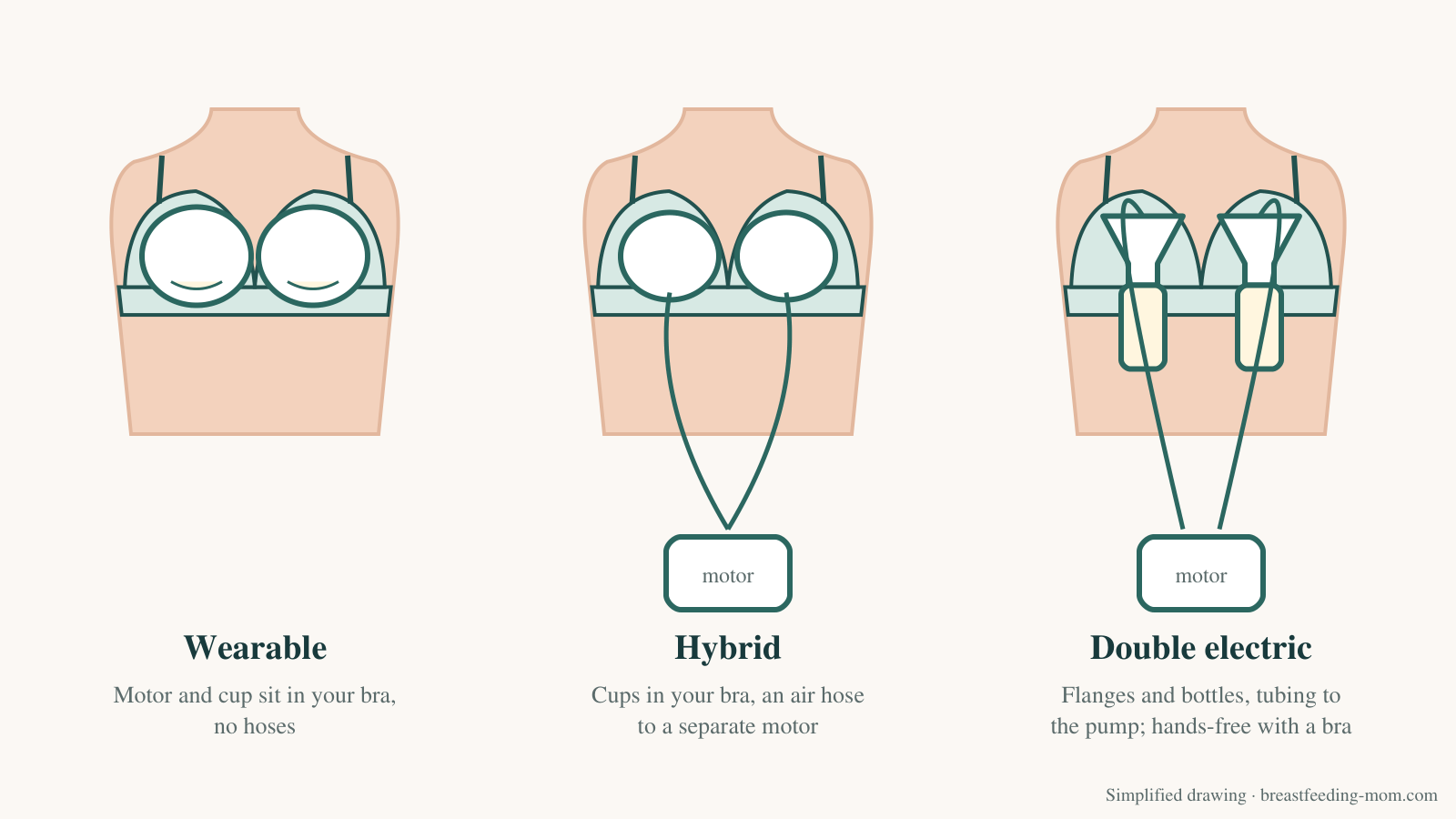
Wearable Breast Pump: How They Work, Pros and Cons, and Fit
An honest guide to wearable breast pumps: how they work, how they compare with traditional pumps, flange fit, cleaning and who they suit best.
Power Pumping: The One-Hour Schedule and What to Expect
What power pumping is, the classic 20-10-10-10-10 one-hour schedule, how long to try it and what the evidence really shows.