How Long Does Breast Milk Last in the Freezer?
By Breastfeeding Mom Editorial TeamUpdated 5 min read
A freezer stash can take the pressure off, whether you’re going back to work, planning a night out or just want a backup. The question is how long the milk keeps.
The answer depends on which agency you ask, because the CDC, the American Academy of Pediatrics (AAP) and the NHS don’t give identical times. This guide lays them side by side, explains how to freeze milk so it keeps its quality, and covers what to do if your freezer stops working. It’s for healthy, full-term babies. If your baby was born early or is in the hospital, ask the care team, because hospitals may have their own rules.
How long breast milk lasts in the freezer
The CDC says freshly expressed breast milk can be stored in the freezer for about 6 months as best, and up to 12 months is acceptable. It adds that freezing keeps food safe almost indefinitely, but the recommended storage times matter for best quality.
| Source | Freezer type and temperature | How long |
|---|---|---|
| CDC | Any freezer at 0°F (-18°C) or colder | Within 6 months is best; up to 12 months is acceptable |
| AAP | Freezer with a separate door, 0°F (-18°C) | Up to 9 months |
| AAP | Chest or deep freezer, -4°F (-20°C) | Up to 12 months |
| ABM Protocol #8 | Freezer | 6 months optimal; 12 months acceptable |
| NHS (UK) | Freezer at -18°C or lower | Up to 6 months |
| NHS (UK) | Ice compartment of a fridge | 2 weeks |
The CDC adapted its chart from ABM Protocol #8, which gives the same figures. The AAP is more conservative for a freezer with a separate door (9 months), and the NHS gives 6 months.
Count from the day the milk was first frozen, even if you move it to a different freezer later (CDC). If you’re in the US and want one number, the CDC’s “6 months is best, up to 12 months acceptable” is the national guidance. Freezing for a shorter time is never a problem. The guidance gives no time beyond 12 months, so we don’t recommend going past it.
Our breast milk storage calculator works out use-by dates for you.
Does the type of freezer matter?
According to the CDC, as long as the freezer is 0°F (-18°C) or below, the type of freezer doesn’t matter. Kitchen freezers are typically 0°F, and deep or chest freezers may be colder. The AAP’s longer times for deep freezers assume a colder temperature of -4°F (-20°C).
Your freezer’s own dial may not tell you the real temperature. The CDC says refrigerators should be 40°F (4°C) or below and freezers 0°F (-18°C) or below, and it suggests inexpensive freestanding appliance thermometers.
How to freeze breast milk
The CDC’s freezing tips are short:
- Chill first, freeze early. If you don’t think you’ll use fresh milk within 4 days, freeze it right away. The CDC says refrigerated milk should be used or thrown away after 4 days, because its protective properties decline after a few days. The AAP is more cautious: it says to freeze milk you won’t use within 48 to 72 hours. See how long breast milk lasts in the fridge.
- Use the right container. Glass or plastic containers with tight lids, or storage bags made for breast milk. Our guide to breast milk storage bags covers what to look for.
- Freeze small portions. The CDC suggests 2 to 4 ounces (60 to 120 ml), or the amount your baby takes at one feeding, so you thaw only what you need.
- Leave about an inch of space at the top (about 2.5 cm), because milk expands as it freezes.
- Label with the date it was expressed. If the milk goes to a childcare provider, add your child’s name.
- Store it at the back, not in the freezer door, where temperature changes are bigger.
- Don’t top up a frozen bag. Use a new one for each session or batch.
La Leche League adds that you should squeeze the air out of bags before sealing and stand or lay them in a container at the back of the freezer, where it stays coldest. Laying bags flat is a popular practical tip that saves space; none of the sources above tested it, but thin portions are easier to stack.
None of the breast milk guidelines we read mention freezer burn. USDA’s general food-safety page says freezer burn appears as grayish-brown leathery spots caused by air touching the surface of food, and that it doesn’t make food unsafe, only dry in spots. That page is about meat, poultry and other foods, not breast milk, so treat it as general background. Pressing out the air before sealing, as La Leche League suggests, is the sensible way to limit air contact.
Quality, not just safety
The CDC says that over time the quality of breast milk can decrease, which is why it recommends using the oldest milk first (“first in, first out”). La Leche League also says some nutrients are lost when milk is frozen, and suggests giving your baby refrigerated milk before frozen milk when possible. That doesn’t make frozen milk a bad choice. It’s a reason to avoid building a stash far bigger than you need.
What happens when the freezer fails
The CDC says that during a power outage, a full freezer left closed keeps food safe for about 48 hours, and a half-full freezer for about 24 hours. After power returns, check the milk:
- Still has ice crystals: it can be refrozen, according to the CDC.
- Completely thawed but still cold: put it in the fridge and use it within the next day, or throw it away.
For moving a stash, the CDC says to move frozen milk quickly and pack it on ice packs. For travel by plane or road, see our guides to flying with breast milk and the breast milk cooler.
From the freezer to the bottle
When you need the milk, thaw the oldest first. The CDC lists three ways: in the fridge overnight, in warm or lukewarm water, or under lukewarm running water. Never use a microwave. Milk thawed in the fridge should be used within 24 hours of being completely thawed, and milk brought to room temperature or warmed within 2 hours. Our guides on how to thaw frozen breast milk and how to warm breast milk go through the steps. You’ll also find all storage times in our breast milk storage hub.
When to call a doctor or lactation consultant
Call your baby’s doctor if your baby seems unwell after a feed of stored milk (for example, fever, vomiting or diarrhea), or if your baby was born early or is in the NICU and you need storage instructions for your situation.
A lactation consultant (IBCLC) can help if you’re worried about how much milk you’re expressing, if your baby refuses stored milk, or if you’re unsure how big a stash to build. See our breastfeeding support page for ways to reach one.
Frequently asked questions
Can I store breast milk in glass or in a bag?
Either. The CDC says to use breast milk storage bags or clean, food-grade glass or plastic containers with tight-fitting lids. It says never to use disposable bottle liners or plastic bags that aren't made for storing breast milk.
Can I add freshly pumped milk to a bag that's already frozen?
The CDC says that mixing freshly expressed milk with already cooled or frozen milk isn't advised, because it can rewarm the older milk. Chill the new milk first, then freeze it in its own labeled bag.
Is it normal for frozen milk to separate or smell different?
Yes. La Leche League says milk naturally separates into a cream layer and a milk layer, and that stored milk can smell metallic, soapy or even rancid, possibly because the fats break down over time. If it was stored properly, it's safe and most babies drink it. See our guide to high lipase milk if your baby refuses it.
What do I do if the power goes out?
The CDC says a full freezer that stays closed keeps food safe for about 48 hours, and a half-full one for about 24 hours. Milk that has started to thaw but still has ice crystals can be refrozen. Milk that has completely thawed but still feels cold should go in the fridge and be used within the next day, or thrown away.
Do I need a freezer stash?
Not necessarily. La Leche League points out that fresh or refrigerated milk may have advantages and that many parents who go back to work only keep a small backup supply. How much you store depends on your situation.
Sources
- CDC: Breast Milk Storage and Preparationhttps://www.cdc.gov/breastfeeding/breast-milk-preparation-and-storage/handling-breastmilk.html
- CDC: Breast Milk Storage Questions and Answershttps://www.cdc.gov/breastfeeding/php/guidelines-recommendations/faqs.html
- CDC: Storage and Preparation of Breast Milk (printable guide, PDF)https://cdc.gov/breastfeeding/media/pdfs/preparation-of-breast-milk_H.pdf
- HealthyChildren.org (AAP): Tips for Freezing & Refrigerating Breast Milkhttps://www.healthychildren.org/English/ages-stages/baby/breastfeeding/Pages/storing-and-preparing-expressed-breast-milk.aspx
- NHS: Expressing and storing breast milkhttps://www.nhs.uk/baby/breastfeeding-and-bottle-feeding/breastfeeding/expressing-breast-milk/
- La Leche League International: Storing Human Milkhttps://llli.org/breastfeeding-info/storing-human-milk/
- USDA FSIS: Freezing and Food Safetyhttps://www.fsis.usda.gov/food-safety/safe-food-handling-and-preparation/food-safety-basics/freezing-and-food-safety
- ABM Clinical Protocol #8: Human Milk Storage Information for Home Use for Full-Term Infants (2017)https://pubmed.ncbi.nlm.nih.gov/29624432/
This guide is general information, not medical advice. For your own situation, talk to your doctor, midwife, pharmacist or an IBCLC lactation consultant. Read our medical disclaimer and find breastfeeding support near you.
Related articles
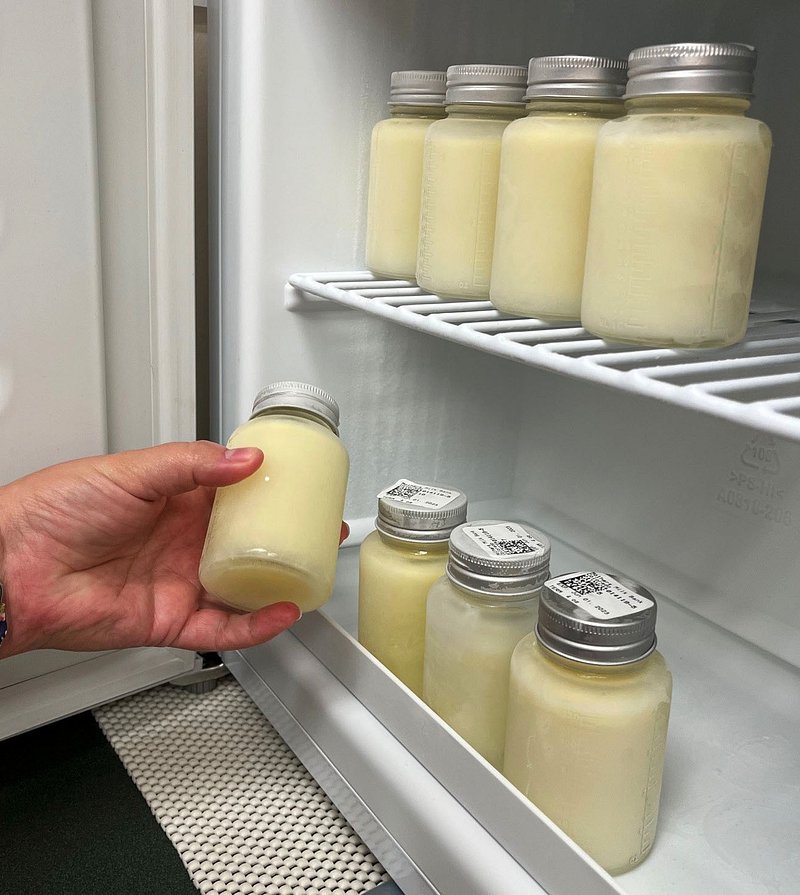
How Long Does Breast Milk Last in the Fridge?
Fresh breast milk keeps up to 4 days in the fridge and thawed milk up to 24 hours. Here's how to store it so it stays safe.
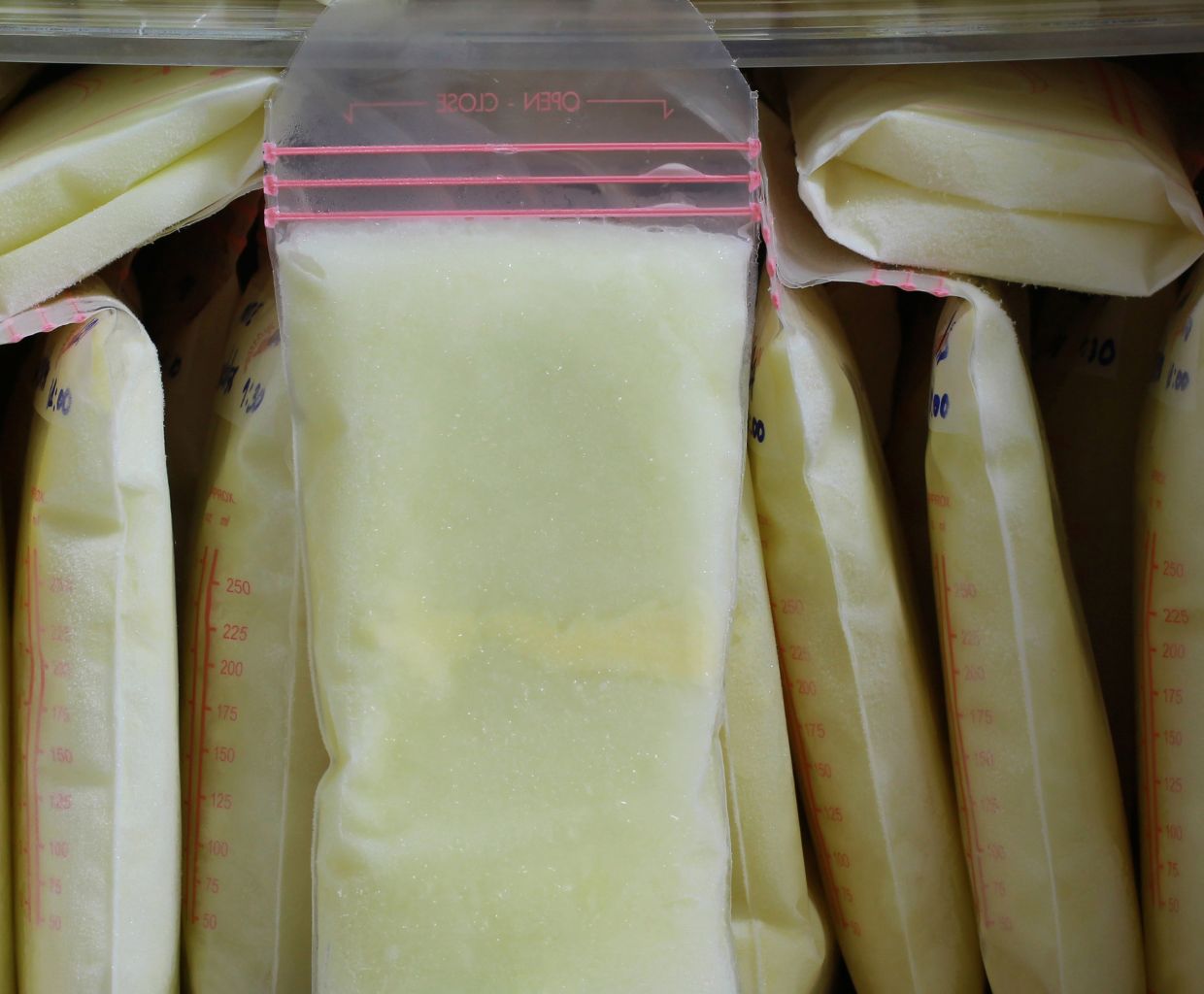
How to Thaw Frozen Breast Milk (and Why Not to Refreeze It)
The safest ways to thaw frozen breast milk, how long thawed milk lasts, and why you should never refreeze milk once it has thawed.
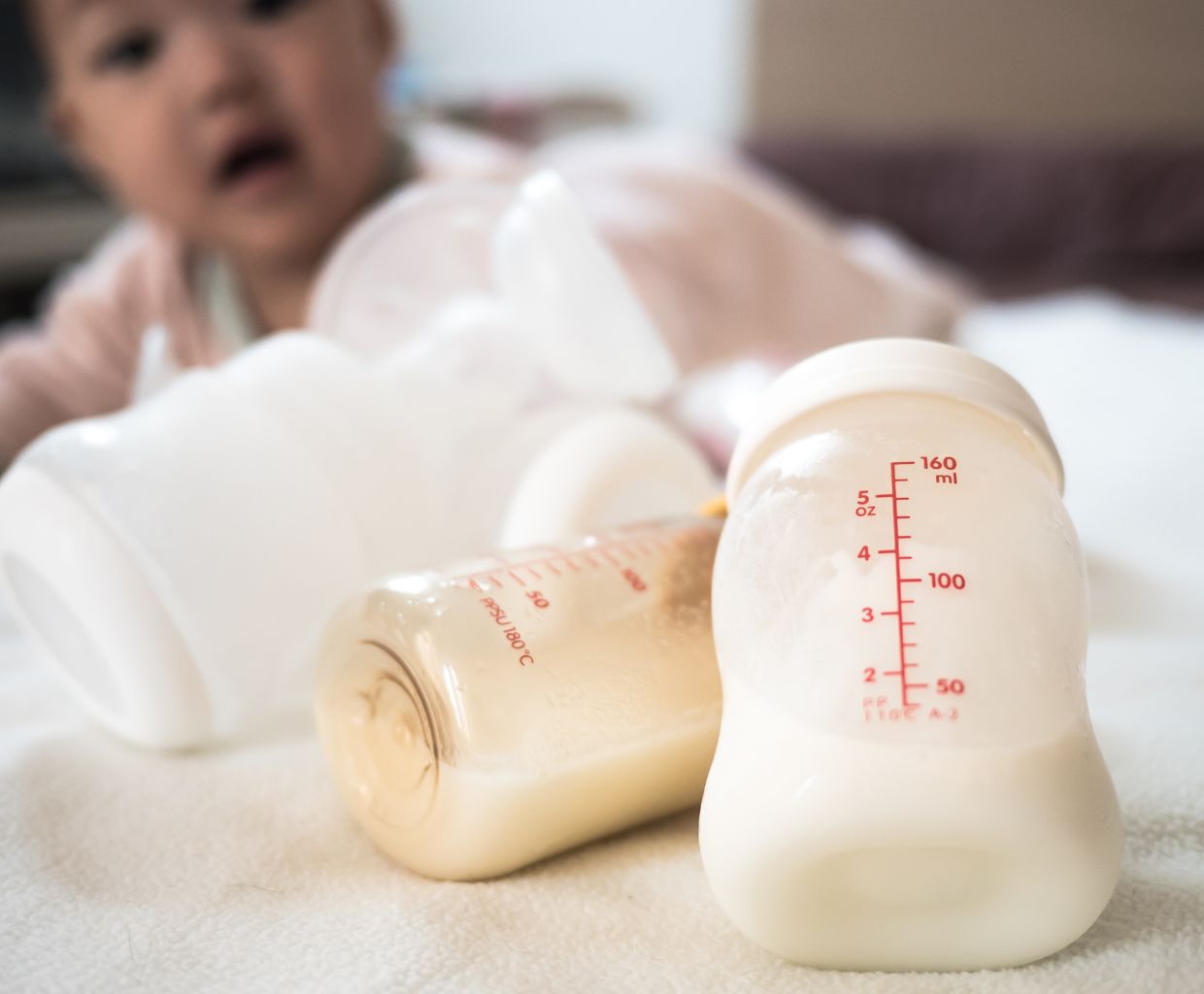
How Long Can Breast Milk Sit Out?
Fresh breast milk can sit out up to 4 hours, thawed milk 1–2 hours and leftovers 2 hours. Here's how each rule works.
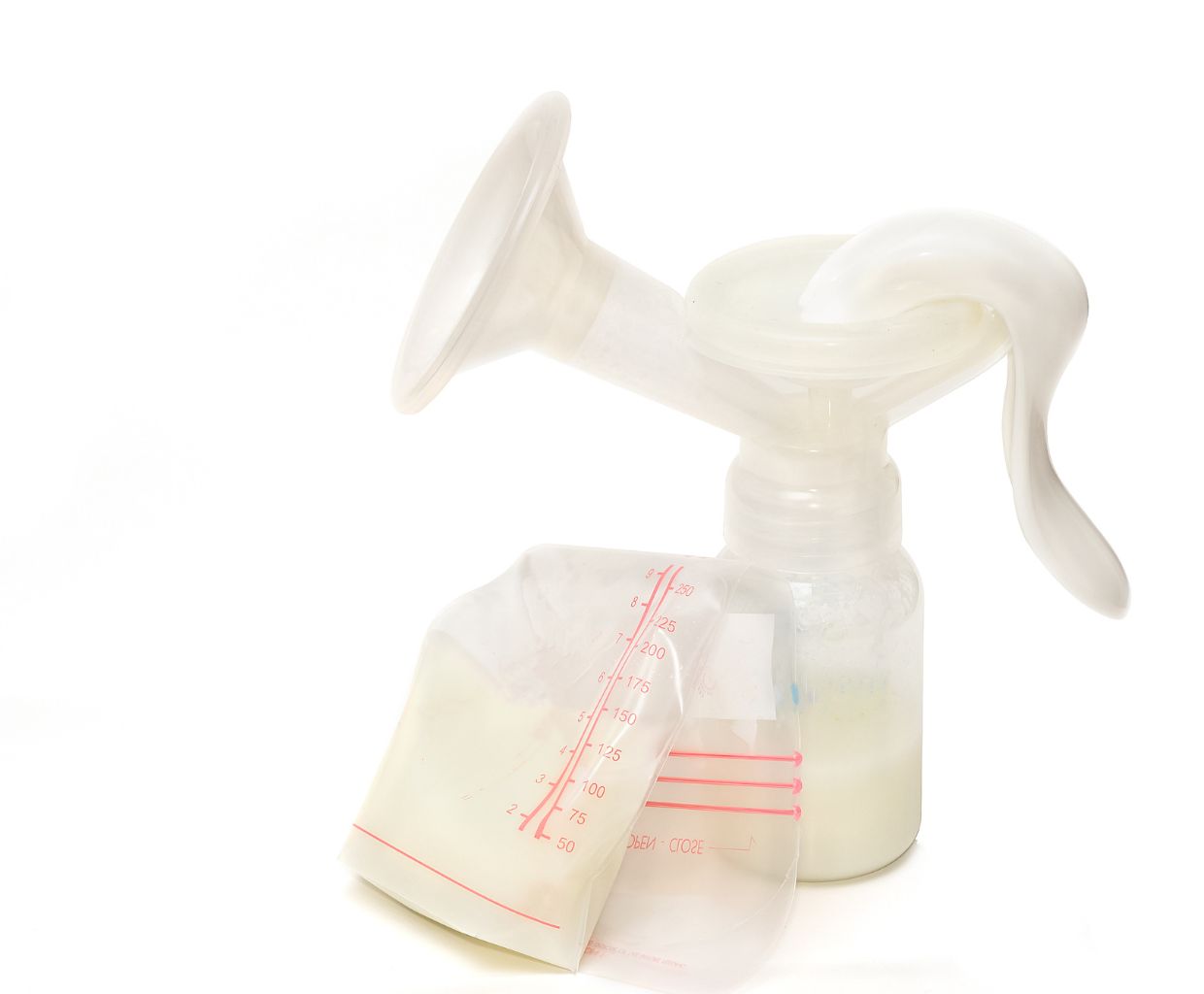
Breast Milk Storage Bags: How to Choose, Fill, Freeze and Label Them
What to look for in breast milk storage bags, plus how to fill, freeze flat, label and thaw them using the CDC's storage times.
How to Turn Breast Milk Into Powder at Home: What You Should Know First
Can you turn breast milk into powder at home? An honest look at the safety concerns, freeze-drying services and safer ways to store milk.